
























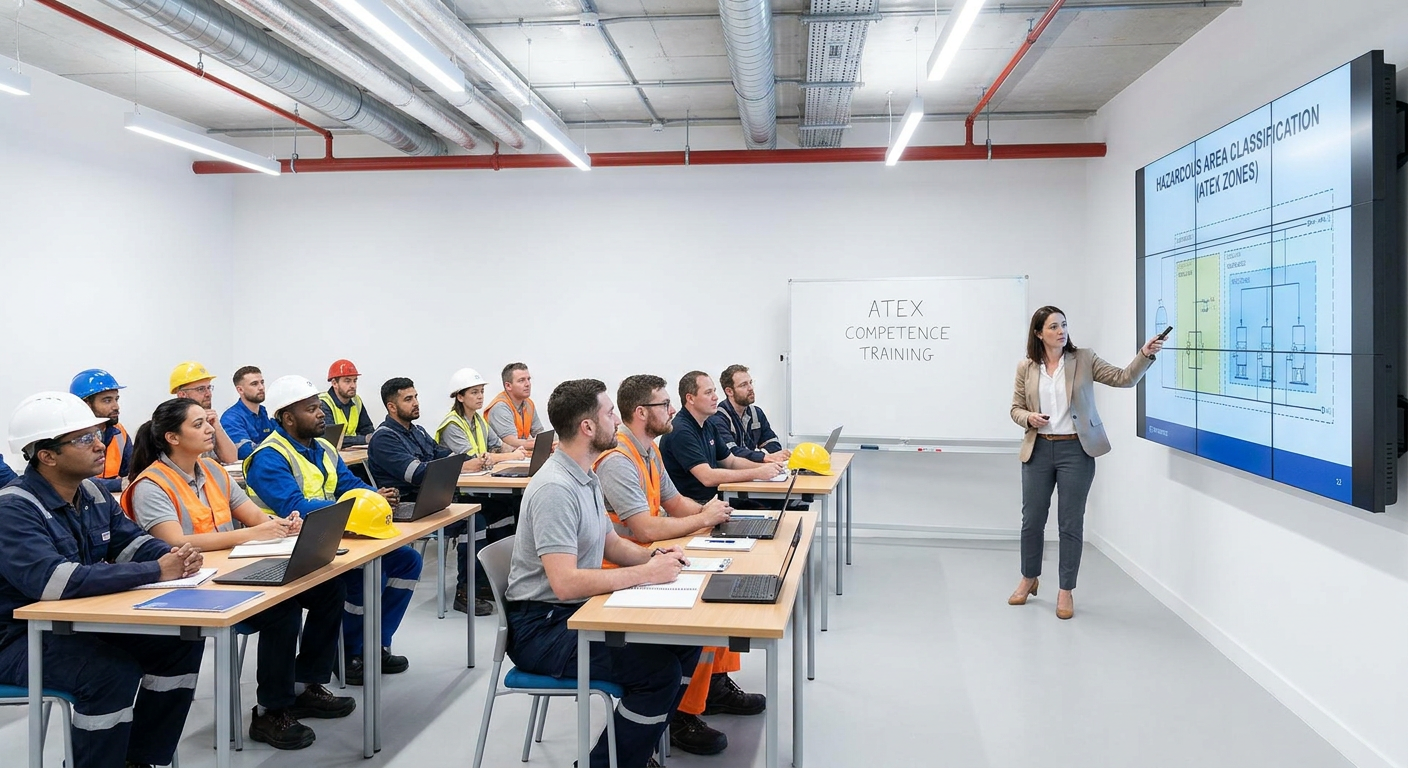
Working within potentially explosive atmospheres is one of the most high-stakes challenges in modern industry. The invisible threat of a gas, vapour, or dust explosion demands more than just robust engineering and certified equipment; it demands an equally robust and deeply ingrained level of human competence. A single misstep, a moment of ignorance, or a poorly understood procedure can negate millions of pounds of safety investment and lead to catastrophic consequences. This is why the concept of ATEX competence cannot be treated as a simple box-ticking exercise or a certificate to be filed away. True competence is a living, breathing state of understanding—a combination of foundational knowledge, practical skill, and a profound respect for the risks involved. This comprehensive guide is designed to be your definitive resource for building a world-class ATEX competence program. We will journey far beyond the surface, delving into the intricate anatomy of an effective training curriculum, identifying exactly who needs training and to what level, exploring the optimal moments for its delivery, and unlocking the profound safety and operational benefits that a truly competent workforce brings. Whether you are a safety manager, an engineer, a technician, or a company director, the insights within these sections will provide you with the blueprint to transform your approach to hazardous area safety, moving from a reactive posture to a culture of proactive, verifiable excellence.
Master Your Plant’s Equipment Categories
Aligning personnel competence with proper hardware requires a clear understanding of equipment markings. Read our deep-dive guide to deciphering ATEX ratings and categories to eliminate compliance risks.
Read the ATEX Rating GuideThe Anatomy of an Effective ATEX Competence Program: A Curriculum Deep Dive
Developing a robust training program for ATEX competence is not merely a procedural formality; it is the foundational pillar upon which the entire safety structure of a hazardous area operation rests. A superficial, check-box approach to training is a direct invitation to catastrophic failure. True competence is built upon a deep, layered understanding of principles, practices, and legal responsibilities. Therefore, a comprehensive curriculum must be meticulously designed to guide personnel from foundational theory to practical, hands-on application. It should be a journey that transforms an employee from someone who is simply aware of the dangers to a competent individual who can actively identify, assess, and mitigate explosion risks. The ultimate goal is to cultivate a culture of intrinsic safety, where correct procedures are not just followed, but understood in their entirety. A well-structured curriculum is the roadmap for this critical transformation, ensuring that every individual working in or impacting a hazardous environment possesses the verified knowledge and skills to protect themselves, their colleagues, and the facility.
- The journey into ATEX competence must begin with a solid grounding in the legislative and theoretical framework that governs hazardous area operations. This initial module is arguably the most critical, as it provides the “why” behind every subsequent action a technician or engineer will take.
- With the legal context established, the curriculum must then transition into the pure science of explosions. Protecting against a phenomenon requires a fundamental understanding of its mechanics. This module should move beyond a simple recitation of the fire triangle and expand into the more comprehensive ‘explosion pentagon,’ which includes fuel, oxygen, an ignition source, dispersion of the fuel, and confinement.
- Building upon the science, the next logical step in the curriculum is the practical application of this knowledge through Area Classification, or ‘zoning’. This is the process of analysing and classifying a workplace into specific zones based on the frequency and duration of the presence of an explosive atmosphere.
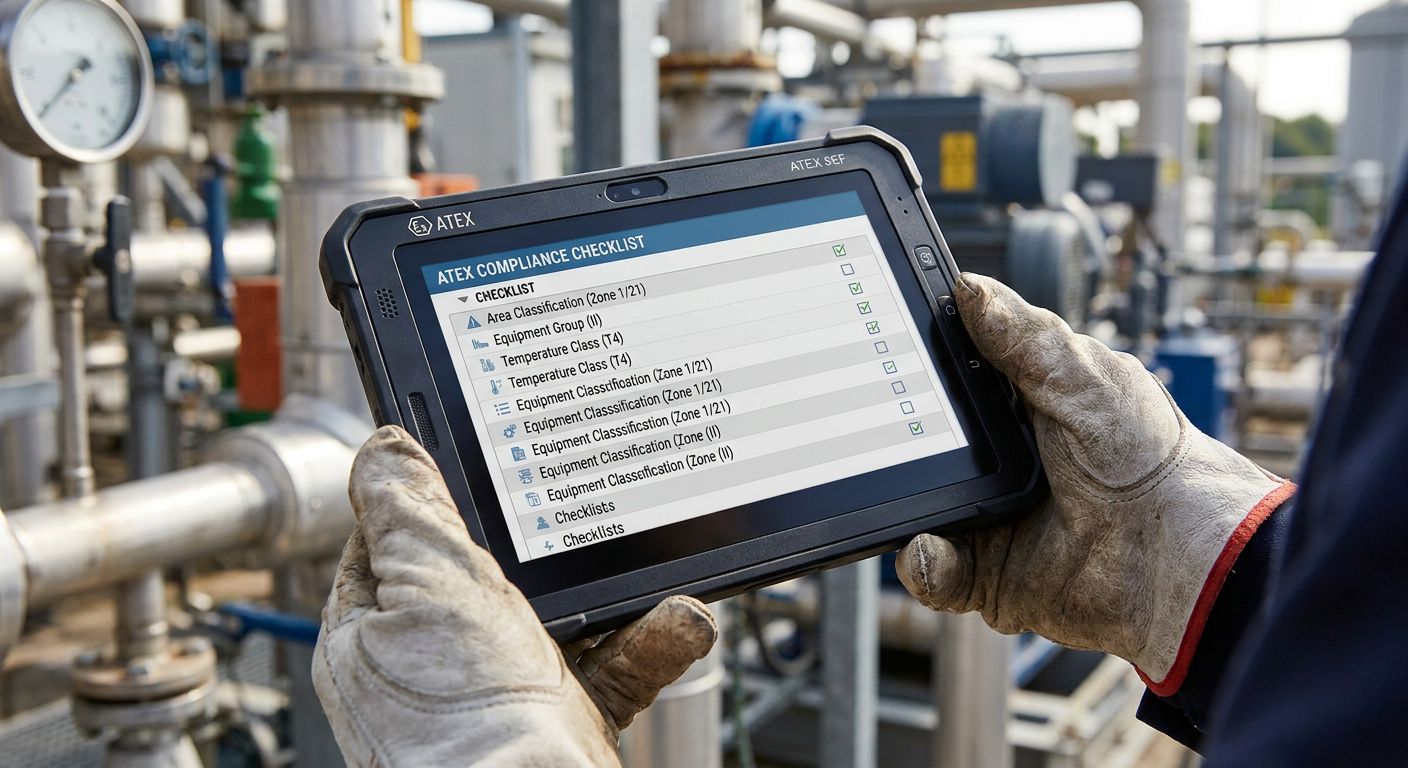
Who Truly Needs ATEX Competence Training? A Role-Based Deep Dive
When considering the application of a comprehensive training curriculum for ATEX competence, the initial, and often flawed, assumption is that it is solely the domain of frontline electrical and mechanical technicians. While these individuals are undeniably a critical audience, limiting the scope of training to this group creates dangerous gaps in an organisation’s safety net. A robust and effective ATEX safety culture is not built on the competence of a single department, but rather on a shared, multi-layered understanding of risk that permeates every level of the operational hierarchy. The curriculum checklist, therefore, is not a monolithic document but a flexible framework that must be adapted and applied to a wide spectrum of roles, each with their own unique responsibilities and potential to influence safety outcomes. True protection against explosive atmospheres is achieved when everyone, from the boardroom to the plant floor, understands their specific part in the collective responsibility.
- The most immediate and obvious candidates for in-depth, practical training are the hands-on personnel: the electricians, instrumentation technicians, and mechanical fitters who work directly with equipment in hazardous areas.
- Moving up the chain of command, we encounter the engineers and designers—the architects of the facility’s safety systems. This group, which includes process, mechanical, electrical, and instrumentation engineers, as well as project managers, requires a different but equally critical level of competence.
- At the management and oversight level, the focus of the training shifts again, from the technical ‘how’ to the strategic ‘why’ and ‘what if’. Plant managers, operations managers, Health, Safety, and Environment (HSE) officers, and even procurement specialists hold the ultimate responsibility for legal compliance, resource allocation, and the cultivation of a safety-first culture.
ATEX Certified Equipment
| Product | Category | Main Specs | Certification | Price |
|---|---|---|---|---|
|
Aegex 100M Intrinsically Safe Tablet
|
Mobile Computing | 10.1-inch Windows OS device, rugged aluminum casing, capacitive touch for gloves/pens, built for digital checklists & inspections. | ATEX / IECEx Zone 1 | $4,206.60 |
|
BARTEC SP9EX1 Smartphone
|
Mobile Communications | 5G Android platform, 48MP camera, 6.1″ Gorilla Glass Victus display, MIL-STD-810H ruggedness, glove-operable. | ATEX Zone 1 / Div 1 | $2,694.60 |
|
iCorDEX DCx13-3 ATEX Camera
|
Cameras & Inspection | 13MP imaging, 4.6″ glove-friendly touchscreen, 64GB storage, custom Android OS, intrinsically secure USB datalink. | ATEX Zone 2 / 22 | $2,495.00 |
Equip Your Qualified Team with Certified Protection
Competent personnel require certified equipment to operate safely. Explore our complete procurement catalog of intrinsically safe solutions engineered for hazardous industrial environments.
Browse the Industrial ShopRelated Resources
- ATEX Zone Classification Guide
- Intrinsic Safety vs. Explosion-Proof
- ATEX Zone 1 vs. Zone 2: Key Differences
FAQs
What does ‘competence’ actually mean in the context of ATEX?
In the world of hazardous area operations, ‘competence’ is not a certificate on a wall; it is the demonstrable and verifiable combination of knowledge, practical skill, and direct experience that enables an individual to perform their specific tasks without introducing an ignition risk. The European ATEX 153 Directive and its national implementations place a legal obligation on employers to ensure that anyone working in or impacting the safety of a hazardous area is competent.
What are the non-negotiable topics for a comprehensive ATEX training curriculum?
A robust ATEX training program must be built on a solid foundation of core topics that address the full lifecycle of hazardous area management. A checklist of essential modules should include a detailed exploration of the fundamentals, starting with the science of an explosion, the characteristics of flammable substances, and the legal and regulatory framework. The curriculum must then transition into the practical application of these principles, including Hazardous Area Classification, a detailed study of the various Protection Concepts, and equipment selection, marking, and installation.
Does everyone on-site need the same level of ATEX training?
No. A one-size-fits-all approach to ATEX training is not only inefficient and costly but also fundamentally unsafe. The level and depth of training must be tailored to the individual’s role, responsibilities, and the degree to which their actions can impact safety within the hazardous area. A tiered approach is essential for creating a holistic culture of safety, with different training for managers, engineers, technicians, and ancillary staff.
How often is ATEX refresher training required?
There is no specific, legally mandated interval for ATEX refresher training. The employer is responsible for determining an appropriate frequency based on a documented needs assessment. The guiding principle is the continuous maintenance of competence. Refresher training should be triggered by changes to standards, new technology, the results of audits, or as part of ongoing performance assessment.
Why is a curriculum checklist so important for ATEX training?
A curriculum checklist is the architectural blueprint for building a resilient and deeply ingrained culture of safety and operational competence. It ensures that every critical topic is covered in sufficient depth, systematically eradicating dangerous gaps in knowledge. It provides a tangible, auditable trail that demonstrates a systematic and serious commitment to fulfilling legal obligations. This defensible position can be the deciding factor in mitigating or avoiding severe legal penalties.
Conclusion
The journey through the intricate world of ATEX competence reveals a fundamental truth: safety in hazardous areas is not a destination you arrive at, but a continuous path you must diligently maintain. The extensive checklists, curriculum breakdowns, and role-based analyses presented in this guide are not merely administrative tools; they are the architectural blueprints for building a resilient and deeply ingrained culture of safety. Ultimately, the goal of any ATEX training program is to create an environment where correct and safe practice is the intuitive default for every single person. The investment in this level of detailed, role-specific, and continuous training is one of the most significant a company can make, ensuring that everyone goes home safe, every single day.
