Intrinsically Safe Products
Intrinsically Safe Control Relays: ATEX/IECEx Models | ISS
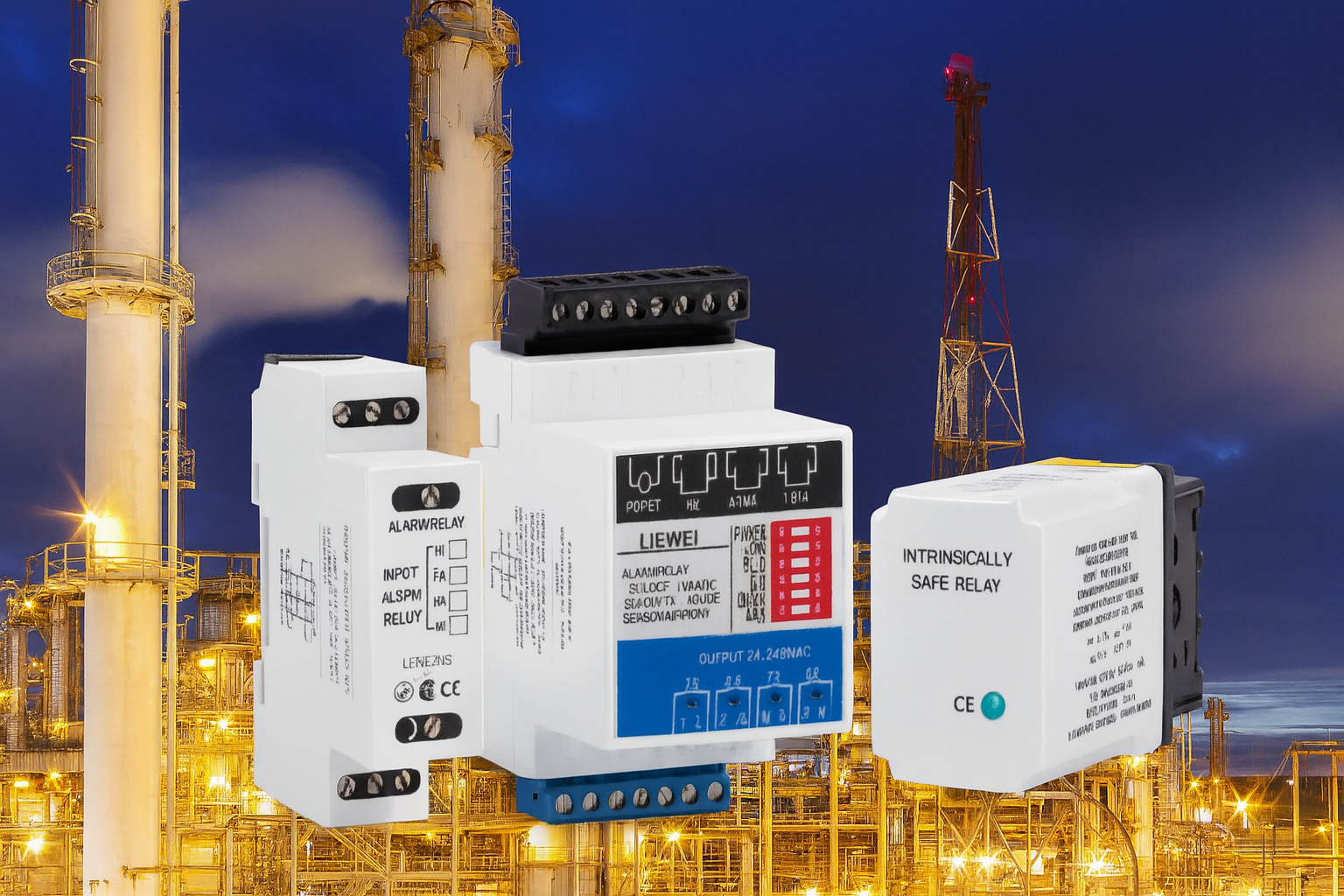
In hazardous industrial environments, safe electrical control is essential to preventing equipment failure, ignition, and worker injury. Facilities in oil & gas, chemical processing, mining, food production, grain handling, and pharmaceuticals depend on control circuits that cannot generate sparks, arcs, or excess heat. This is where an intrinsically safe control relay becomes a fundamental component of explosion prevention systems.
This guide explains what intrinsically safe control relays do, how they work in safety circuits, key technical specifications, compliance requirements, and recommended applications—supported by tables, product category references, and best-practice engineering insights.
What Is an Intrinsically Safe Control Relay?
An intrinsically safe control relay is an electrical switching device designed to operate in hazardous locations without releasing enough energy—thermal or electrical—to ignite an explosive atmosphere. Instead of simply containing an explosion (like explosion-proof equipment), intrinsic safety prevents ignition from occurring in the first place by limiting voltage, current, and stored energy.
These relays are used to safely control low-energy signals in industrial processes such as emergency shutoffs, pump control, motor operation, valve actuation, alarm circuits, and monitoring systems located in hazardous areas classified under the Zone system (e.g., Zones 0, 1, and 2) or the Class/Division system (e.g., Class I, Division 1).

How Does an Intrinsically Safe Control Relay Work?
Intrinsically safe control relays function by receiving a low-power signal from field devices inside a hazardous area and safely interfacing it with non-hazardous control equipment. They are engineered to prevent electrical faults—like short circuits or coil failures—from conducing enough power into the danger zone to trigger ignition.
They typically work in combination with intrinsically safe barriers or galvanic isolators, which restrict electrical energy to a mathematically safe threshold. The relay then switches higher-power circuits in a safe (non-hazardous) zone.
The result: The hazardous location stays protected from electrical ignition sources while still allowing normal industrial operation.
Need to complete your safety circuit? Ensure full compliance by pairing your IS relays with certified barriers and enclosures.
Find Certified Intrinsically Safe Barriers
Explore ATEX/IECEx Junction Boxes
Choosing the Right Protection: Zener Barriers vs. Galvanic Isolators
While an intrinsically safe control relay is a key component, it almost always works in tandem with an IS barrier to limit energy. The two most common types of barriers are Zener barriers and galvanic isolators. Choosing the right one is critical for system integrity, cost, and maintenance.
Zener Barriers
Zener barriers are passive devices that use Zener diodes, resistors, and fuses to divert excess voltage and current to a dedicated, high-integrity ground connection. During normal operation, the diodes are inactive. If a fault occurs and voltage rises above the Zener voltage, the diodes conduct the excess energy safely to ground, protecting the hazardous area circuit.
- Pros: Simple, compact, and generally lower in cost per channel.
- Cons: Requires a dedicated, high-integrity (low resistance) instrument ground, which can be expensive to install and maintain. A fault can blow the internal fuse, requiring the barrier to be replaced. They are not suitable for all signal types, especially those without a ground reference.
Galvanic Isolators
Galvanic isolators provide protection by creating a physical air-gap separation between the safe and hazardous area circuits, typically using transformers, optocouplers, or capacitors. This electrical isolation means they do not require a dedicated IS ground connection. They transfer the signal across the isolation gap while blocking any dangerous energy from passing through.
- Pros: No need for a special IS ground, which simplifies installation and reduces long-term maintenance costs. They can isolate and clean up noisy signals. Faults on the safe side generally do not damage the unit.
- Cons: They are active devices requiring a power supply, are larger in size, and have a higher upfront cost per channel compared to Zener barriers.
The choice between them often depends on the availability of a reliable ground, budget constraints, and the specific signal type being protected. For many modern control systems, the installation simplicity and robustness of galvanic isolators make them the preferred choice despite the higher unit cost.
Why Are Intrinsically Safe Control Relays Important for Explosion Prevention?
Intrinsically safe control relays serve three primary safety functions that make them essential in explosion prevention systems:
They Prevent Ignition in Hazardous Zones
All energy entering the hazardous area is limited to safe levels—often by pairing the relay with an intrinsically safe barrier or isolator.
They Enable Safe Switching of Critical Circuits
Emergency stop circuits, alarms, pumps, solenoids, and instrumentation require reliable switching even in hazardous environments.
They Protect Personnel, Equipment, and Operations
In industries where a single spark can cause catastrophic explosions, intrinsically safe switching is an insurance policy against electrical ignition.
As a result, these relays are standard components in refinery control rooms, chemical batching systems, oil rigs, tank farms, grain silos, and gas detection networks.
What Are the Key Specifications of an Intrinsically Safe Control Relay?
Below is an overview of the most important specifications to consider.
Input & Output Specifications
-
Input voltage: Typically 12–30V DC
-
Relay coil voltage: 24V DC is standard
-
Contact rating: 5A–10A at 250V AC or 30V DC
-
Current limiting: Built into associated IS barrier or relay circuitry
-
Signal type: Discrete control inputs (NO/NC contacts)
Safety Ratings
-
IECEx certification
-
UL 913 (Intrinsically Safe) or UL 508
-
FM & CSA Class I Division 1 or 2
-
Temperature class (T-rating) ensuring safe operating heat limits
Construction Requirements
-
Arc-free switching
-
Encapsulated or sealed electronics
-
Isolation between safe and hazardous circuits
-
Fail-safe design to ensure controlled shutdown
Environmental Ratings
-
Wide-temperature operation (−40°C to +60°C)
-
Shock/vibration resistance
-
IP50–IP66 protection depending on housing
Adherence to these specifications helps ensure the relay performs reliably and meets the requirements for use in its certified hazardous locations.
What Applications Use Intrinsically Safe Control Relays?
Intrinsically safe control relays are used anywhere low-voltage control signals must pass into or out of a hazardous area.
Common Industrial Applications
-
Pump control systems in oil & gas production
-
Emergency shutdown circuits (ESD)
-
Gas detection systems requiring safe switching
-
Valve actuation in chemical or petrochemical plants
-
Alarm and annunciator systems for hazardous zones
-
Monitoring instrumentation such as level switches or flow switches
-
Batching and mixing systems
-
Mining and tunneling equipment
-
Pharmaceutical production machinery
Zones & Divisions Where They Apply
-
ATEX Zones 0, 1, and 2
-
Class I Div 1 & Div 2 hazardous locations
-
Dust-hazard areas like grain silos (Class II)
-
Fuel storage and transfer stations
Anywhere flammable gas, vapor, or dust exists, intrinsically safe relays act as a protective layer between the hazardous field devices and high-energy equipment.
Deploying sensors in a classified area? Integrate certified field devices with your IS control relays for a complete safety solution.
Select Certified Gas Detectors for Zone 0
Find IS Sensors for Your Application
What Is the Role of Intrinsically Safe Control Relays in Safety Circuits?
Intrinsic safety is one of the most reliable explosion protection techniques, and intrinsically safe control relays sit at the center of hazardous-location safety circuits.
They Serve Three Safety Circuit Functions:
1. Barrier Between Hazardous & Safe Areas
The relay ensures high-energy circuits never cross into classified zones.
2. Safe Switching of Protective Devices
Relays control alarms, emergency stops, shutdown sequences, and isolation valves—all vital for hazard mitigation.
3. Fault Containment
Even if a fault occurs on the safe side (e.g., short circuit, overcurrent, or coil failure), the intrinsically safe side remains protected.
Example: Gas Detection System Circuit
A typical IS control relay ensures that a flammable gas detector safely sends an alarm signal to the control system without increasing ignition risk in the hazardous area.
Control Relays vs. Intrinsically Safe Control Relays
| Feature / Function | Standard Control Relay | Intrinsically Safe Control Relay |
|---|---|---|
| Hazardous area use | Not safe | Certified safe for Zone 0/1/2, Div 1/2 |
| Spark prevention | No | Yes, energy-limited |
| Explosion protection method | None | Intrinsic safety (IS) |
| Energy limitation | No | < 1.2V, < 0.1A (depending on certification) |
| Applications | General industrial | Hazardous industries |
| Pairing required | No | Often paired with IS barrier |
| Cost | Lower | Higher due to certifications |
This comparison highlights why intrinsically safe control relays are indispensable in explosion-risk environments.
What Types of Intrinsically Safe Control Relays Are Available?
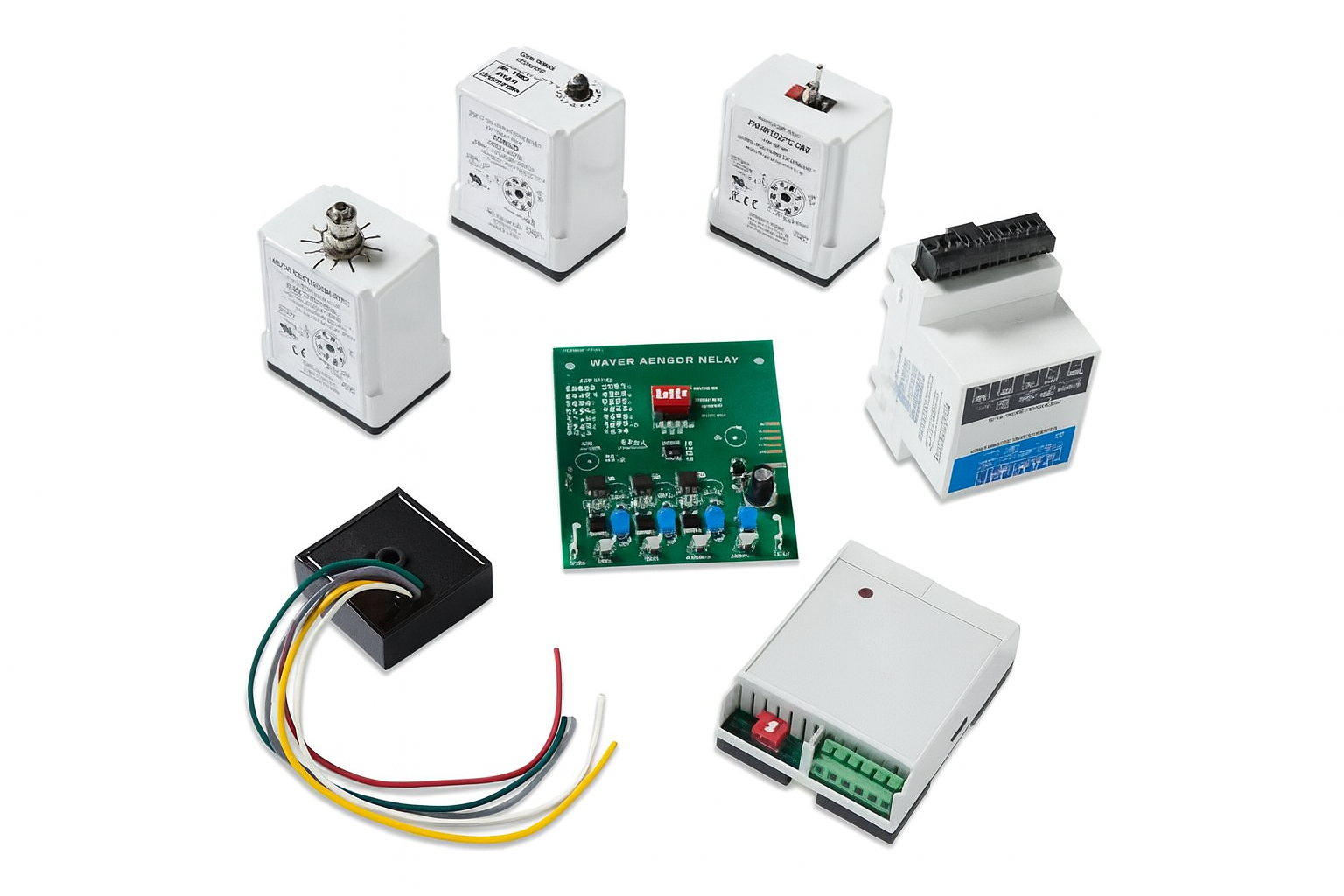
Although designs vary across manufacturers, relays generally fall into the following categories:
Mechanical IS Relays
-
Use physical contacts
-
Provide reliable switching
-
Often paired with barriers
-
Suitable for alarms, pumps, shutdown systems
Solid-State IS Relays
-
No moving parts
-
High switching speed
-
Ideal for automation, fast-response instrumentation
Multi-channel & Modular IS Relays
-
Provide multiple relay outputs in one housing
-
Used in complex process control systems
Hybrid IS Relays (Relay + Barrier)
-
Combine galvanic isolation and a control relay
-
Simplify panel design
-
Reduce wiring complexity
These options allow engineers to tailor safety circuits to process requirements.
What Standards Govern Intrinsically Safe Control Relays?
To be compliant for use in hazardous areas, IS control relays must meet global safety standards.
ATEX (Europe)
-
ATEX Directive 2014/34/EU governs equipment used in explosive atmospheres.
-
Certification must match the specific Zone (0, 1, or 2).
IECEx (International)
-
Ensures safe operation in explosive atmospheres worldwide.
UL & FM (United States)
-
UL 913: Intrinsically Safe Apparatus
-
UL 508: Industrial Control Equipment
-
FM Class I, II, III Div 1/2 approvals
CSA (Canada)
-
Aligns with NEC/CEC hazardous location classifications.
Major Compliance Requirements
-
Verified energy limitation
-
Surface temperature control
-
Fault condition tolerance
-
Isolation protection between circuits
These certifications provide assurance that the relay cannot cause ignition regardless of the fault mode.
Installation Requirements for Intrinsically Safe Control Relays
Correct installation is essential to maintaining intrinsic safety.
Key Requirements
-
Use certified IS wiring for the hazardous area side
-
Install in non-hazardous or reduced-hazard zones unless relay is certified for direct mounting
-
Pair with matching IS barriers (Zener or galvanic isolators)
-
Bond and ground barriers properly
-
Maintain segregation between IS circuits and non-IS circuits
-
Follow manufacturer entity parameters (Uo, Io, Po, Co, Lo)
Common Installation Mistakes to Avoid
-
Mixing IS and non-IS conductors in the same conduit
-
Failing to observe maximum cable capacitance/inductance
-
Installing uncertified devices in the same junction box
-
Incorrect grounding of Zener barriers
Proper installation ensures continued compliance with IS standards and long-term operational safety.
System Design: Understanding and Matching Entity Parameters
Proper installation goes beyond physical wiring; it requires a documented verification that the components of the intrinsically safe loop are compatible. This is achieved by comparing the “Entity Parameters” of the associated apparatus (the barrier or isolator) and the field device (the sensor, switch, etc.). This calculation ensures that under fault conditions, the energy let through by the barrier is less than what the field device can safely handle without causing ignition.
The key parameters are:
- Uo (Vmax): Maximum output voltage from the barrier.
- Io (Imax): Maximum output current from the barrier.
- Po (Pmax): Maximum output power from the barrier.
- Co (Ca): Maximum allowed capacitance of the field device and cable connected to the barrier.
- Lo (La): Maximum allowed inductance of the field device and cable connected to the barrier.
The field device has corresponding maximum input parameters (Ui, Ii, Pi) and internal capacitance/inductance (Ci, Li). The safety check is straightforward:
- Voltage Check: Uo must be less than or equal to Ui (Uo ≤ Ui).
- Current Check: Io must be less than or equal to Ii (Io ≤ Ii).
- Power Check: Po must be less than or equal to Pi (Po ≤ Pi).
- Capacitance Check: Co must be greater than or equal to the sum of the cable capacitance and the device’s internal capacitance (Co ≥ Ccable + Ci).
- Inductance Check: Lo must be greater than or equal to the sum of the cable inductance and the device’s internal inductance (Lo ≥ Lcable + Li).
Every one of these conditions must be met for the loop to be considered intrinsically safe. This calculation must be documented as part of the facility’s safety and compliance records. Failure to correctly match entity parameters invalidates the intrinsic safety protection method.
Need help selecting the right IS relay and barrier combination? Our specialists can provide a technical recommendation and quote.
Request a Technical Recommendation
Call a HazLoc Specialist: 832 699 6726
Maintenance Requirements for Intrinsically Safe Relays
Although these devices require little routine maintenance, periodic inspection ensures reliability.
Maintenance Checklist
-
Inspect wiring for damage or corrosion
-
Verify integrity of barriers and grounding
-
Check relay coil resistance
-
Confirm proper switching operation
-
Replace units showing heat discoloration or mechanical wear
Intrinsic safety greatly reduces maintenance compared to explosion-proof equipment because it avoids heavy housings and mechanical flame paths.
Best Intrinsically Safe Relay Options by Application
| Application | Recommended Relay Type | Key Features | Certification |
|---|---|---|---|
| Gas detection | Solid-state IS relay | Fast switching, fault-tolerant | ATEX/IECEx |
| Pump control | Mechanical IS relay | High contact rating | UL/CSA |
| Emergency shutdown (ESD) | Hybrid relay with barrier | Fail-safe switching | ATEX/IECEx |
| Valve actuation | Modular IS relay | Multiple channels | ATEX Zone 1 |
| Alarm circuits | Mechanical or hybrid | Reliable contact operation | FM/UL |
This simplifies choosing the right IS relay for your application.
FAQs About Intrinsically Safe Control Relays
What makes a control relay intrinsically safe?
It limits electrical energy—voltage, current, and power—to levels that cannot ignite a hazardous atmosphere.
Do intrinsically safe relays require barriers?
Yes, most installations require a Zener barrier or galvanic isolator to maintain energy limits.
Can these relays be installed directly in a hazardous area?
Some relays are certified for Zone 1 or Zone 2 mounting, but most are installed in a safe area and interface with IS wiring.
Are intrinsically safe relays the same as explosion-proof equipment?
No. Explosion-proof equipment contains an internal explosion. Intrinsic safety prevents ignition altogether.
What industries commonly use IS relays?
Oil & gas, chemical processing, mining, food production, pharmaceuticals, wastewater treatment, and grain processing.
Equip your entire operation for safety. We offer a full catalog of certified devices for hazardous locations.
Recommended guides to deepen your hazardous-area knowledge:
Conclusion: Choosing the Right Intrinsically Safe Control Relay
An intrinsically safe control relay is a fundamental component for safe switching in hazardous locations. These relays ensure that critical control circuits—pumps, alarms, sensors, shutdown systems—can operate without generating enough electrical energy to ignite flammable atmospheres.
By understanding specifications, installation requirements, and application needs, engineers can design safer, more reliable explosion prevention systems. Intrinsically Safe Store offers a full range of intrinsically safe relays, barriers, and hazardous-location control equipment suitable for demanding industrial environments.