Intrinsically Safe Barriers
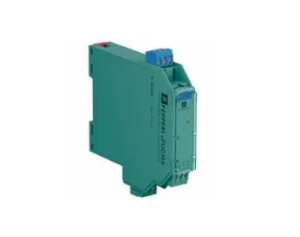
Pepperl + Fuchs KFD2-STC5-EX1
$666.00In Stock


Your Global Authority In Hazardous Areas
Your cart is empty.
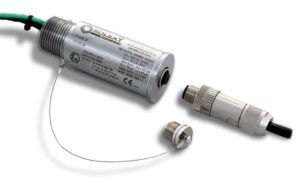
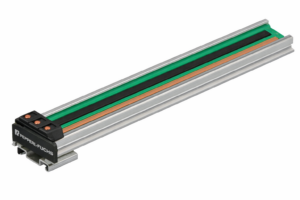
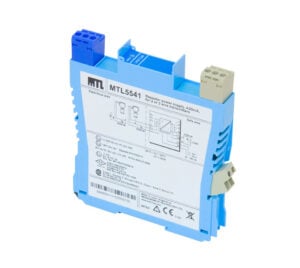
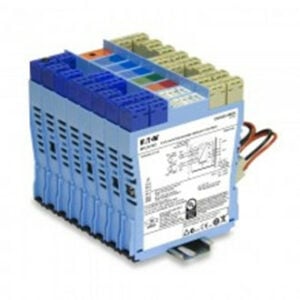
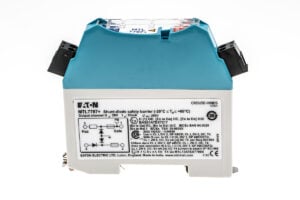
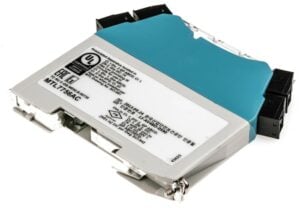
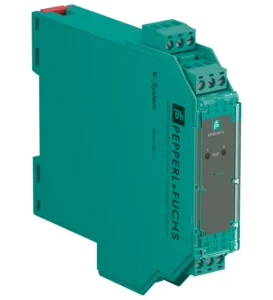
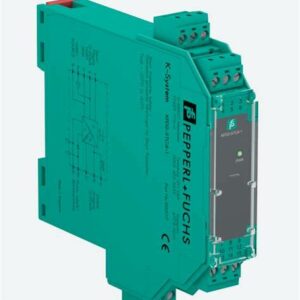
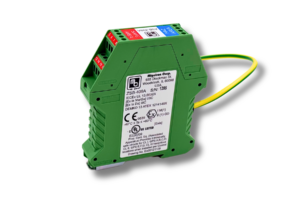
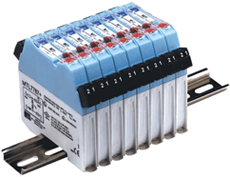
Intrinsically Safe (IS) Barriers are essential safety devices that protect personnel and equipment in hazardous environments. They function as energy-limiting interfaces installed between control systems in a safe area and field instrumentation located in a hazardous area. By regulating the voltage and current sent to field devices, IS barriers ensure the energy level remains below the threshold required to ignite a specific flammable atmosphere, effectively preventing fires and explosions. Our curated selection of IS barriers provides the highest level of protection for your critical safety instrumented systems.
Choosing the correct type of barrier is critical for system integrity and safety. We offer two primary types of intrinsically safe interfaces, each with distinct advantages for different applications.
Zener barriers are passive devices that use Zener diodes, resistors, and fuses to divert excess electrical energy to a dedicated, high-integrity earth ground. They are a cost-effective and reliable solution for many applications. Key characteristics include:
Galvanic isolators provide full electrical isolation between the hazardous and non-hazardous area circuits using components like transformers, opto-couplers, or relays. This isolation eliminates the need for a specialized earth ground, simplifying installation and preventing issues related to ground loops. Key advantages include:
Compliance with international safety standards is non-negotiable. The barriers in our catalog are certified by leading global bodies to ensure they meet stringent safety requirements for use in classified locations. When selecting a barrier, it is crucial to match its certification with the specific hazardous environment of your application.
Intrinsically safe barriers are a cornerstone of safety in industries where flammable gases, vapors, or combustible dusts are present. They are used to protect a wide array of field devices, ensuring that signals can be transmitted safely into and out of hazardous areas. Common applications include:
Protecting your operations starts with selecting the correct components. Browse our comprehensive collection of Zener barriers and galvanic isolators above. Consider your specific needs, including loop voltage, signal type, channel count, and the required hazardous area certifications. If you need assistance, our team of experts is ready to help you navigate the complexities of intrinsic safety. Contact us today for technical support or a custom quote to ensure your facility operates with the highest degree of safety and reliability.
The key difference lies in their method of energy limitation and grounding requirements. A Zener Barrier uses Zener diodes to divert excess energy to a dedicated intrinsic safety ground, which is a critical and mandatory component of the installation. A Galvanic Isolator, conversely, uses transformers or optocouplers to provide complete electrical isolation between the safe area and hazardous area circuits. This eliminates the need for a dedicated IS ground, often simplifying installation, preventing ground loops, and enhancing signal integrity.
No, they represent two different and distinct hazardous area protection methods. Intrinsically Safe (IS) barriers are energy-limiting devices installed in the safe area that ensure the power sent to field devices remains below the level required for ignition. The ‘Explosion Proof’ (XP or Ex d) method relies on robust enclosures that contain an internal explosion and prevent it from propagating to the external hazardous atmosphere. IS is a system approach that prevents the ignition, while XP is a containment approach.
Selecting the correct barrier is critical for system safety and requires matching the barrier to the field device and control system. Key parameters include: 1) Signal Type (e.g., 4-20mA analog input/output, digital input/output, RTD, thermocouple). 2) Number of Channels required. 3) Entity Parameters (Vmax, Imax, Pmax, Ci, Li) of the barrier, which must be verified as compatible with the field device and cabling parameters. 4) Required hazardous area certifications for your region and classification (e.g., ATEX, IECEx, UL/cUL).
Generally, no. Intrinsically Safe Barriers are designed for installation in the non-hazardous (safe) area. Therefore, they are typically housed in standard industrial control panels or junction boxes (e.g., NEMA 4/12) suitable for that safe environment. The ‘Explosion Proof’ protection method is not required for the barrier itself, as its function is to limit energy before it enters the hazardous location. The focus is on proper grounding (for Zener barriers) and segregation of IS and non-IS wiring.
The fundamental function of an IS Barrier is to serve as a protective interface between electrical equipment in a safe area and instrumentation in a hazardous area. It reliably limits the voltage and current available to the hazardous location device under both normal and fault conditions. By keeping the electrical energy below the minimum ignition energy of the surrounding hazardous atmosphere (gas, vapor, or dust), the barrier prevents the electrical circuit from becoming an ignition source.