Intrinsically Safe Products
IS Pressure Transmitters | Class I Div 1 Certified | ISS
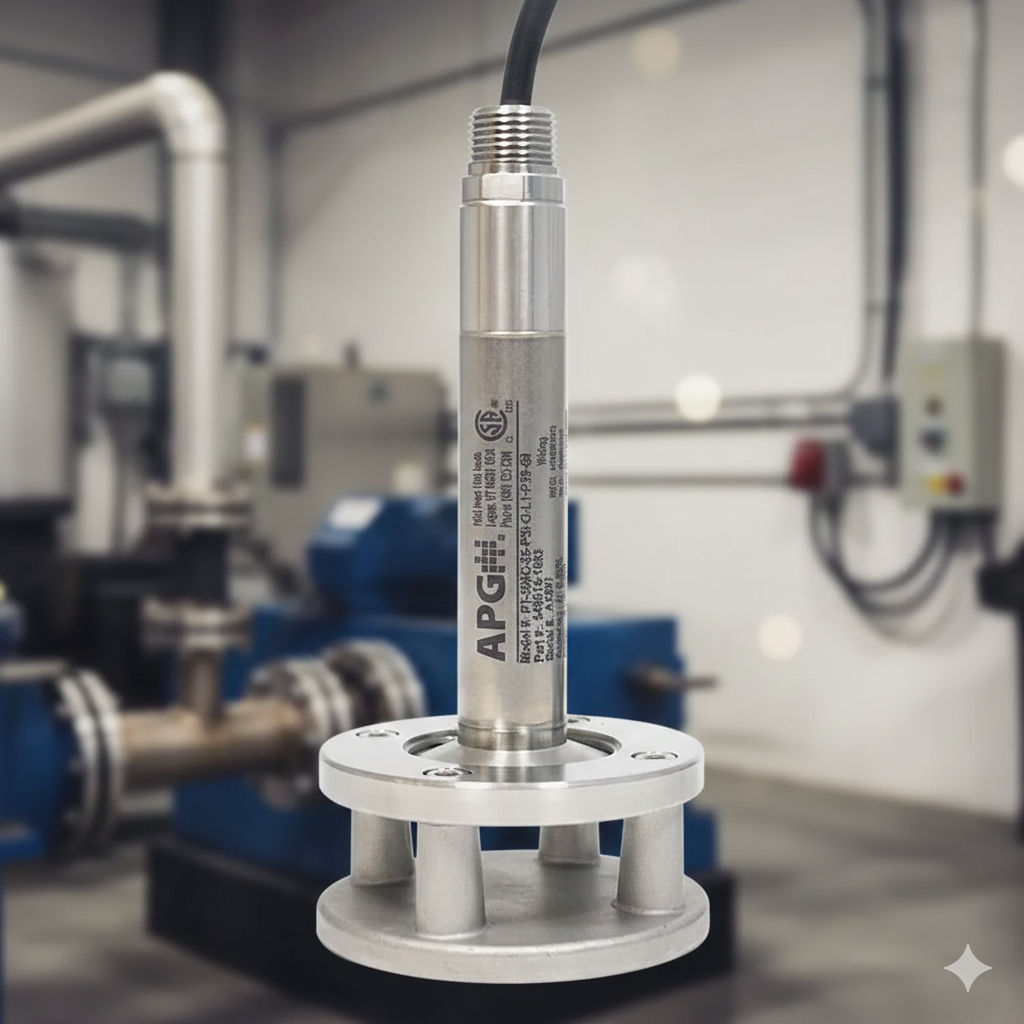
Pressure monitoring in hazardous industrial zones is a critical part of ensuring both operational efficiency and workplace safety. When flammable gases, vapors, or combustible dusts are present, traditional electrical instruments pose an ignition risk. To mitigate this risk, industries rely on the intrinsically safe pressure transmitter, a specialized device engineered to operate with extremely low energy levels that cannot ignite explosive atmospheres.
This article explores how intrinsically safe pressure transmitters work, their certifications, key features, accuracy benchmarks, and industrial applications. You’ll also learn how to select the right transmitter for your facility and find certified solutions available at Intrinsically Safe Store.
What Is an Intrinsically Safe Pressure Transmitter?
An intrinsically safe pressure transmitter is a pressure-sensing device designed to be safe for use in hazardous environments by limiting electrical and thermal energy below ignition thresholds. These instruments convert applied pressure into a usable electrical signal (such as 4–20 mA) while complying with ATEX, IECEx, UL, or CSA safety standards.
Intrinsically safe devices are particularly valuable in environments where flammable gases, vapors, or dusts could ignite due to sparking or overheating equipment.
How Intrinsically Safe Pressure Transmitters Work
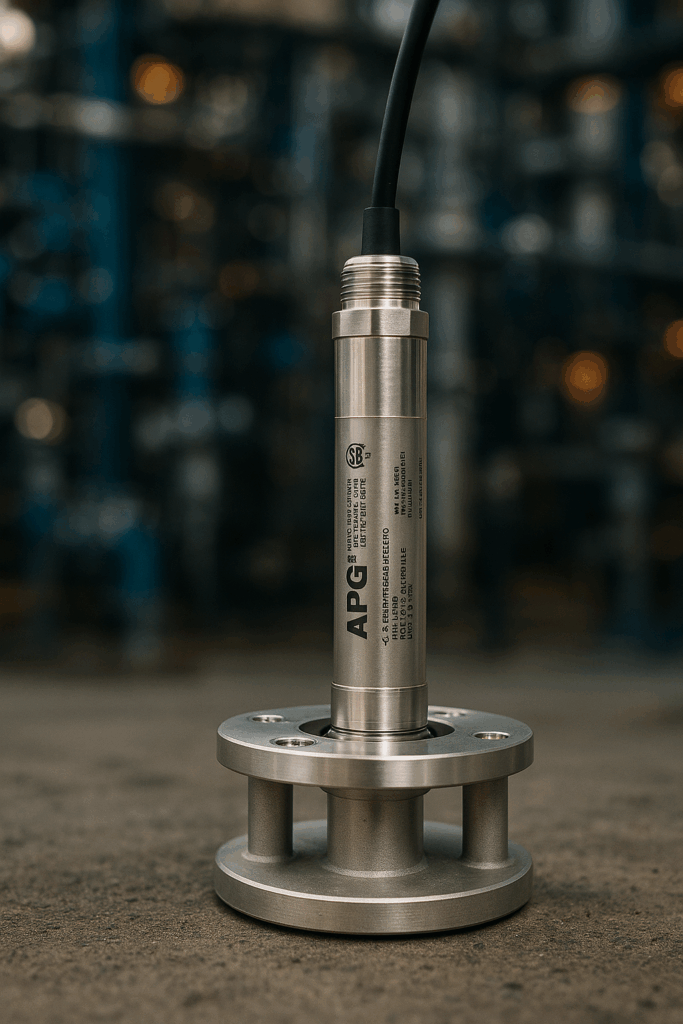
Intrinsically safe pressure transmitters work by using a sensor element—often piezoresistive, capacitive, or strain gauge-based—that detects changes in pressure and outputs a proportional low-energy signal. Their internal circuits are engineered to prevent any spark or heat from exceeding ignition thresholds.
Measurement Process
-
Pressure applied to the diaphragm causes deformation.
-
Sensor electronics interpret the deformation as electrical changes.
-
The transmitter outputs a low-power 4–20 mA or digital signal.
-
Intrinsically safe barriers or isolators maintain compliance by limiting voltage and current.
This design ensures that even under fault conditions, the transmitter cannot generate enough energy to ignite a hazardous atmosphere.
Ready to choose a pressure transmitter for your hazardous area?
Browse ATEX and IECEx-certified models and request a quote for your specific application.
Certifications Required for Intrinsically Safe Pressure Transmitters
Pressure transmitters used in hazardous locations must meet strict global certification requirements. The certification needed depends on the region and type of hazardous environment.
Major Certification Standards
| Certification | Region | Purpose | Hazard Zones |
|---|---|---|---|
| ATEX | Europe | Ensures equipment safety in explosive atmospheres | Zone 0/1/2, 20/21/22 |
| IECEx | Global | International standard for hazardous area equipment | Zones 0–2, 20–22 |
| UL (Class/Div) | USA | North American hazardous locations | Class I/II, Div 1/2 |
| CSA | Canada | Canadian hazardous location standard | Class I/II, Div 1/2 |
| FM | USA | Verification for industrial explosive atmospheres | Class I/II, Div 1/2 |
Each certification evaluates factors such as maximum surface temperature, electrical energy limits, enclosure strength, and failure safety.
Unsure which certification your pressure transmitter needs?
Learn when to choose ATEX vs IECEx and how certification impacts device selection and compliance.
Key Features of an Intrinsically Safe Pressure Transmitter
Intrinsically safe pressure transmitters include safety-focused and performance-enhancing features that make them suitable for precision industrial applications.
Core Features
-
Energy-limited circuitry designed to prevent ignition under normal and specified fault conditions per relevant standards like ATEX and IECEx.
-
Temperature compensation for stable performance despite thermal fluctuations.
-
Strong ingress protection (IP65–IP68) for dust, moisture, and washdown environments.
-
Corrosion-resistant materials like stainless steel, titanium, or Hastelloy for harsh chemicals.
-
Long-term stability ensuring consistent accuracy over many years of service.
-
4–20 mA output commonly used in hazardous area control loops.
-
Compliance with ATEX, IECEx, UL, or CSA certifications for global usability.
These features make IS transmitters ideal for operations requiring precise monitoring under strict safety regulations.
Accuracy of Intrinsically Safe Pressure Transmitters
Accuracy is a critical factor in selecting the right pressure transmitter. Modern intrinsically safe transmitters offer accuracy levels competitive with high-performance industrial sensors. Reliable data is crucial for process control, and our full range of measurement and calibration equipment is designed to meet these stringent demands.
Industry Benchmark Accuracy Values
| Performance Metric | Typical Value |
|---|---|
| Static accuracy | ±0.1–0.5% of full scale |
| Temperature coefficient | ±0.01–0.03% FS/°C |
| Long-term drift | ±0.1–0.2% per year |
| Response time | Less than 10 ms |
| Overpressure limit | Up to 2× rated pressure |
Accuracy is influenced by sensor type, environmental conditions, installation method, and long-term stability of the diaphragm and electronics.
Industrial Applications of Intrinsically Safe Pressure Transmitters
As industries adopt more automation, pressure transmitters become essential for monitoring and controlling production processes in hazardous zones.
Industries That Rely on IS Pressure Transmitters
-
Oil and gas
-
Petrochemical production
-
Chemical processing
-
Wastewater treatment
-
Mining and minerals
-
Pharmaceuticals
-
Food and beverage processing (dust hazards)
Common Use Applications
-
Pipeline pressure monitoring
-
Compressor discharge pressure
-
Tank level measurement using hydrostatic pressure
-
Pump protection
-
Steam system pressure control
-
Gas flow monitoring through differential pressure
In all these applications, intrinsic safety allows for reliable, continuous monitoring without risking ignition.
Product Comparison: Intrinsically Safe Pressure Monitoring Solutions
Below are pressure-sensing solutions and IS-compatible modules available through Intrinsically Safe Store. Some products serve as condition-monitoring devices rather than dedicated transmitters but can support hazardous-area pressure measurement capabilities.
Comparison Table
| Product | Certifications | Pressure Capability | Output | Key Features |
|---|---|---|---|---|
| Ecom AIRIS Vibration & Pressure Detection Sensor | ATEX: II 1 G Ex ia IIC T4 Ga; IECEx: Ex ia IIC T4 Ga | Multi-sensor pressure capability | Wireless | Condition monitoring, IIoT-ready |
| Ecom AIRIS Module for Hazardous Areas | ATEX: II 1 G Ex ia IIC T4 Ga; IECEx: Ex ia IIC T4 Ga | Integrates with pressure sensors | Wireless | Industrial sensor integration |
| Pepperl+Fuchs Intrinsically Safe Barriers | ATEX: II (1)G [Ex ia Ga] IIC; IECEx: [Ex ia Ga] IIC; UL: Class I, Div 1, Groups A-G | Required for pressure transmitter loops | – | Ensures energy-limited circuits |
These components enable safe pressure monitoring workflows in complex hazardous environments.
Material and Certification Considerations
In upstream oil and gas, transmitters are often specified with ATEX/IECEx certification and corrosion-resistant materials like stainless steel. For chemical processing, materials like Hastelloy may be required to withstand aggressive media.
What Should You Look for When Selecting an Intrinsically Safe Pressure Transmitter?
Choosing the right transmitter requires evaluating pressure requirements, hazardous zone classification, environmental conditions, and wiring infrastructure.
Hazardous Area Classification
Check the zone or Class/Div compatibility:
-
ATEX Zone 0, 1, 2
-
IECEx Ex ia or Ex ib
Pressure Type and Range
Determine the correct measurement type:
-
Gauge
-
Absolute
-
Differential
It is a common engineering best practice to select a pressure range that provides 20–50% overhead capacity above the maximum expected pressure to accommodate process fluctuations.
Wetted Materials
Match the diaphragm and housing to your media:
-
Stainless steel: general-purpose
-
Hastelloy: aggressive chemicals
-
Titanium: seawater or chlorides
Output Type
Choose based on integration needs:
-
4–20 mA
-
HART digital
-
Wireless transmitters for remote sites
Environmental Rating
Look for features such as:
-
IP67 or IP68
-
High vibration resistance
-
Wide operating temperature range
Installation Requirements
Confirm whether you need:
-
Intrinsically safe barriers
-
Galvanic isolators
-
ATEX-certified cable glands
How Intrinsically Safe Pressure Transmitters Are Installed
Installation involves connecting the transmitter to a certified barrier or isolator, using approved wiring methods designed for hazardous zones.
Installation Steps
-
Verify the device matches the hazardous zone classification.
-
Install an intrinsically safe barrier between the transmitter and control panel.
-
Use approved IS-rated wiring, typically shielded twisted pair.
-
Ensure proper grounding to maintain intrinsic safety.
-
Inspect labeling and documentation for certification accuracy.
Correct installation ensures compliance and maintains the integrity of the intrinsically safe system.
Need barriers or isolators for your pressure transmitter loops?
Pair your IS pressure transmitters with certified barriers to keep voltage and current within safe limits.
Understanding Sensor Technologies in IS Pressure Transmitters
The core of any pressure transmitter is its sensor. The technology used determines its accuracy, stability, and suitability for different applications. Intrinsically safe models utilize several common types, each with unique operating principles.
Piezoresistive Sensors
Piezoresistive sensors are one of the most common types. They use a silicon diaphragm with embedded piezoresistors. When pressure flexes the diaphragm, the resistance of the embedded elements changes. This change is precisely measured and converted into a proportional electrical signal. Their benefits include high sensitivity, excellent linearity, and a compact design, making them suitable for a wide range of general-purpose and high-precision applications.
Capacitive Sensors
Capacitive sensors measure pressure by detecting changes in capacitance. The sensor consists of two parallel plates, one of which is a flexible diaphragm that moves in response to pressure. As the distance between the plates changes, the capacitance of the circuit changes. This change is then converted into a pressure reading. Capacitive sensors are known for their high accuracy, excellent long-term stability, and ability to withstand high overpressure conditions, making them ideal for critical process control.
Wireless Intrinsically Safe Pressure Transmitters: Advantages and Applications
As industries embrace IoT and remote monitoring, wireless technology is becoming more prevalent in hazardous areas. Wireless IS pressure transmitters eliminate the need for extensive and costly signal wiring, which is a major advantage in complex or remote locations. These devices typically use low-power communication protocols like WirelessHART or ISA100 to transmit data securely to a central control system.
Key benefits include reduced installation costs, enhanced flexibility for monitoring mobile or hard-to-reach assets, and simplified scalability. They are particularly useful in large-scale facilities like refineries, offshore platforms, and tank farms, where running cables is impractical. The use of certified intrinsically safe sensors with wireless capabilities is a key enabler of predictive maintenance and operational efficiency in modern hazardous environments.
Maintenance Requirements for Intrinsically Safe Pressure Transmitters
Maintenance is generally minimal, as intrinsically safe devices are built with robust circuits and durable materials.
Maintenance Activities
-
Scheduled calibration (annual or semi-annual)
-
Physical inspection for corrosion or buildup
-
Verification of certification labeling
-
Checking wiring, barriers, and grounding integrity
Proper maintenance ensures long-term accuracy and safety compliance.
Do Intrinsically Safe Pressure Transmitters Cost More?
Yes, intrinsically safe models typically have a higher initial cost due to specialized design and certification testing. However, they often reduce the total cost of installation.
Cost Considerations
-
Intrinsic safety systems do not require heavy explosion-proof housings.
-
Wiring and installation costs are significantly lower than explosion-proof installations.
-
Long-term maintenance is simpler and cheaper.
Over the lifecycle of the equipment, IS transmitters often offer a better return on investment. This is a key differentiator when comparing intrinsically safe vs explosion-proof protection methods.
Need help choosing the right intrinsically safe pressure monitoring solution?
Talk to our hazardous-area specialists, compare certified options, and get a fast quote for your facility.
Explore intrinsically safe pressure monitoring equipment:
Measurement & Calibration | Intrinsically Safe Sensors
Want to go deeper? See our guides on intrinsically safe equipment best practices and intrinsically safe vs explosion-proof.
Frequently Asked Questions (FAQ)
What’s the difference between intrinsically safe and explosion-proof transmitters?
Intrinsically safe transmitters prevent ignition by limiting electrical energy, whereas explosion-proof transmitters contain internal explosions within reinforced housings.
Can intrinsically safe pressure transmitters be used in wet environments?
Yes. Many models feature IP65–IP68 protection and corrosion-resistant materials suitable for washdown and submerged applications.
Do I need a barrier for an intrinsically safe transmitter?
Yes. IS barriers or galvanic isolators are mandatory for maintaining intrinsic safety in hazardous-area circuits.
Conclusion
Choosing the right intrinsically safe pressure transmitter is essential for safe, accurate pressure monitoring in hazardous industrial zones. By understanding certification requirements, performance specifications, environmental factors, and installation needs, you can select the optimal device for your facility. Whether monitoring pipelines, tanks, chemical reactors, or wastewater systems, intrinsically safe transmitters offer reliable measurement without risking ignition.
For ATEX, IECEx, and UL-certified components, explore the full range of hazardous-area solutions at Intrinsically Safe Store, including sensors, barriers, and integration modules.