
























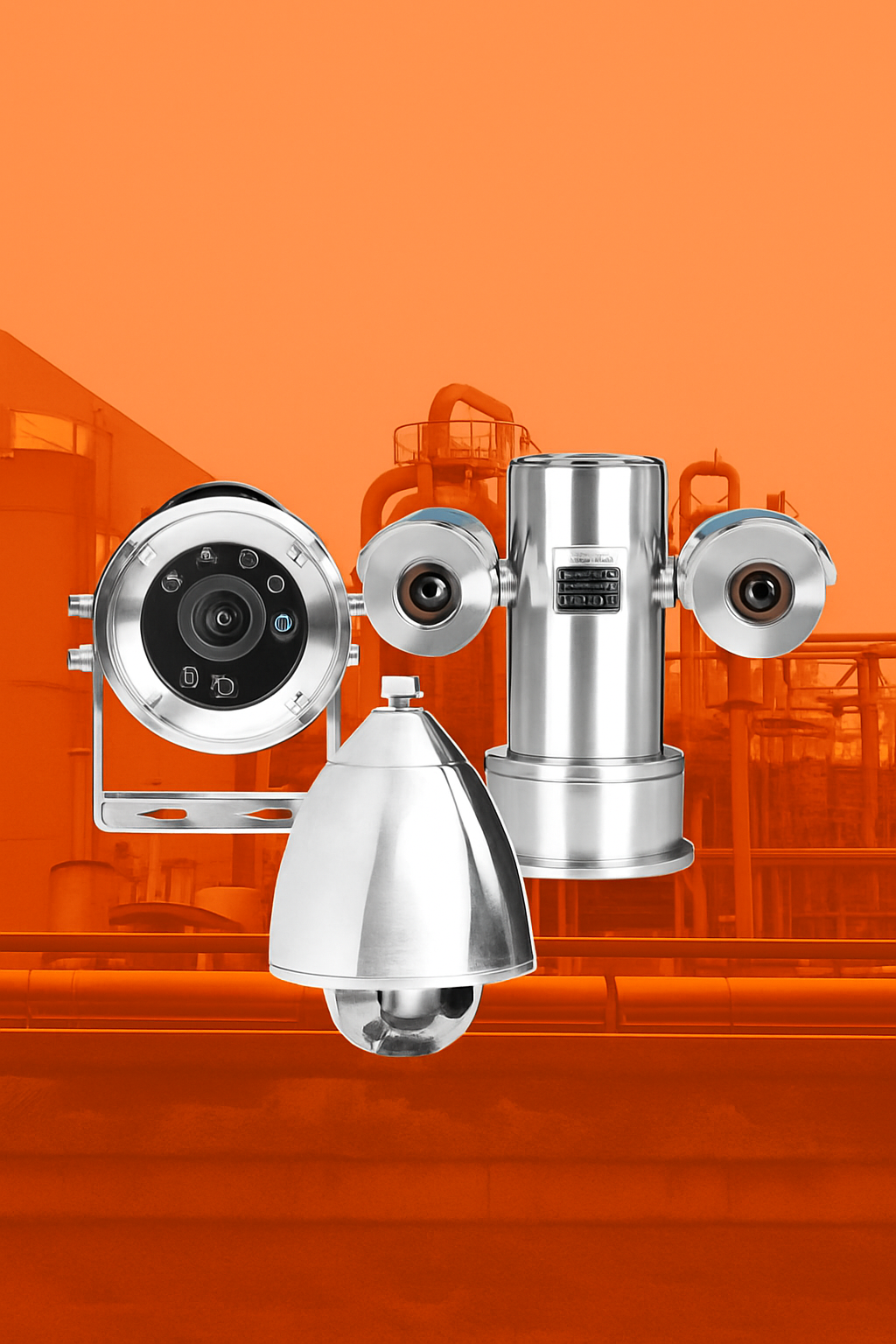
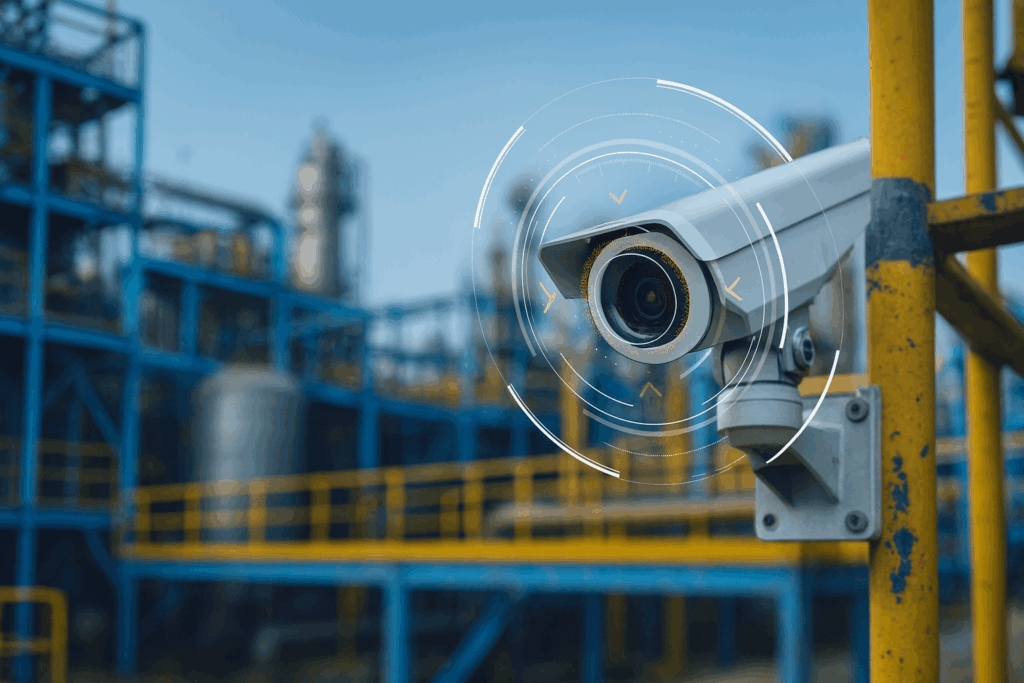
When you’re working around flammable gases, vapors, or combustible dusts, a standard camera won’t cut it. You need an explosion proof camera (or an intrinsically safe device) that’s engineered to prevent ignition while still delivering the image quality and reliability your job demands. Whether you’re documenting maintenance in a refinery, inspecting pumps in a chemical plant, or monitoring process areas outdoors, choosing the right certified camera protects people, assets, and uptime.
This guide is your one-stop resource to shop real, in-stock cameras, understand pricing, compare certifications (ATEX / IECEx / Class I, Division 1), and move quickly from research to a Get Quote (RFQ). All products featured are available from Intrinsically Safe Store.
What does “explosion-proof” or “intrinsically safe” mean?
Explosion-proof vs. Intrinsically Safe (IS)
Explosion-proof (Ex d / Ex e housings): The enclosure is built to contain any internal ignition so it cannot ignite the surrounding atmosphere. These are common for fixed CCTV cameras and housings/enclosures in Zone/Division classified areas.
Intrinsically Safe (Ex i electronics): The device’s electrical energy is limited so it cannot create a spark or temperature sufficient to ignite an explosive atmosphere—ideal for handheld or portable cameras used for inspections.
Both approaches are valid; the right choice depends on whether you need permanent monitoring (fixed explosion-proof cameras/enclosures) or mobile documentation (handheld intrinsically safe camera).

How certification affects selection—and cost
The big three you’ll see on camera spec sheets
| Certification / Marking | Region / Code Family | What it means for your camera |
|---|---|---|
| ATEX (e.g., II 2G, Ex d / Ex i) | EU (Directive 2014/34/EU) | Certified safe for explosive atmospheres (gas/vapor and/or dust). Zone ratings (0/1/2 for gas, 20/21/22 for dust) indicate how frequently an explosive atmosphere is present. |
| IECEx | International | Harmonized certification accepted by many global jurisdictions—often paired with ATEX for multinational deployments. |
| NEC/CEC (Class I Division 1/2 or Zones) | USA/Canada | North American hazardous-location scheme. Class I covers flammable gases/vapors; Division 1 ≈ continuous/likely presence, Division 2 ≈ abnormal presence. |
Why it matters: Certification drives the engineering, testing, and bill of materials—which in turn drives price. A camera rated for Zone 1 / Class I, Division 1 requires heavier housings, sealed interfaces, and thorough certification procedures, making it cost more than a non-rated industrial camera.
Need help choosing the right explosion-proof camera?
Our Hazardous Area Experts can guide you on ATEX, IECEx, and Class I Division 1 certifications — and help you find the best model for your facility in minutes.
💬 Chat with an ExpertQuick replies • Stock & pricing • Certification support
What drives explosion-proof camera pricing?
The key cost levers (and how to evaluate them)
Certification scope: Zone 0/Zone 1/C1D1 builds cost more than Zone 2/C1D2. Dual certifications (ATEX + IECEx) can add cost but simplify global compliance.
Enclosure & materials: Corrosion-resistant stainless steel, thick flanges, explosion-proof glands, and tempered glass windows are premium features—especially for marine or offshore conditions.
Optics & sensor: Resolution (MP), low-light performance, and zoom/varifocal lenses add cost. Thermal or dual-sensor solutions land higher on the price curve.
Environmental features: Integrated IR illumination, wipers, heaters/blowers, and sunshades increase both performance and price—critical for outdoor visibility.
Connectivity & power: PoE, fiber, or specialized wiring through certified glands, plus brackets and mounts, contribute to total installed cost.
Documentation & support: Certificates of conformity, datasheets, and compliance packs are part of the value—choose partners who provide them quickly.
Shop products available now
Below are in-stock options you can purchase or quote today from Intrinsically Safe Store.
Fixed cameras & enclosures (Explosion-proof)
Kaixuan KX-EX600PW Explosion Proof CCTV Camera Enclosure
Type: Fixed enclosure (you can integrate a compatible camera module)
Why choose it: Budget-friendly base for protected installs in classified areas
Typical use: Refineries, compressor stations, indoor/outdoor process areas
Price: $200.00
Shop / RFQ: Cameras Category ›
Kaixuan KX-EX701PWC2 Explosion Proof CCTV Camera
Type: Fixed explosion-proof camera
Why choose it: Compact footprint for tight installs; dependable clarity for general surveillance
Typical use: Chemical plants, terminals, indoor equipment bays
Price: $417.31
Shop / RFQ: Cameras Category ›
Kaixuan KX-EX701PWC5 Explosion Proof CCTV Camera
Type: Fixed explosion-proof camera
Why choose it: Enhanced optics and ruggedized build for tougher visuals
Typical use: Process units, hazardous corridors, loading racks
Price: $539.03
Shop / RFQ: Cameras Category ›
Kaixuan KX-EX707PWY Explosion-Proof Enclosure with Wiper & IR
Type: Enclosure (with integrated wiper & IR)
Why choose it: Reliable visibility in rain, mist, or dusty outdoor conditions—ideal for 24/7 monitoring
Typical use: Outdoor pipe racks, jetties, offshore platforms
Price: $750.15
Shop / RFQ: Cameras Category ›
Handheld (Intrinsically safe)
Bartec Pixavi Cam
Type: Handheld intrinsically safe camera
Why choose it: Portable 12 MP imaging; capture photos & videos inside hazardous areas without a separate enclosure
Typical use: Field inspections, maintenance documentation, incident reporting
Price: $2,545.84
Shop / RFQ: Cameras Category ›
Note on pricing: Some items include an import tariffs charged notice at checkout. Final cost will be confirmed in your quote.
Quick compare: choose faster with side-by-side specs
| Model | Type | Certification Approach | Standout Features | Ideal For |
|---|---|---|---|---|
| Kaixuan KX-EX600PW | Enclosure | Explosion-proof housing | Affordable base, stainless build | Protecting a compatible internal camera in Ex areas |
| Kaixuan KX-EX701PWC2 | Fixed CCTV | Explosion-proof camera | Compact, dependable clarity | General hazardous-area surveillance |
| Kaixuan KX-EX701PWC5 | Fixed CCTV | Explosion-proof camera | Enhanced optics, durable body | Higher-detail visuals in process units |
| Kaixuan KX-EX707PWY | Enclosure | Explosion-proof housing | IR illumination + wiper | Outdoor visibility in rain/dust/night |
| Bartec Pixavi Cam | Handheld | Intrinsically Safe (Ex i) | Portable photo + video, 12 MP | Mobile inspections & documentation |
Certification cheat sheet (ATEX / IECEx / C1D1)
How the schemes map to real-world decisions
If you’re in the EU or reporting to EU auditors, prioritize ATEX; add IECEx if you operate globally.
If you’re in North America, check for NEC/CEC Class I, Division 1/2 or the equivalent Zone markings.
If you run multinational assets, a device with both ATEX + IECEx simplifies deployment and auditing.
Always verify:
The Ex mark on the label
Equipment group (e.g., II)
Category (e.g., 2G)
Temperature class (e.g., T6)
Certificate number & notified body
Use cases & selection tips
Refinery & petrochemical units
Primary needs: Continuous monitoring in Zone 1/2 areas; outdoor visibility through weather and process byproducts.
Recommended: KX-EX707PWY enclosure (wiper + IR) for exterior runs and racks; KX-EX701PWC5 for clearer visuals in complex process areas.
Chemical processing & terminals
Primary needs: Compact form factor where space is limited; dependable, certifiable imagery for compliance.
Recommended: KX-EX701PWC2 as a cost-effective fixed camera; KX-EX600PW enclosure when integrating a specific camera module.
Offshore & marine environments
Primary needs: Corrosion resistance and visibility under harsh weather.
Recommended: KX-EX707PWY for outdoor, all-weather visibility; pair with stainless mounts.
Maintenance & incident documentation
Primary needs: Mobile capture of stills/videos inside hazardous areas; glove-friendly UI.
Recommended: Bartec Pixavi Cam (intrinsically safe handheld).
Implementation checklist
Define the area classification (Zone or Class/Division) and confirm gas group & temperature class.
Pick the camera type (fixed CCTV vs. handheld IS) based on the task and frequency of use.
Decide on visibility features: IR, wiper, heater, sunshade, lens type.
Plan power & connectivity: PoE, fiber, or analog; ensure proper glands/adapters.
Confirm mounts & accessories: wall/pole brackets, cable seals, and junction boxes.
Request a Quote with your configuration for pricing, lead time, and documentation.
Get a Quote (RFQ): the fastest path to the right kit
Explosion-proof and intrinsically safe cameras are configuration-driven. A quick RFQ ensures your setup is safe, compatible, and budget-aligned.
How to request:
Go to the Cameras catalog:
https://intrinsicallysafestore.com/product-category/cameras/Choose the products that fit your scope (fixed camera vs. enclosure vs. handheld).
Click Get Quote / Request a Quote and include: classification (Zone/Div), indoor/outdoor, mounting, cable runs, and any IR/wiper needs.
Our team replies with confirmed pricing, stock, lead time, and certificates.
FAQs: Explosion-proof / intrinsically safe cameras
Do I need an explosion-proof camera or an intrinsically safe one?
If you’re installing fixed surveillance in a classified area, an explosion-proof enclosure or camera is common. If you need portable, on-person imaging for inspections, an intrinsically safe handheld (like Bartec Pixavi Cam) is typically the right choice.
Can I put a standard camera inside an explosion-proof enclosure?
Often yes—if the enclosure is certified and sized properly, the internal camera’s heat profile stays within limits, and entries are sealed with certified glands. Always confirm with the enclosure’s documentation and your AHJ.
Are these suitable for outdoor use?
Yes. Look for IP66/IP67 ratings, optional heaters/blowers, and features like IR and wipers (e.g., KX-EX707PWY) for low-visibility conditions.
What’s a typical lead time?
Many systems ship in 2–6 weeks, depending on configuration and current demand. Use Get Quote for a precise delivery window.
Do these integrate with my existing CCTV/NVR?
Fixed Ex cameras and enclosures commonly support PoE/IP workflows or can be adapted. Provide your VMS/NVR details in the RFQ so we can confirm compatibility.
How do I verify the certifications?
Check the device’s Ex label, certificate number, temperature class, and notified body. Attach the certificate of conformity to your work package or audit file.
What about import tariffs or duties?
Some models show “Import tariffs charged.” Your quote will include the landed price so there are no surprises.
Conclusion: get the right explosion proof camera—safely and quickly
Deploying the correct explosion proof camera (or intrinsically safe handheld) is about safety first—and operational clarity second. By aligning the certification, form factor, and visibility features with your environment, you’ll reduce risk, document work clearly, and stay audit-ready.
Start with the models above—Kaixuan for fixed CCTV and enclosures, Bartec Pixavi Cam for portable documentation—then use the RFQ process to lock in pricing, stock, and lead times.
