

























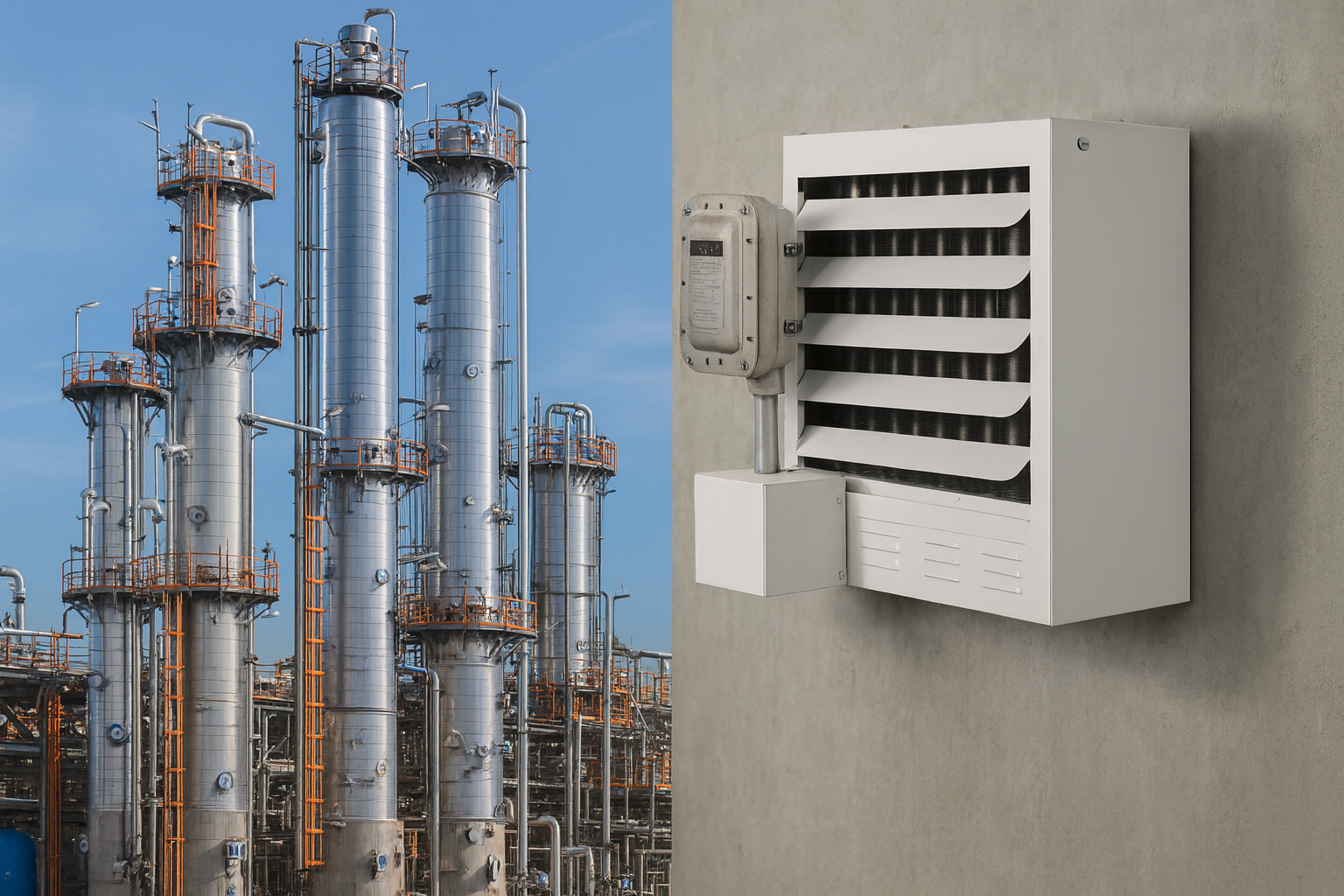
When it comes to temperature control in hazardous environments, explosion proof heaters (Class I, Division 2) are essential for maintaining safety and reliability. These heaters are specifically engineered to operate in areas where flammable gases, vapors, or liquids are present under abnormal conditions. Understanding Class I Div 2 heater pricing, wattage options, voltage configurations, and thermostatic control is crucial when planning your facility’s heating requirements.
In this guide, we’ll break down everything you need to know about explosion proof heater Class I Div 2 price, including the factors that influence cost, how to select the right model, and how to request a custom quote from Intrinsically Safe Store.
Need Expert Advice on Explosion Proof Heaters?
Chat with our safety experts or call us to find the right Class I Div 2 heater for your facility.
💬 Chat with an Expert 📞 Call (832) 699-6726What Is a Class I Div 2 Explosion Proof Heater?
A Class I Division 2 (C1D2) heater is an industrial-grade heating device certified for use in hazardous (classified) locations, as defined by the National Electrical Code (NEC).
These heaters are used in environments where flammable gases or vapors may exist under abnormal (not continuous) operating conditions—such as chemical plants, oil refineries, wastewater treatment facilities, or offshore platforms.

Key Class I Div 2 Heater Characteristics:
Explosion proof housing prevents ignition of external gases.
Temperature-limiting devices to avoid overheating.
Corrosion-resistant construction (often aluminum or stainless steel).
Compliant with NEC, CSA, or ATEX/IECEx standards depending on region.
These design elements ensure safety while maintaining thermal performance in challenging industrial settings.
What Affects Explosion Proof Heater Class I Div 2 Price?
Prices for Class I Division 2 heaters vary widely depending on application, material, and electrical characteristics. While many manufacturers offer standard configurations, custom-engineered heaters are often required for specialized environments.
| Factor | Description | Typical Impact on Price |
|---|---|---|
| Wattage Output | Higher wattage = more power & coverage | Moderate increase |
| Voltage Rating | Custom voltages (e.g., 480V 3-phase) may increase cost | Slight increase |
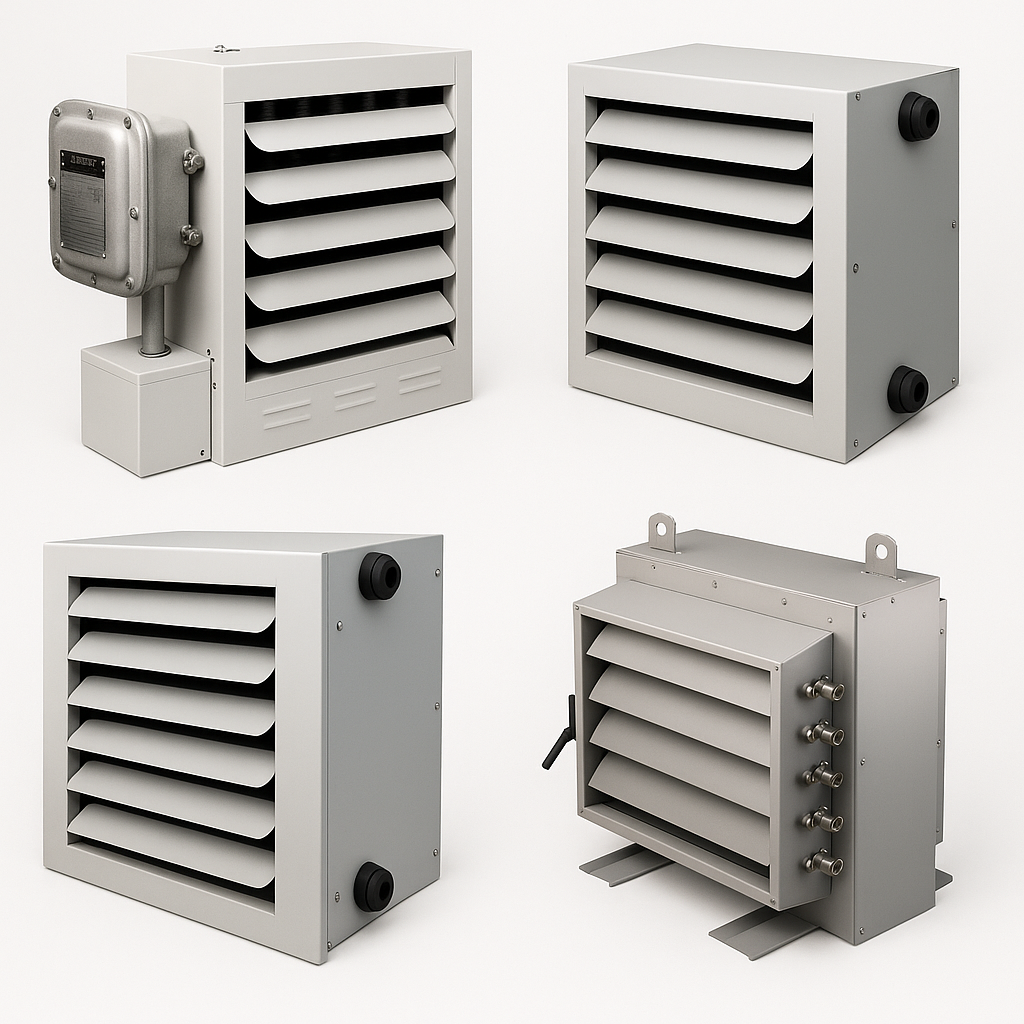
| Mounting Type | Wall, duct, or portable | Varies |
| Thermostat Type | Integrated vs. remote control | Moderate increase |
| Certifications | UL, CSA, ATEX, or dual-rated units | Significant increase |
| Material Build | Stainless steel vs. aluminum | Moderate increase |
| Ambient Conditions | Corrosive or marine-grade requirements | Variable |
Typical Price Range (2025 Estimate)
Wall Heaters: $1,000 – $2,800
Duct Heaters: $2,000 – $5,500
Portable Heaters: $1,500 – $4,000
Custom Engineered Systems: $5,000 – $10,000
Tip: Get a personalized quote with wattage, voltage, and certification details tailored to your hazardous location needs.
Request a Custom Quote via ChatWhat Wattage and Voltage Options Are Available?
The wattage and voltage configuration of an explosion proof heater determines its heat output, coverage area, and electrical compatibility with your site’s infrastructure.
Typical Wattage Ranges
| Heater Type | Wattage Options | Coverage Area |
|---|---|---|
| Wall Mount | 500W – 10,000W | Small to mid-sized enclosures |
| Duct Heater | 2kW – 25kW | Air handling & ventilation systems |
| Portable Unit | 1.5kW – 5kW | Temporary or localized heating |
Voltage Options
120V / 240V (Single-phase, small enclosures)
480V / 600V (Three-phase, industrial plants)
Custom configurations for international or marine standards
When requesting a quote, always specify your desired wattage, voltage, and ambient operating temperature range. This helps engineers design a heater that fits your application’s safety and performance needs precisely.
Wall Mount vs. Duct Heaters: Which Is Better?
Choosing between a wall-mounted and a duct-mounted explosion proof heater depends on your facility’s airflow requirements and installation constraints.
| Feature | Wall Heater (C1D2) | Duct Heater (C1D2) |
|---|---|---|
| Installation | Mounted directly to wall or column | Installed in HVAC or process duct |
| Best For | Enclosed rooms, control panels, small process areas | Air handling systems, large rooms, process ventilation |
| Airflow Dependency | Optional fan or natural convection | Requires airflow |
| Maintenance | Easy access | More complex |
| Price Range | $1,000–$2,800 | $2,000–$5,500 |
| Temperature Control | Integrated thermostat optional | Often uses remote or external sensor |
Best Choice:
Wall Heaters – Ideal for localized space heating.
Duct Heaters – Best for process air heating or integrated HVAC control.
Explore Certified Heater Solutions
Do Explosion Proof Heaters Include Thermostats?
Yes — most modern Class I Div 2 heaters can include built-in or remote thermostats for precise temperature regulation.
The choice depends on your application and environment.
Thermostat Options:
Integrated Thermostat:
Compact and convenient.
Ideal for wall-mounted units.
Typically ranges from 40°F–100°F control.
Remote Thermostat or Control Panel:
Used for hazardous or hard-to-reach locations.
Allows fine-tuning from outside the classified area.
Often paired with digital displays or programmable logic controllers (PLC).
For critical process applications, consider using a remote sensing thermostat with feedback loops to prevent temperature overshoot or heater burnout.
Where Are Class I Div 2 Heaters Used?
Explosion proof heaters serve in a wide range of industrial and hazardous-area applications, including:
Oil & Gas: Compressor stations, pump rooms, drilling operations
Chemical Processing: Solvent storage areas, blending rooms
Water Treatment Plants: Gas chlorination facilities
Battery Charging Areas: Hydrogen generation zones
Marine & Offshore Platforms: Engine rooms and bulk storage compartments
Each application demands a heater built to withstand vibration, corrosion, and ignition risks—which is why certification and proper installation are critical.
FAQs About Explosion Proof Heater Class I Div 2 Price
1. Why are Class I Div 2 heaters more expensive than standard heaters?
These heaters undergo stringent testing and certification to ensure safety in explosive environments. The added cost reflects specialized enclosures, flameproof components, and certification fees.
2. Can I use a regular industrial heater in a Class I Div 2 area?
No. Using a non-certified heater in a hazardous location can lead to catastrophic ignition risks and violate OSHA/NEC compliance. Only certified Class I Div 2 units are permitted.
3. How can I reduce installation costs?
Plan early. Choose standard voltage and mounting options whenever possible. Custom voltage or exotic materials drive up costs.
4. Do all Class I Div 2 heaters come with built-in thermostats?
Not necessarily. Some models offer optional thermostats or remote control units. Always verify when requesting a quote.
5. What certifications should I look for when buying an explosion proof heater?
Look for UL 1203, CSA C22.2 No. 30, or ATEX/IECEx labels. These indicate compliance with recognized explosion protection standards.
Industry Benchmarks: Explosion Proof Heater Specifications
| Parameter | Typical Range | Standard/Compliance |
|---|---|---|
| Temperature Class | T3–T6 | NEC/CSA |
| Ambient Range | -40°C to +60°C | Factory tested |
| Watt Density | 5–30 W/in² | Application dependent |
| Ingress Protection | IP65–IP67 | Moisture and dust sealed |
| Housing Material | Aluminum or stainless steel | Corrosion resistant |
| Certification | UL, CSA, ATEX, IECEx | Hazardous area approved |
These metrics are common benchmarks when comparing explosion proof heating systems across manufacturers.
How to Request a Quote for a Class I Div 2 Heater
Because no two hazardous locations are the same, obtaining a tailored quote is the best way to determine your exact explosion proof heater Class I Div 2 price.
When you request a quote at Intrinsically Safe Store, include the following details:
Application type: Wall, duct, or portable
Heater size and wattage (e.g., 5kW, 240V)
Area classification: Class I Division 2, Group B/C/D
Ambient temperature range
Preferred mounting type
Thermostat requirements
Certifications required
Once submitted, our engineering team will analyze your specifications and deliver a detailed quote including estimated price range, lead time, and configuration recommendations.
Ready to Talk to a Safety Expert?
Our team can help you find the ideal explosion proof heater for your facility and ensure NEC/ATEX compliance.
Why Choose Intrinsically Safe Store?
At Intrinsically Safe Store, we specialize in hazardous location equipment that meets global certification standards—including ATEX, IECEx, UL, and CSA.
Our experts work directly with manufacturers and end users to ensure every product recommendation is both compliantand cost-effective.
Even if explosion proof heaters aren’t currently listed on our site, we can:
Source certified solutions through our extended vendor network.
Provide technical documentation for NEC compliance.
Offer engineering support for hazardous area design.
Request a Quote Now and get expert help selecting the right Class I Div 2 heater for your project.
Conclusion
Selecting the right explosion proof heater Class I Div 2 involves balancing price, wattage, voltage, and installation requirements. The total cost depends on your application’s environmental conditions, certification needs, and configuration preferences.
By working with a trusted partner like Intrinsically Safe Store, you gain access to certified products, expert consultation, and reliable support—ensuring your hazardous location heating system is both safe and compliant.
Request your custom quote today and take the first step toward safer, more efficient temperature control.
Key Takeaways
Explosion proof heaters are essential for hazardous Class I Div 2 environments.
Pricing varies by wattage, voltage, mounting, and certification.
Thermostats can be integrated or remote, depending on application.
Always request a quote with detailed specs for accurate pricing.
Intrinsically Safe Store provides expert consultation and sourcing support
