


























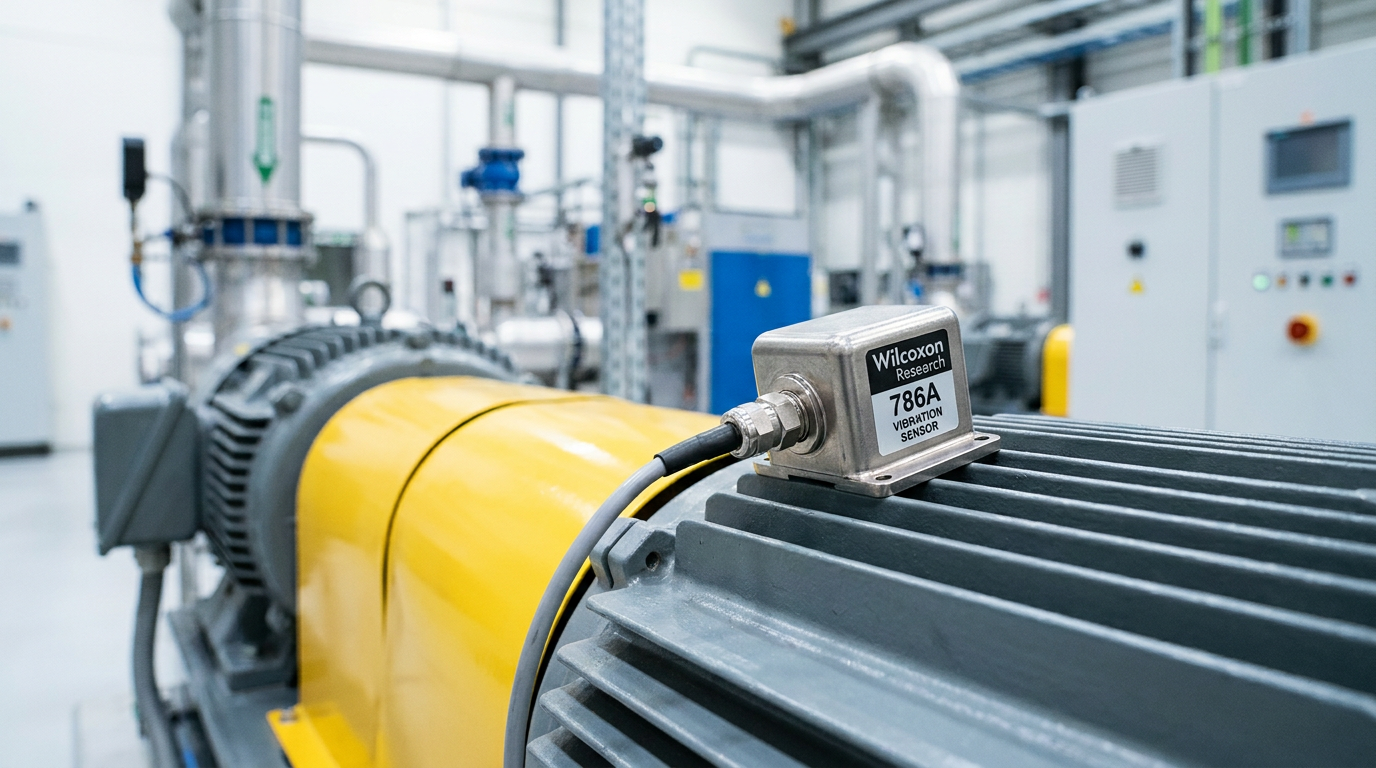
In any industrial facility, the rhythmic hum of machinery is the sound of productivity. But when a machine begins to vibrate erratically, that hum can quickly turn into a warning siren, signaling an impending failure that threatens downtime and costly repairs. Now, imagine that same scenario, but the air surrounding the machine is filled with a volatile mixture of flammable gas, vapor, or combustible dust. Suddenly, the stakes are infinitely higher. A failing bearing isn’t just a maintenance problem; it’s a potential ignition source. A simple electrical fault in a monitoring device isn’t a minor issue; it’s a potential catalyst for a catastrophic explosion. This is the critical reality of operating in hazardous environments. The very tools we rely on to predict failure must be fundamentally incapable of causing one. This guide is born from that challenge. It is a deep dive into the world of hazardous zone vibration monitoring, designed to move beyond simple product specifications and into the core principles of safety, technology, and strategy. We will navigate the complex landscape of sensor options, demystify the philosophies of Intrinsic Safety and Explosion-Proofing, and explore how the rise of wireless technology is revolutionizing safety and reliability in the world’s most dangerous industrial settings.
Confused by Protection Methods?
Before selecting your hardware, make sure you choose the right compliance framework for your facility. Read our technical breakdown on Intrinsic Safety vs. Explosion-Proof protection methodologies.
Compare Safety PhilosophiesChoosing the Right Sentry: Vibration Monitoring Sensor Options for Hazardous Zones
Embarking on the journey of vibration monitoring within a hazardous environment is fundamentally different from deploying sensors in a standard industrial setting. In a typical factory, the primary concerns are accuracy, reliability, and cost. However, when you introduce the volatile potential of flammable gases, combustible dusts, or ignitable fibers, a new, overriding priority emerges: safety. The very act of monitoring must not, under any circumstances, become the source of a catastrophic event. This is the central challenge of vibration monitoring in hazardous zones. It’s not just about listening to the health of a machine; it’s about ensuring the listening device itself doesn’t trigger a disaster. Every component, from the sensor on the machine to the cable running from it and the system analysing the data, must be scrutinised through the lens of ignition prevention. The choice of sensor, therefore, transcends a simple technical specification and becomes a critical safety decision, governed by stringent regulations and a deep understanding of the physics of fire and explosions.
- The core principle that dictates sensor selection in these environments is the prevention of ignition.
- Intrinsic Safety, often abbreviated as I.S., is a protection technique based on the elegant principle of energy limitation.
- The alternative and more traditional approach is Explosion-Proofing, also known as Flameproofing (with the common certification marking ‘Ex d’).
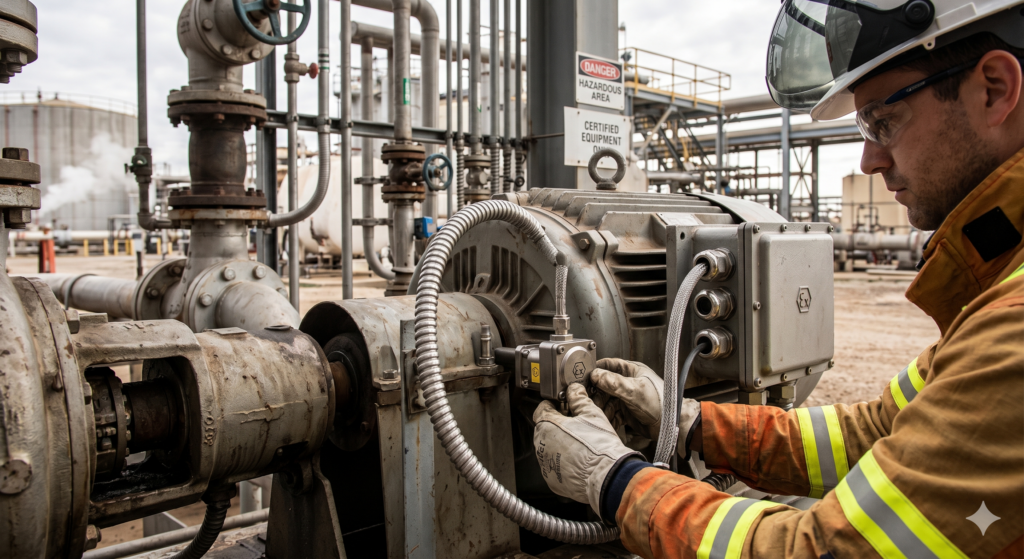
Unveiling the Critical Industries: Who Truly Needs Hazardous Zone Vibration Monitoring?
When we peel back the layers of modern industry, it becomes clear that the question is not so much *if* you need to monitor your machinery, but *how* you can do so safely and effectively. The conversation shifts dramatically, however, when the very air surrounding that machinery could ignite. In these environments, vibration monitoring transcends its role as a predictive maintenance tool and becomes a fundamental pillar of operational safety and risk management. The need for specialized, certified sensors is not a luxury; it is a non-negotiable requirement dictated by physics, chemistry, and stringent regulatory standards. So, who are the key players in this high-stakes arena? The answer extends far beyond the obvious and into sectors that might surprise you, each with its own unique set of challenges and, consequently, its own ideal sensor solution. It’s a landscape defined by the presence of flammable gases, volatile vapors, combustible dusts, or ignitable fibers, where a single spark from unprotected electronics could lead to a catastrophic event.
- The most prominent and easily identifiable candidates for hazardous zone vibration monitoring are, without a doubt, the titans of the energy and chemical sectors.
- Moving away from flammable gases and liquids, we encounter an equally dangerous, yet often underestimated, threat: combustible dust.
- Perhaps the most overlooked but rapidly growing adopters of this technology are the pharmaceutical and food and beverage industries.

Vibration Monitoring Technology Standard Specifications
| Technology Category | Protection Methodology | Standard Technical Parameters |
|---|---|---|
| Industrial Casing Accelerometer | Intrinsic Safety (I.S.) / Flameproof (Ex d) | 100 mV/g nominal sensitivity, ±50 g dynamic measurement range, constant current excitation. |
| Loop-Powered Vibration Transmitter | Intrinsic Safety (I.S.) / Explosion-Proof | 4-20 mA proportional output, 0-1 in/sec RMS or peak velocity calibration. |
| Wireless Monitoring Node | Intrinsic Safety (I.S.) Energy Limitation | Integrated MEMS or piezoelectric sensor, battery power management, wireless mesh networking. |
| Non-Contact Proximity Probe | Intrinsic Safety (I.S.) with Galvanic Isolator | Eddy current operational principle, dynamic voltage output calibrated for sleeve bearing shaft relative motion. |
Deploy Certified Machinery Protection
Protect your critical rotating assets with intrinsically safe and explosion-proof sensors certified for severe ATEX, IECEx, and Class/Division zones.
Browse Intrinsically Safe SensorsRelated Resources
- Intrinsic Safety vs. Explosion-Proof
- Understanding ATEX Zones
- Wireless Monitoring in Hazardous Areas
FAQs
What truly makes a vibration sensor “safe” for a hazardous zone?
A sensor is deemed “safe” for a hazardous location because it is specifically designed and certified to prevent the ignition of a surrounding flammable or explosive atmosphere. The core principle is energy management. “Safe” sensors employ one of two primary protection philosophies: Intrinsic Safety (IS) or Explosion-Proof (Ex d).
What is the real-world difference between an Intrinsically Safe (IS) and an Explosion-Proof sensor, and how do I choose?
While both Intrinsic Safety (IS) and Explosion-Proof (Ex d) methods achieve the goal of preventing an explosion, they do so in fundamentally different ways that have significant practical implications for installation, maintenance, and cost. The choice between them depends on several factors, including the hazardous zone classification, maintenance philosophy, and total installed cost.
Is it possible to use wireless vibration sensors in hazardous areas?
Yes, absolutely, and this is one of the most transformative developments in predictive maintenance for industries with hazardous environments. The deployment of wireless vibration sensors in these zones is not only possible but is rapidly becoming a best practice for monitoring a wider range of assets. The key to their safe operation lies almost universally in the adoption of the Intrinsic Safety (IS) protection method.
What do all the certification codes like ATEX, IECEx, and Class/Div actually mean?
Navigating the alphabet soup of hazardous area certifications can be daunting, but understanding the basics is non-negotiable for ensuring plant safety. These codes are a standardized language that tells you exactly where a piece of equipment can be safely used. The three most common systems you’ll encounter are ATEX, IECEx, and the North American Class/Division system.
How do I know which type of sensor (accelerometer, proximity probe) to use?
The choice between an accelerometer and a proximity probe is dictated entirely by the machine’s construction and bearing type. Accelerometers are used to measure the vibration of a machine’s casing and are suitable for most rotating machinery. Proximity probes are non-contact sensors used to measure the movement of the rotating shaft itself and are required for critical, high-speed turbomachinery that operates on fluid-film or sleeve bearings.
Conclusion
The journey through the intricate world of hazardous zone vibration monitoring ultimately leads to a powerful conclusion: this is not merely a technical exercise in selecting hardware. It is a strategic imperative that sits at the very intersection of operational reliability, asset management, and, most importantly, human safety. The decision to implement a robust monitoring program, and the subsequent choice between an intrinsically safe system, an explosion-proof solution, or a certified wireless network, transcends the maintenance department. It is a fundamental business decision that reflects an organization’s commitment to a proactive safety culture. The technologies we have explored—from the elegant, low-energy principles of Intrinsic Safety to the brute-force containment of Explosion-Proof enclosures—are not just tools; they are enablers of a safer, more predictable, and more profitable future. They provide the critical foresight needed to transform a reactive, high-risk environment into a controlled, data-driven operation where catastrophic failures are engineered out of the equation.
