























Achieving IECEx certification is often perceived as the final, triumphant step in a long and complex product development journey. Manufacturers can easily fall into the trap of viewing the Certificate of Conformity (CoC) as a trophy to be displayed—a permanent badge of honour that signifies a product is safe for hazardous areas. This perspective, however, is fundamentally incomplete and dangerously misleading. The IECEx certificate is not a finish line; it is the starting pistol for a marathon of continuous responsibility. It represents a public and legally binding declaration that a manufacturer not only has a product design that meets the most stringent international safety standards but also possesses the robust systems, unwavering commitment, and verifiable processes to ensure that every single unit produced, from the first to the ten-thousandth, maintains that exact same level of safety. This ongoing obligation is a deeply embedded, multi-faceted commitment that must be woven into the very DNA of the manufacturing organisation, transforming the company culture and its daily operations. Understanding the depth and breadth of these responsibilities is the most critical step for any manufacturer looking to not just enter, but to thrive and lead in the global market for explosion-proof equipment.
Understand the Standards Protecting Your Site
Compliance goes beyond certification. Discover how limiting electrical and thermal energy prevents ignition in hazardous environments with our comprehensive guide to IECEx intrinsic safety standards.
Read the Safety GuideUnpacking a Manufacturer’s Core Responsibilities in IECEx Certification
The journey begins, as one might expect, with the product itself. The primary responsibility of the manufacturer is to design and develop a product that inherently complies with the relevant IEC 60079 series of standards for a specific protection concept, whether it be flameproof (Ex d), intrinsic safety (Ex i), or another method. This is not a process of trial and error. It requires a deep, expert-level understanding of the standards from the outset. The design must be meticulously documented, with every component choice, material selection, and dimensional tolerance justified and recorded. This initial design package is then subjected to rigorous scrutiny and testing by an approved IECEx Testing Laboratory (ExTL). The manufacturer must provide the ExTL with fully representative prototypes and comprehensive technical documentation to facilitate this process. The outcome of this phase is the Ex Test Report (ExTR), a detailed document that serves as the objective evidence that the product’s design meets the required safety standards. Securing a successful ExTR is a significant milestone, but it is merely the first pillar of the certification structure. It proves the design is sound, but it does not yet prove the manufacturer can consistently produce it.
- Design and develop a product that inherently complies with the relevant IEC 60079 series of standards.
- The design must be meticulously documented, with every component choice, material selection, and dimensional tolerance justified and recorded.
- Provide the ExTL with fully representative prototypes and comprehensive technical documentation.
Equip Your Team with Certified Protection
Maintaining safety standards requires the right tools. Browse our extensive catalog of rigorously tested, explosion-proof, and intrinsically safe equipment designed for seamless compliance and operational efficiency.
Shop Certified Equipment
The Importance of Documentation and Quality Systems
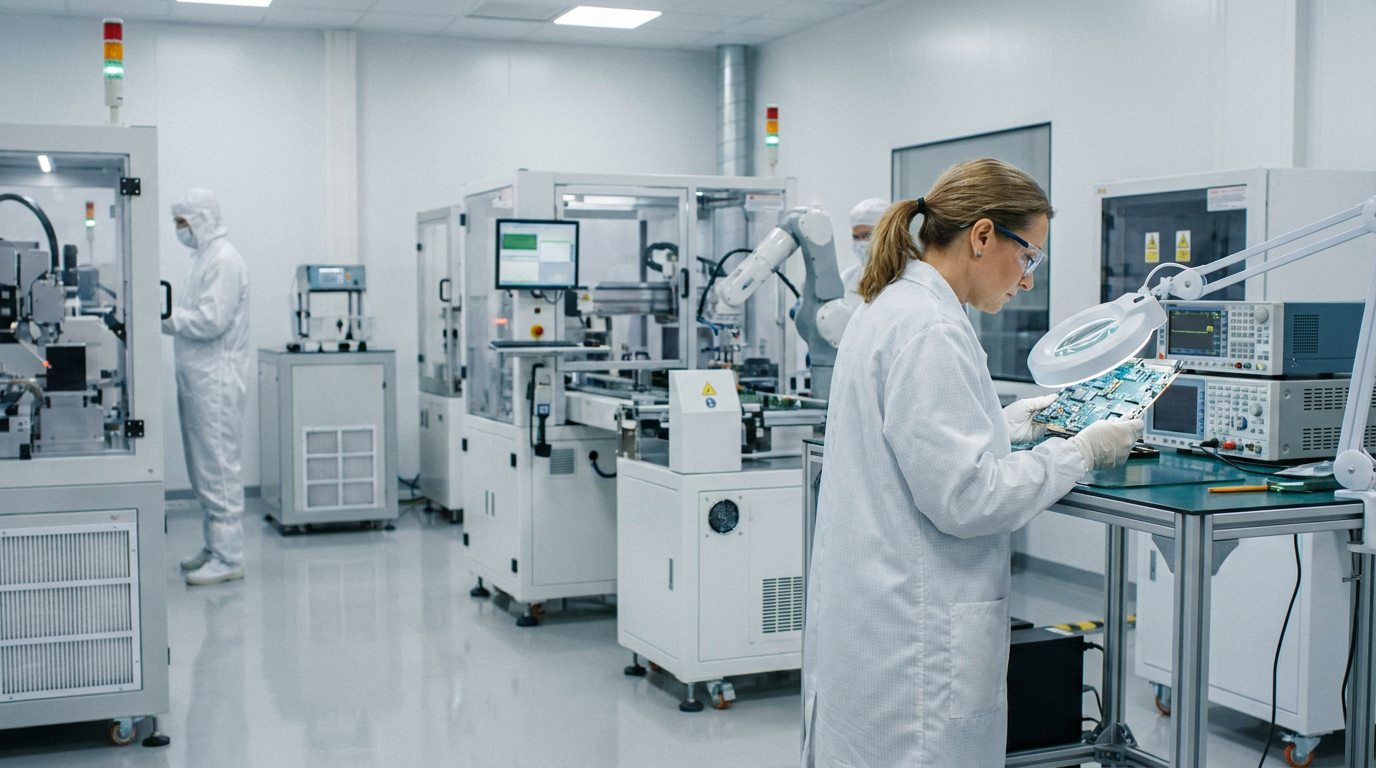
This is where the focus shifts from the product to the process, leading us to the absolute linchpin of a manufacturer’s ongoing IECEx responsibility: the implementation and maintenance of a comprehensive Quality Management System (QMS). The IECEx scheme mandates that a manufacturer must not only have a certified product design but also a certified production quality system. This is audited and confirmed through a Quality Assessment Report (QAR). This is not a mere formality or a simple paperwork exercise; it is the very mechanism that ensures the 10,000th unit produced is identical in its safety-critical features to the first prototype that was tested by the ExTL. The system must be compliant with the stringent requirements of ISO/IEC 80079-34, “Explosive atmospheres – Part 34: Application of quality management systems for equipment manufacture.” This standard builds upon the familiar framework of ISO 9001 but adds specific, rigorous requirements directly related to producing Ex-certified equipment.
- The QMS ensures the 10,000th unit is identical to the first prototype.
- The system must be compliant with ISO/IEC 80079-34.
- The documentation is the narrative of quality; the system is the engine that drives it.

Key Pillars of IECEx Manufacturer Compliance |
||
|---|---|---|
| Compliance Element | Core Requirement | Manufacturer Responsibility |
| Ex Test Report (ExTR) | Product Design Evaluation | Design products to comply with the relevant IEC 60079 series standards and provide representative prototypes alongside comprehensive technical documentation to an approved ExTL. |
| Quality Assessment Report (QAR) | Production Quality System | Implement and maintain a Quality Management System compliant with ISO/IEC 80079-34, ensuring continuous production consistency matching the approved design. |
| Surveillance & Audits | Ongoing System Verification | Undergo routine periodic surveillance audits by an ExCB every 12 to 18 months, followed by a comprehensive re-assessment audit every three years for renewal. |
| Management of Change | Design Integrity Control | Document any proposed component or design modification, submit the assessment to the ExCB, and await formal authorization prior to implementing updates. |
| Multi-Site Manufacturing | Facility Control Expansion | Ensure every individual factory location producing the certified equipment is thoroughly audited and officially listed on the Certificate of Conformity. |
Frequently Asked Questions
What is the difference between an IECEx Test Report (ExTR) and a Certificate of Conformity (CoC)?
An ExTR is a technical document that details the results of testing a product sample against the relevant IEC standards. It is issued by an IECEx Test Laboratory (ExTL) and serves as evidence that the product’s *design* is compliant. A CoC, on the other hand, is issued by an IECEx Certification Body (ExCB) and is a more holistic certification. It confirms that not only is the product design compliant (as evidenced by the ExTR), but also that the manufacturer has a certified quality system (evidenced by a QAR) to ensure they can consistently produce the product to that same compliant design. You cannot get a CoC without a valid ExTR and QAR.
Do I need to have ISO 9001 certification before I can get an IECEx Quality Assessment Report (QAR)?
While it is not strictly mandatory to have a separate ISO 9001 certification, it is highly recommended and provides a very strong foundation. The standard for the IECEx QAR is ISO/IEC 80079-34, which is essentially a version of ISO 9001 with additional, specific requirements for manufacturing Ex equipment. If you already have a robust ISO 9001 system, you will be well-positioned to add the specific Ex requirements. If you do not, you will need to build a quality system from the ground up that satisfies all the clauses of ISO/IEC 80079-34.
How often are the quality system audits for the QAR conducted?
After the initial audit to grant the QAR, the IECEx Certification Body (ExCB) will conduct periodic surveillance audits to ensure the manufacturer’s quality system remains compliant and effective. The typical interval for these surveillance audits is every 12 to 18 months. The certificate itself is usually valid for a three-year period, at which point a more comprehensive re-assessment audit is required for renewal.
What happens if I need to change a small component in my certified product?
You must not implement the change without first consulting your IECEx Certification Body (ExCB). The manufacturer is required to have an internal “management of change” procedure. You must document the proposed change and assess its potential impact on the product’s safety and compliance. This assessment must then be submitted to your ExCB. They will review the change and determine the necessary course of action. It might be a simple documentation update, or it could require partial or even full re-testing of the product. Making unauthorised changes will invalidate your certification.
Can I use a single IECEx certification if I manufacture the same product at multiple factory locations?
Yes, this is possible, but it requires careful management. Each manufacturing location that produces the certified product must be covered by the IECEx quality system audit (QAR). The ExCB will need to audit each site to verify that they all have the necessary controls, processes, and documentation in place to produce the product in a compliant manner. The Certificate of Conformity (CoC) will then list all the approved manufacturing locations. You cannot simply start producing a certified product at a new, un-audited site.
Conclusion
Ultimately, embracing the full spectrum of responsibilities required by the IECEx scheme should not be viewed as a burdensome cost of doing business, but as a profound strategic investment in the future of your organisation. The journey from initial design assessment to maintaining a living quality system is a rigorous one, but it forges a more resilient, reputable, and competitive company. The meticulous documentation, the disciplined change management, and the unwavering focus on production consistency are not just hoops to jump through for an auditor; they are the very building blocks of operational excellence. They reduce the risk of costly recalls, protect against catastrophic liability, and build a powerful brand reputation founded on the non-negotiable principle of safety. In a global marketplace where trust is the ultimate currency, the IECEx mark, backed by a manufacturer’s demonstrable commitment to its ongoing obligations, becomes more than just a symbol of compliance. It becomes a powerful statement of quality, a passport to international markets, and a solemn promise to every end-user that the equipment they rely on has been built not just to a standard, but with a deeply ingrained culture of responsibility. This is the true, enduring value that extends far beyond the badge.
