Intrinsically Safe Knowledge Base
Exploring the Future of Intrinsic Safety Innovations
In the high-stakes world of industrial operations, where the margin for error is non-existent, the pursuit of safety is a relentless journey of innovation. For decades, the primary approach to managing explosive atmospheres was one of brute force and containment—building stronger, heavier boxes to house electrical equipment in the hope of containing an inevitable blast. However, a revolutionary philosophy has emerged, fundamentally reshaping our understanding of hazardous area protection. This philosophy, known as Intrinsic Safety, moves beyond mere containment and into the realm of intelligent prevention. It is not just a new type of equipment, but a complete rethinking of how we manage energy in volatile environments. This comprehensive guide will take you on a deep dive into the world of intrinsic safety innovations, exploring the foundational principles, the vast operational advantages, the diverse industries it protects, and the practical steps for integrating this life-saving, efficiency-boosting technology into your own operations. We will demystify the technology, answer your most pressing questions, and illuminate the path toward a future where the safest industrial environments are also the most productive and technologically advanced.
Stay Ahead of Hazardous Area Compliance
The regulatory landscape is constantly evolving. Deepen your understanding of regional safety standards and compliance frameworks by reviewing our latest analysis on North American hazardous location rules.
Decoding Intrinsic Safety: The Foundation of Modern Hazard Protection
To truly appreciate the innovations shaping the future of industrial safety, we must first build a solid understanding of the foundational principle upon which many of them are built: Intrinsic Safety. The term itself sounds reassuring, but what does it actually mean in the context of a bustling chemical plant, a deep underground mine, or a pharmaceutical cleanroom? It represents a profound shift in the philosophy of hazard management, moving away from brute-force containment and towards an elegant, intelligent method of prevention. At its core, Intrinsic Safety is a protection technique applied to electrical and electronic equipment used in areas where flammable gases, vapors, dusts, or fibers could create a potentially explosive atmosphere. Instead of trying to contain an explosion after it happens, the entire design philosophy of Intrinsic Safety is to ensure that the equipment is fundamentally incapable of producing enough electrical or thermal energy to cause an ignition in the first place. It is, in essence, designing a system that is too weak to be dangerous, a concept that is both brilliantly simple and technically complex.
- Prevention over Containment
- Low-Energy by Design
- System-Level Safety
The Expanding Circle: Identifying the Industries and Professionals Championing Intrinsic Safety
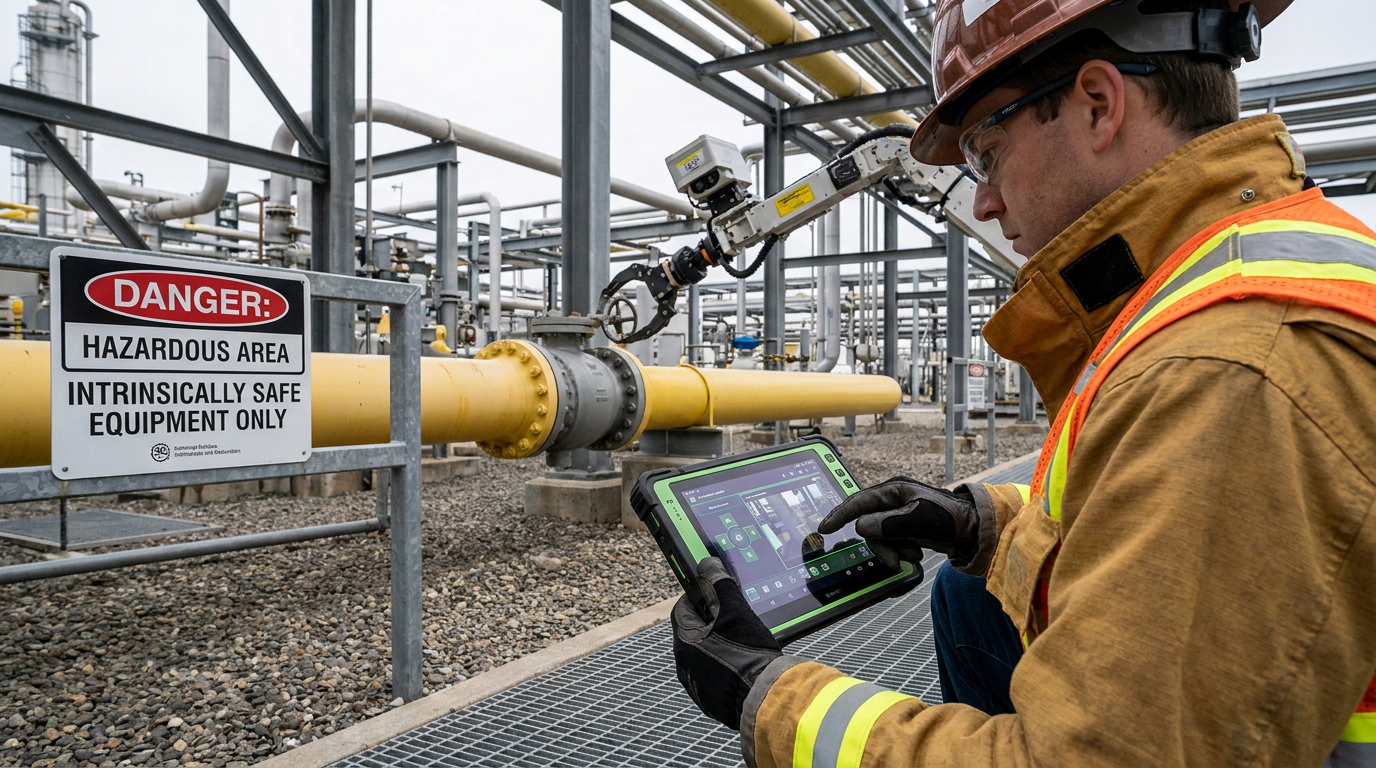
To truly grasp the impact of intrinsic safety innovations, one must look beyond the technology itself and into the environments where it becomes not just a preference, but a fundamental necessity. The principles of intrinsic safety—designing electrical equipment with such low energy that it cannot create a spark or thermal effect capable ofigniting a hazardous atmosphere—are a lifeline for a surprisingly diverse and expanding array of industries. While the initial and most obvious adopters are those traditionally associated with explosive risks, the evolution of technology and a deeper understanding of risk management have broadened this circle to include sectors that might not immediately come to mind. This is not a niche solution for a single problem; it is a foundational safety philosophy that underpins the modern operations of countless professionals who work at the volatile intersection of technology and combustible materials.
- Oil and Gas
- Chemical and Petrochemical
- Mining
Deploy Certified Explosion Protection
Equip your team with rugged, deployment-ready hardware engineered to operate under explosive atmospheric risks. Browse our catalog for certified instrumentation, lighting, and mobile devices.
| Core Concept | Industrial Protection Methodology |
|---|---|
| Intrinsic Safety (IS) | An engineering approach that limits electrical and thermal energy levels below the threshold required to ignite a hazardous atmosphere, prioritizing absolute prevention over containment. |
| Explosion-Proof / Flameproof | A containment strategy that utilizes heavy, robust enclosures designed to withstand and safely contain an internal explosion, preventing flames from escaping into the surrounding environment. |
| Energy Limitation | The core design mechanism of IS systems, ensuring electrical currents and voltage are too weak to generate sparks or thermal effects capable of igniting gases, dusts, or fibers. |
| System-Level Safety | A comprehensive certification approach requiring all interconnected field devices, wiring, and barriers to be evaluated together as a single safe loop, rather than isolated pieces of hardware. |
| Galvanic Isolation | An interface method that provides complete electrical separation between hazardous and safe areas using magnetic or optical links, eliminating common grounding vulnerabilities. |
| Zener Barriers | Protective interface circuits that divert excess electrical energy and fault currents directly to the ground using specialized diodes, protecting the hazardous area from power surges. |
Key Benefits of Intrinsic Safety Innovations
- Enhanced Worker Safety
- Significant Economic Advantages
- Enabler for Modernization and IIoT
- Simplified Maintenance and Installation
- Increased Operational Flexibility
FAQs
What exactly is intrinsic safety and why is it considered a pioneering approach?
Intrinsic Safety (IS) is a protection technique that prevents explosions by limiting the electrical and thermal energy in circuits to levels below what’s required to ignite a hazardous atmosphere. It’s pioneering because it focuses on prevention rather than containment, allowing for the use of complex electronics in dangerous environments.
How does intrinsic safety fundamentally differ from “explosion-proof” or “flameproof” protection methods?
Explosion-proof methods contain an explosion within a robust enclosure, while intrinsic safety prevents the explosion from ever occurring by limiting energy. This makes IS equipment lighter, cheaper, and easier to maintain.
What are the key innovations currently shaping the future of intrinsic safety?
Key innovations include intrinsically safe wireless and IoT devices, which allow for extensive data collection in hazardous areas without expensive wiring, and intelligent safety barriers and isolators with advanced diagnostic capabilities.
Can you explain the role of Zener barriers and galvanic isolators in an IS system?
Zener barriers and galvanic isolators are interfaces between safe and hazardous areas. Zener barriers shunt excess energy to the ground, while galvanic isolators provide complete electrical isolation, offering a higher level of safety and simplifying installation.
What do certifications like ATEX and IECEx mean, and why are they so important?
ATEX and IECEx are crucial certifications that verify a product’s safety for use in explosive atmospheres. ATEX is a legal requirement in the EU, while IECEx is an international scheme that facilitates global trade and harmonization of standards. They provide ultimate assurance of a device’s safety and compliance.
Chat for a Quote
Call: 832-699-6726
Conclusion
The journey through the landscape of intrinsic safety reveals a powerful and undeniable truth: the most effective way to manage the risk of an explosion is to engineer the possibility out of existence from the very beginning. This is the core promise and the delivered reality of intrinsic safety innovations. We have moved beyond the cumbersome and reactive philosophy of explosion-proof containment, which accepts the inevitability of an internal blast, and into a proactive, intelligent paradigm of prevention. By fundamentally limiting electrical and thermal energy to levels incapable of igniting a hazardous atmosphere, intrinsic safety does not just add a layer of protection; it transforms the entire operational environment. It fosters a workplace where live maintenance is not a high-risk exception but a routine, efficiency-driving procedure, saving countless hours of downtime and millions in operational costs. It unlocks the door to the Industrial Internet of Things, allowing for the deployment of sophisticated wireless sensors and mobile devices that feed data-rich insights, driving predictive maintenance and process optimization in the very heart of your most dangerous locations.