




















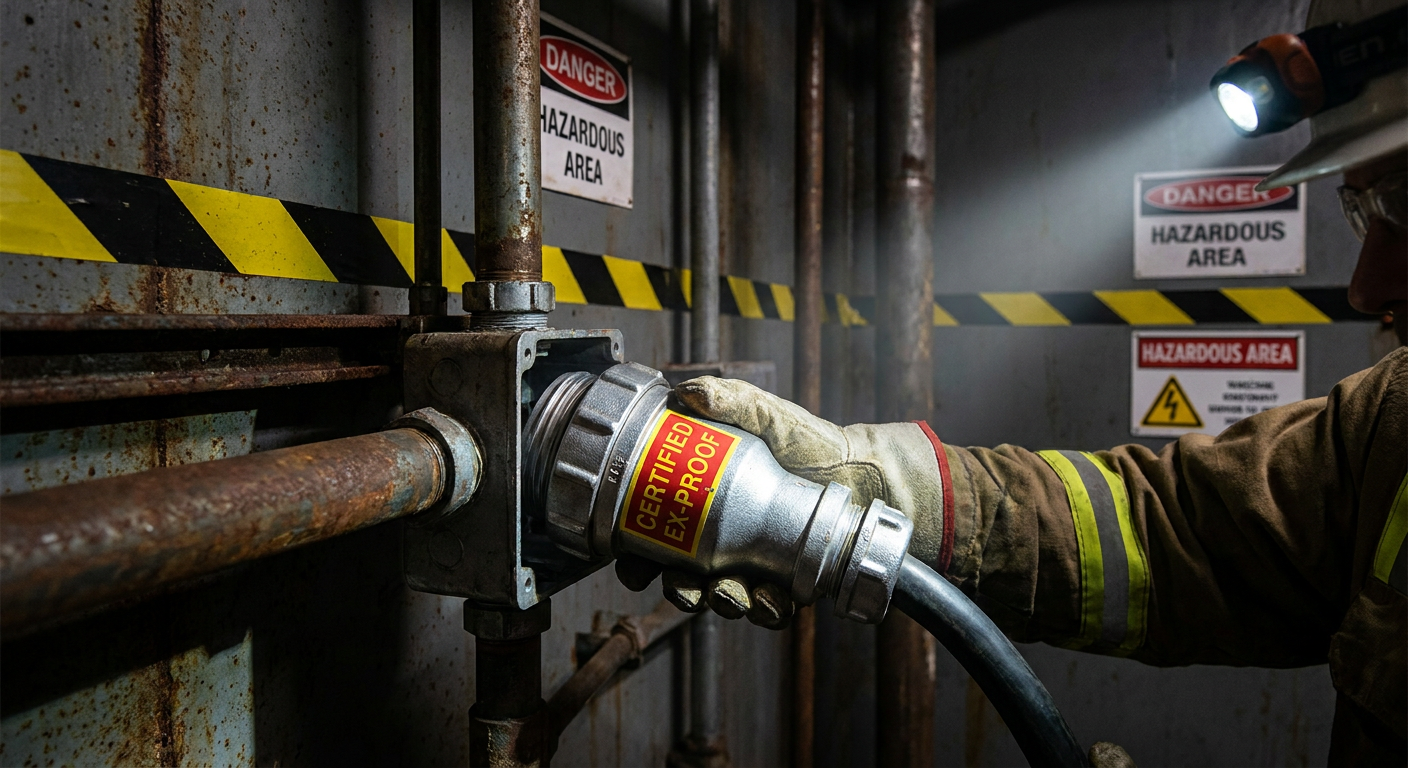
In the intricate and high-stakes world of industrial operations, where the air itself can become a volatile threat, the integrity of an electrical network is paramount. A single, minuscule spark, harmless in an office, can become the catalyst for a catastrophic explosion in a refinery, chemical plant, or grain silo. This is the stark reality of operating in hazardous areas—environments where flammable gases, vapors, mists, or combustible dusts create a constant, invisible risk. Every component within these zones, no matter how small, must be scrutinized not just for its function, but for its potential to become an ignition source. This brings us to the humble connector, a component often overlooked yet fundamentally critical to the safety chain. Choosing the right connector is not a simple matter of matching pins and sockets; it is a complex, multi-layered decision that balances international safety standards, sophisticated engineering principles, and the harsh realities of the industrial environment. This guide is designed to be your comprehensive roadmap, navigating you through the critical path of selecting certified connectors, decoding the complex language of ATEX and IECEx, and empowering you to make decisions that safeguard lives, protect assets, and ensure unwavering operational compliance.
Navigate Complex Global Standards with Confidence
Demystify protection concepts like Ex d, Ex e, and Ex i to ensure complete facility compliance. Access our definitive resource on hazardous area classifications and engineering requirements.
Access the Area Classification Guide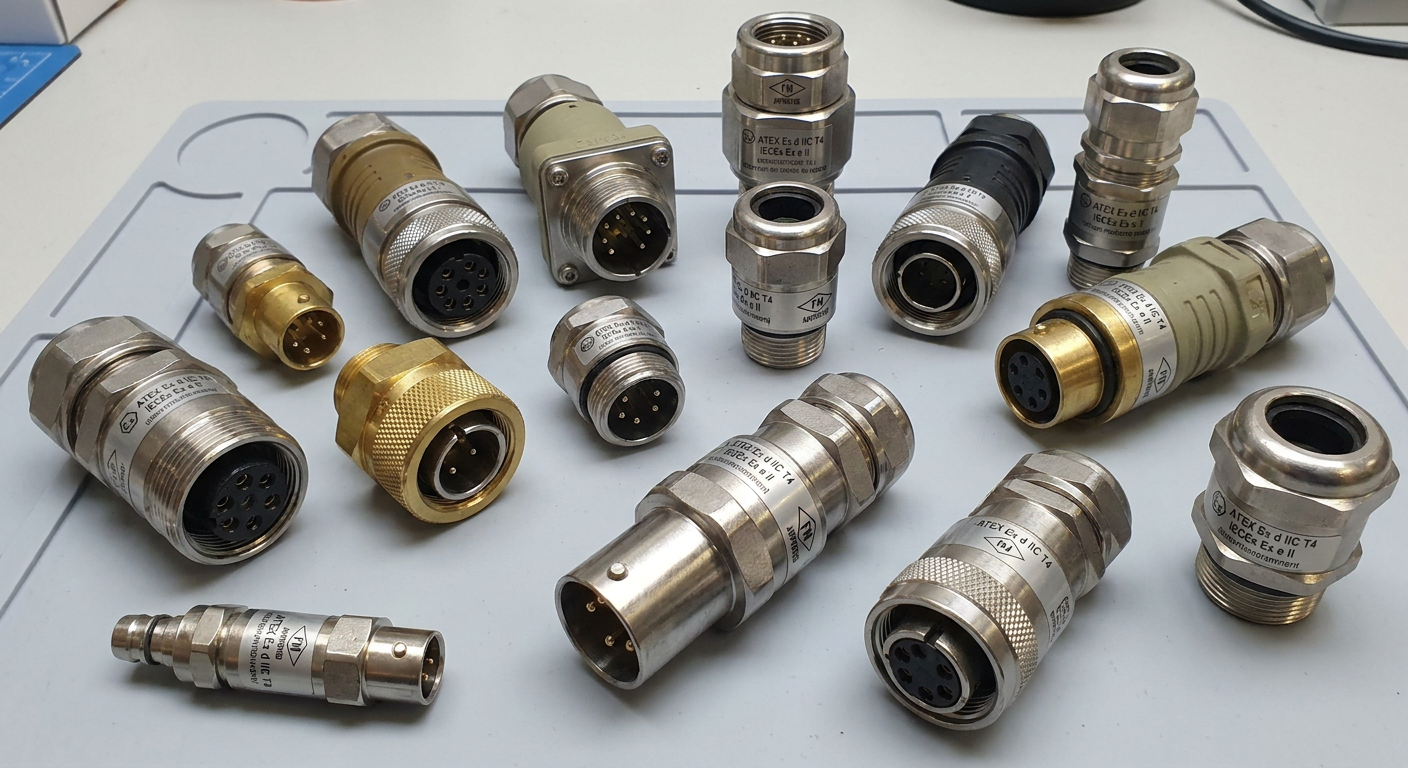
Key Benefits of UL Certification
- Assurance of Safety and Compliance: The most immediate and non-negotiable benefit is the unparalleled assurance of safety and compliance. A connector bearing a certification mark from a recognized body like ATEX or IECEx is not just a product; it is a promise.
- Improved Operational Efficiency: Certified hot-swappable connectors introduce a revolutionary improvement in operational efficiency and a drastic reduction in costly downtime.
- Lower Total Cost of Ownership: The dramatic reduction in labor costs associated with installation, maintenance, and repairs is a primary driver of savings.
- Simplified System Design: The plug-and-play nature of these components introduces a level of modularity and flexibility that is simply impossible with hardwired systems.
- Future-Proofs Facility: This modularity ensures that the infrastructure can grow and change with the needs of the business without requiring massive capital expenditure or disruptive overhauls.

Secure Your Network with Certified Hardware
Eliminate ignition risks in volatile environments. Browse our selection of ATEX, IECEx, and UL HazLoc certified explosion-proof connectors built for heavy industrial applications and minimal downtime.
Shop Explosion-Proof ConnectorsHazardous area protection methods for industrial connectors
| Concept | Safety Principle | Typical Connector Application | Power Level |
|---|---|---|---|
| Ex d | Containment: Designed to withstand an internal explosion without propagating flames to the external atmosphere. | Heavy-duty, robust, and large-scale power connectors built for massive industrial machinery and high-voltage supply. | High Power |
| Ex e | Prevention: Eliminates the formation of electric arcs, sparks, or hot spots using premium insulation and engineered components. | Medium-power distribution and control signaling connectors operating in highly humid or corrosive environments. | Medium Power |
| Ex i | Limitation: Limits electrical and thermal energy strictly below the minimum ignition thresholds of volatile gases or dusts. | Hot-swappable connectors ideal for low-power instrumentation, sensitive sensors, PLC connections, and data networks. | Low Power |
FAQs
What truly defines a “hazardous area,” and how does that classification dictate my connector choice?
A hazardous area is any space where the atmosphere contains, or has the potential to contain, a flammable or explosive mixture. Your choice of connector is directly and non-negotiably dictated by this classification.
I see ATEX, IECEx, and UL HazLoc certifications. What is the difference, and how do I know which one I need?
These are not interchangeable labels; they represent distinct legal and technical frameworks tied to geography. The one you need depends entirely on the final geographical destination of the equipment.
What are the different protection concepts like Ex d, Ex e, and Ex i, and how do they influence which connector I should choose?
The choice between them depends heavily on your application’s power requirements and operational needs. Ex d for high power and containment, Ex e for prevention in medium-power circuits, and Ex i for absolute energy limitation in low-power, highly sensitive areas.
When should I select the certified connectors for my project?
The selection of certified connectors should be made at the very genesis of the project: the initial design and planning phase.
What are the dangers of delaying connector selection?
Delaying the selection of certified connectors until the procurement or assembly phase introduces a cascade of compromises and risks that undermine the very purpose of hazardous area design.
Conclusion
The journey through the world of hazardous area connectors reveals a fundamental truth: this is not a decision to be taken lightly or left to the final stages of procurement. The selection of a certified connector is a strategic engineering and safety function that forms a critical link in the chain of operational integrity. It is a process that demands a holistic perspective, weaving together a deep understanding of the specific hazardous environment, a fluent interpretation of complex global standards like ATEX and IECEx, and a pragmatic appreciation for the long-term operational and maintenance realities. The right choice is never just about a single component; it is about upholding a commitment to the safety of personnel, the protection of multi-million dollar assets, and the unwavering compliance that grants a facility its license to operate.
