





















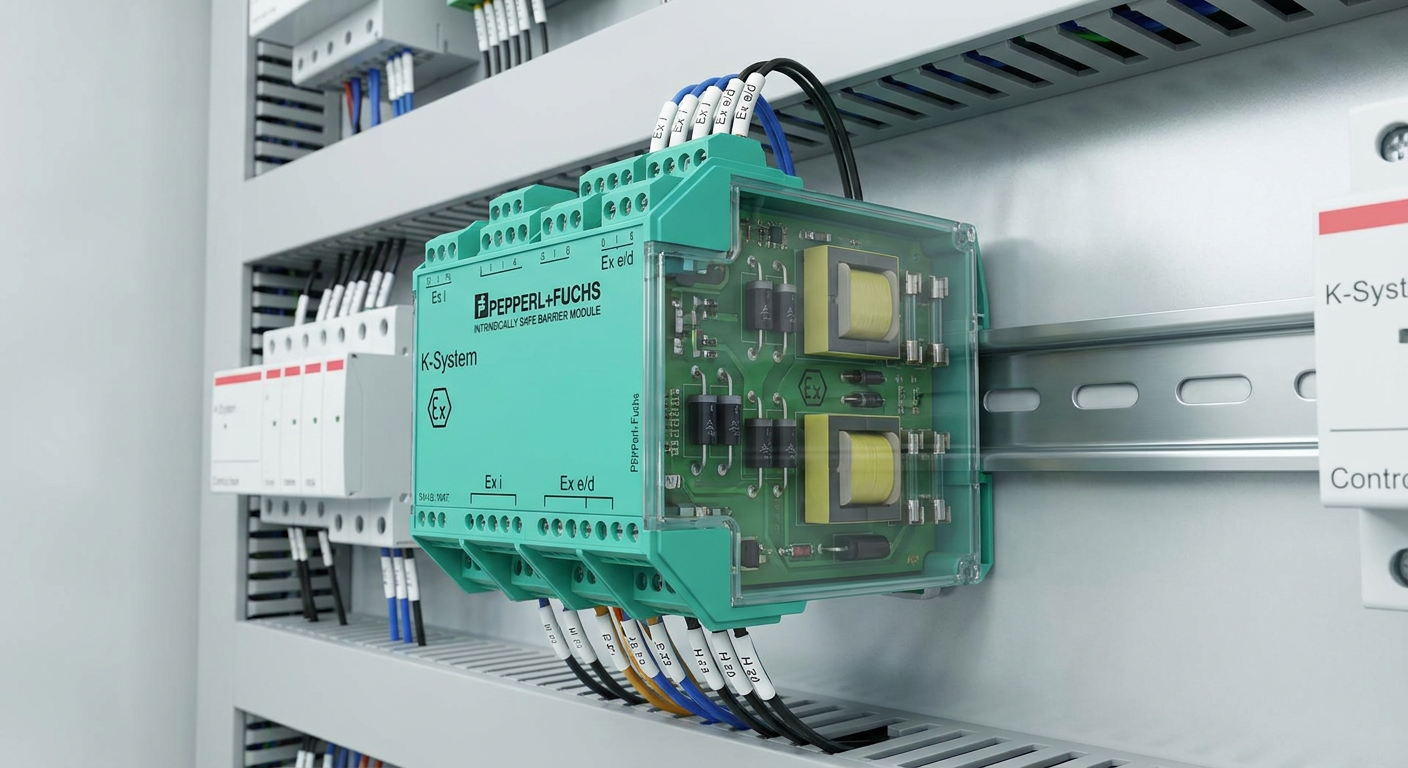
In hazardous industrial environments where flammable gases, vapors, or dust are present, preventing ignition sources is paramount. One of the most effective methods for ensuring electrical safety is the use of intrinsically safe (IS) systems. But what is an intrinsically safe barrier, and how does it contribute to a safe working environment? An intrinsically safe barrier is a critical component that limits the electrical and thermal energy of a circuit to a level below that which can cause ignition of a specific hazardous atmospheric mixture. These devices are fundamental to designing and implementing safe, low-power instrumentation in areas classified as hazardous. By regulating the energy, IS barriers ensure that even under fault conditions, such as a short circuit, the electrical apparatus cannot become a source of ignition. This approach provides a robust and reliable method for protecting personnel and infrastructure in high-risk industries like oil and gas, chemical processing, and pharmaceuticals.

The Core Function of an Intrinsically Safe Barrier
The primary function of an intrinsically safe barrier is to provide a crucial interface between control equipment located in a safe area and field devices situated in a hazardous location. It achieves this by limiting the voltage, current, and total energy delivered to the field instrument. As required by IEC 60079-11, these barriers are designed to prevent the transfer of unacceptably high energy levels from the safe area to the hazardous area. There are two main types of intrinsically safe barriers: Zener barriers and galvanic isolators. Zener barriers divert excess energy to the ground, while galvanic isolators provide electrical isolation between the safe and hazardous area circuits, eliminating the need for a dedicated ground connection. The choice between the two depends on the specific application, grounding requirements, and the complexity of the system. Understanding the core function of what is an intrinsically safe barrier is the first step in appreciating its importance in hazardous area safety.
Master Hazardous Area Compliance
Read our comprehensive guide on mastering intrinsic safety standards and global compliance to ensure your facility meets strict regulatory requirements.
Read the Compliance GuideKey Principles of Intrinsic Safety
Intrinsic safety is based on a few fundamental principles that ensure the prevention of ignition in hazardous environments. These principles are applied to the entire system, not just individual components.
- Energy Limitation: The most critical principle is the strict limitation of electrical energy. The voltage and current are kept so low that any spark or thermal effect is incapable of igniting the most easily ignitable concentration of a hazardous substance.
- Fault Prevention: Intrinsic safety systems are designed to be safe even in the event of a fault. This includes considerations for open circuits, short circuits, and grounds. The system must remain safe with a specified number of faults applied.
- System-Level Approach: Intrinsic safety is a system concept. It involves the barrier, the field device, and the interconnecting cable. All three components must be compatible and correctly installed to ensure safety.
- Clear Labeling and Documentation: All intrinsically safe devices and barriers are clearly labeled with their ratings and the hazardous locations for which they are approved. Detailed documentation is essential for proper installation, maintenance, and inspection.
Benefits of Using Intrinsically Safe Barriers
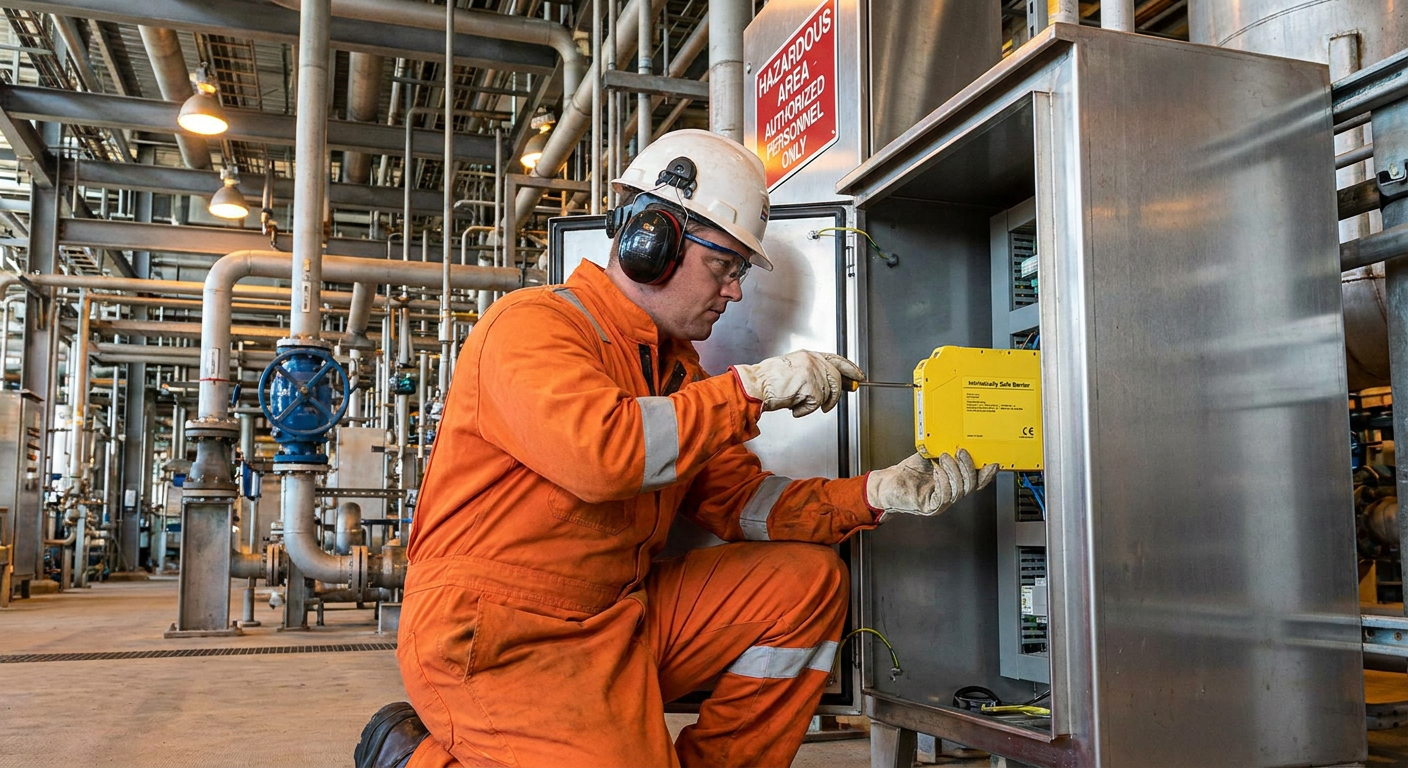
Opting for intrinsically safe barriers and systems offers numerous advantages over other protection methods like explosion-proof enclosures.
- Live maintenance is possible without shutting down the process, as the circuits are low-energy.
- Installation is typically simpler and less expensive than using heavy and bulky explosion-proof conduit and enclosures.
- Commissioning and fault-finding are easier and safer due to the low power levels involved.
- Intrinsic safety is a globally recognized protection method, with standards like IEC 60079-11 providing a common framework.
Recommended Products for Intrinsic Safety Systems
The following products from our catalog are certified for use in hazardous areas and are essential components for building a complete intrinsically safe system:
| Product Category | Rating / Certification | Link |
|---|---|---|
| Power & Energy Solutions | Class I Div 1 / ATEX Zone 0 | Shop Now |
Frequently Asked Questions
What is the main difference between a Zener barrier and a galvanic isolator?
A Zener barrier uses Zener diodes to limit voltage and a resistor to limit current, diverting excess energy to a ground connection. A galvanic isolator uses transformers, capacitors, or optical couplers to provide electrical isolation between circuits, which means it doesn’t require an earth ground and can eliminate ground loop issues.
Can any field device be used with an intrinsically safe barrier?
No, only field devices that are certified as intrinsically safe and have compatible entity parameters (voltage, current, power, capacitance, and inductance) can be used. The entire loop, consisting of the barrier, cable, and field device, must be assessed to ensure it meets the requirements of standards like IEC 60079-11.
Where are intrinsically safe barriers typically installed?
Intrinsically safe barriers are installed in the safe area, which is a location free from hazardous concentrations of flammable substances. They act as an interface, connecting the control system in the safe area to the field instruments in the hazardous area.
Is intrinsic safety the same as explosion-proof?
No. Intrinsic safety prevents explosions by limiting energy to non-incendive levels. Explosion-proof (or flameproof) protection involves containing a potential explosion within an enclosure that is strong enough to withstand the pressure and prevent flames from escaping to the surrounding hazardous atmosphere.
What kind of maintenance is required for an intrinsically safe barrier?
Maintenance for IS barriers is minimal but crucial. It involves periodic visual inspections to check for damage, corrosion, and loose connections. Since the circuits are low-energy, testing and maintenance can often be performed while the process is active, which is a significant advantage over other protection methods.
Secure Your Control Loops with Certified IS Barriers
Equip your hazardous locations with industry-leading Zener barriers and galvanic isolators. Browse our extensively tested inventory for reliable integration with your safe area control equipment.
Shop Intrinsically Safe BarriersConclusion
Understanding what is an intrinsically safe barrier is fundamental to ensuring safety in hazardous industrial environments. These devices are not merely components; they are the linchpin of the intrinsic safety protection method. By reliably limiting energy to levels that cannot cause ignition, IS barriers allow for the safe operation of electrical equipment in the presence of flammable materials. The main takeaways are the barrier’s core function of energy limitation, the system-level approach required for proper implementation, and the significant benefits in terms of safety, maintenance, and cost. When correctly selected and installed as part of a properly designed system, an intrinsically safe barrier provides the highest level of safety for low-voltage instrumentation in hazardous locations. For anyone working with instrumentation in such environments, a thorough understanding of what is an intrinsically safe barrier is not just beneficial—it’s essential.