























Intrinsically safe camera housing is the ideal solution for Offshore Oil and Gas Industries, refineries, mining and Explosive environments. Additionally, the intrinsically safe camera design allows operators to monitor situations in ATEX Zone 1, ATEX Zone 2, Class 1 Division 1, Class 1 Division 2, IECEx, and more.
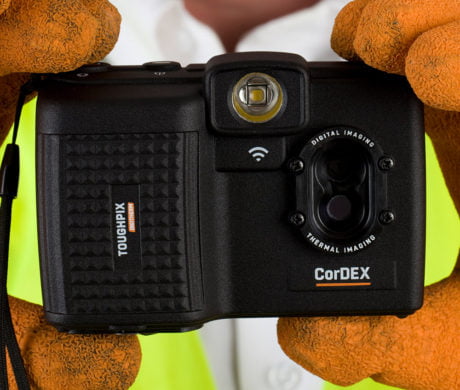
There are a lot of articles explaining how a device is Intrinsically Safe so we will not go through the details.
Why Certified Camera Housings Are Critical in Hazardous Areas
In environments where flammable gases, vapors, dust, or fibers are present, a single spark from standard electronic equipment can lead to a catastrophic explosion. Certified camera housings are not just protective cases; they are engineered safety components designed to prevent ignition in these volatile atmospheres, ensuring operational continuity and protecting lives.
Protecting People and Assets in Explosive Atmospheres
The primary function of a certified housing is to prevent the camera’s electrical components from becoming an ignition source. This protects personnel from injury or death and safeguards high-value assets and infrastructure from devastating damage. A certified system provides peace of mind that monitoring technology does not introduce a new hazard into a controlled environment.
Common Applications: Refineries, Chemical Plants, and Mining Operations
Certified camera housings are indispensable in numerous industries. In oil and gas refineries, they monitor processes involving flammable hydrocarbons. In chemical plants, they oversee the handling of volatile substances. In mining, they provide surveillance in environments with explosive coal dust or methane gas. Other applications include paint booths, grain silos, and pharmaceutical manufacturing facilities.
The High Cost of Non-Compliance and Equipment Failure
Using uncertified equipment in a classified hazardous area is a serious violation of safety regulations like OSHA in the US. The consequences can include heavy fines, operational shutdowns, and legal liability in the event of an incident. Beyond regulatory penalties, the cost of an explosion—in terms of lost production, equipment replacement, and potential human tragedy—is immeasurable. Investing in certified equipment is a critical risk management strategy.
Key Differences: Explosion-Proof vs. Intrinsically Safe Housings
While both “Explosion-Proof” and “Intrinsically Safe” are methods for ensuring safety in hazardous locations, they operate on fundamentally different principles. Understanding this distinction is crucial for selecting the appropriate protection for your specific needs.
Explosion-Proof (Ex d) Enclosures: Containing an Internal Ignition
An explosion-proof housing, designated as ‘Ex d’, is designed to contain an internal explosion. The enclosure is built to be robust enough to withstand the pressure of an internal ignition and prevent it from propagating to the surrounding explosive atmosphere. The design includes carefully machined flame paths that cool and extinguish hot gases before they can escape the enclosure, rendering them incapable of igniting the external environment.
Intrinsically Safe (Ex i) Systems: Preventing the Spark Entirely
An intrinsically safe system, designated as ‘Ex i’, takes a different approach. Instead of containing an explosion, it prevents one from ever occurring. This is achieved by limiting the electrical and thermal energy of the entire circuit to a level below what is required to ignite a specific hazardous atmospheric mixture. The system, including the camera and its power source, is designed to be incapable of producing a spark or hot surface, even under fault conditions.
How to Decide Which Protection Method Your Application Needs
The choice between Explosion-Proof and Intrinsically Safe depends on the application. Ex d housings are often used for high-power equipment where limiting energy is not feasible. They are rugged but can be heavy and require careful installation. Ex i systems are ideal for lower-power instrumentation and devices, offering benefits like lighter weight and the ability to perform live maintenance without shutting down power, as the circuit’s energy is already at a safe level.
Understanding Hazardous Area Certifications for Camera Enclosures
Certifications are the language of safety in hazardous locations. They provide a standardized way to confirm that a piece of equipment is safe for use in a specific explosive atmosphere. The main global standards are ATEX, IECEx, and the North American NEC standards.
Decoding ATEX and IECEx Standards for Europe and International Use (Zone 1, Zone 2)
ATEX (Atmosphères Explosibles) is the mandatory directive for equipment used in the European Union. IECEx is an international certification scheme that facilitates global trade in hazardous area equipment. Both systems classify areas into Zones based on the frequency and duration of the presence of an explosive atmosphere. Zone 1 is an area where an explosive atmosphere is likely to occur in normal operation, while Zone 2 is an area where it is unlikely to occur, and if it does, only for a short period.
Navigating North American NEC Standards (Class I, Division 1 & 2)
In North America, the National Electrical Code (NEC) uses a Class/Division system. Class I locations are those with flammable gases or vapors. Division 1 is analogous to Zone 1, signifying an area where ignitable concentrations exist under normal operating conditions. Division 2 is similar to Zone 2, where ignitable concentrations are present only under abnormal conditions, such as a container failure.
Reading the Label: How to Verify a Housing’s Certification Markings
Every certified product must have a permanent label with its certification markings. This label contains critical information, including the certification body (e.g., UL, CSA), the standards it meets (ATEX, IECEx), the Class/Division or Zone rating, the gas group (e.g., IIC for hydrogen), and the temperature code (e.g., T4). Verifying these markings against your area’s classification is essential for compliance.
The Oil and Gas industry is often associated with low performance and outdated technology. For instance, some people may say the devices are not very good at saving space. However, the Industry is changing that with the help of various vendors and manufacturers who aim at giving the best in class ruggedized and EX certified equipment for your protection.
Things & Specs to look for:
- Video quality – Full HD video (1080p, 30 FPS)
- Imaging – 8 megapixel still images
- Image capture – Dedicated Camera button
- Storage – at least 32 GB
- Lighting – Dual LED lights
- Brightness – Direct sunlight readable display
- Touch screen – Glove compatible capacitive touch
- Glass – Preferably Gorilla glass
- Android version Android 7.1.2 Nougat or Higher
- Submersible – IP68 waterproof
- Impact and drop proof
How to Choose the Right ATEX or Class/Div Certified Camera Housing
Selecting the correct certified housing requires a systematic approach to ensure safety and functionality.
Step 1: Identify Your Specific Hazardous Area Classification
The first and most important step is to know the exact classification of the area where the camera will be installed. You must identify the Class/Division or Zone, as well as the specific gas or dust group (e.g., Group C for ethylene, Group G for grain dust) and the temperature code required. This information is typically found on site plans and documentation provided by a qualified engineer.
Step 2: Consider Material, IP Rating, and Environmental Factors
Beyond the hazardous area rating, consider the operating environment. Will the housing be exposed to corrosive chemicals? Stainless steel (316L) is often preferred for offshore and chemical applications. What level of weather protection is needed? An IP (Ingress Protection) rating, like IP66 or IP68, indicates its resistance to dust and water. Also, consider the ambient temperature range of the location.
Step 3: Ensure Compatibility with Your Camera and Mounting Requirements
Verify that the housing’s internal dimensions can accommodate your chosen camera, lens, and any associated wiring. Check for compatibility with power supplies and data transmission methods (e.g., PoE, fiber optic). Finally, confirm that the housing’s mounting options (wall mount, pole mount) are suitable for the installation site.
Installation and Maintenance Best Practices for Certified Housings
Proper installation and regular maintenance are just as important as selecting the right product. An improperly installed certified housing can be rendered unsafe, voiding its certification.
Following Manufacturer Guidelines for Compliant Installation
Always adhere strictly to the manufacturer’s installation manual. This includes using the correct certified cable glands and seals for all entry points, ensuring flame paths on Ex d enclosures are clean and properly assembled, and verifying that all bolts are tightened to the specified torque. All wiring must be done in accordance with relevant electrical codes.
Routine Inspection Checklist for Long-Term Safety
Establish a regular inspection schedule. A basic checklist should include: looking for signs of physical damage or corrosion on the enclosure, checking that all bolts and fittings are secure, ensuring cable glands are tight and seals are intact, and verifying that the certification label is legible. Any damage should be reported and repaired immediately by qualified personnel.
Common Mistakes That Can Invalidate a Certification
Simple mistakes can compromise safety. Common errors include drilling unauthorized holes in an enclosure, using incorrect replacement parts (like non-certified bolts), damaging flame path surfaces by prying them open, or failing to properly secure the lid or cover. Any modification to the housing not approved by the manufacturer will invalidate its certification.
Certifications:
Lastly, the following information is the certification for Intrinsically Safe camera housing.
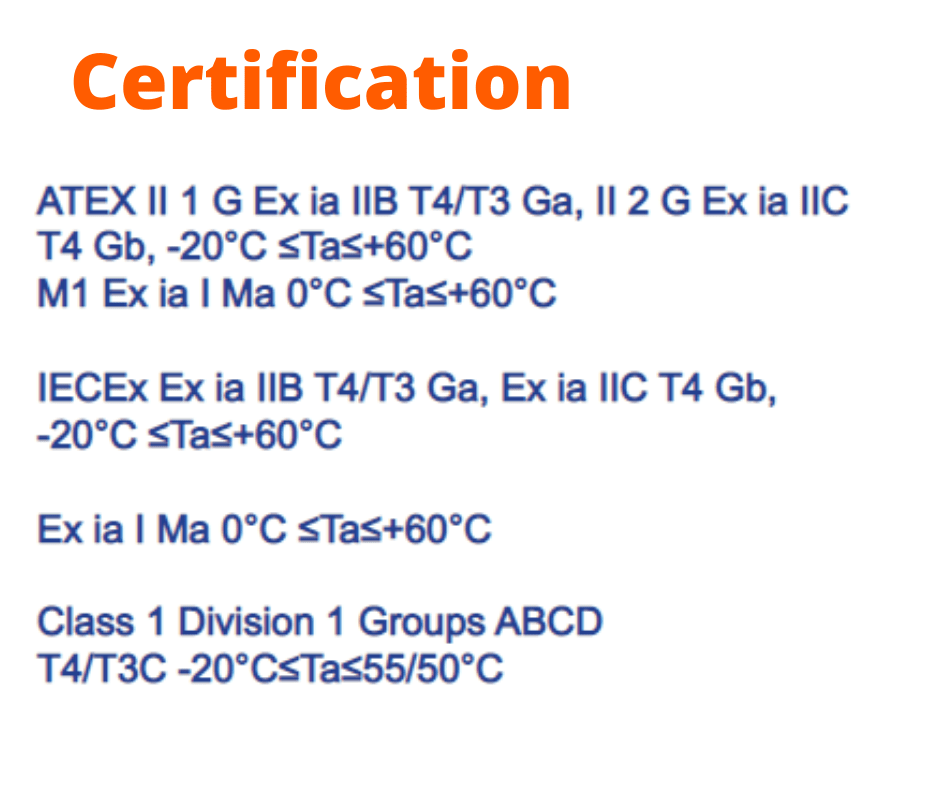
ATEX Zone 1, ATEX Zone 2, Class 1 Division 1, Class 1 Division 2, IECEx
Ex ib IIC T4 Gb Ta = -10˚C to +40˚C
Groups A, B, C, D, T4 t Ta = -10C to +40C
Frequently Asked Questions about Hazardous Area Camera Housings
Can I use a standard camera inside an explosion-proof enclosure?
Yes, this is the primary purpose of an explosion-proof (Ex d) enclosure. The enclosure itself provides the protection, allowing non-certified equipment to be safely operated inside. However, the entire assembly must be certified after the camera is installed to ensure it meets safety standards.
What is the difference between a Zone 1 and a Class I, Division 1 rating?
They are functionally very similar but belong to different regulatory systems. Zone 1 (IECEx/ATEX) and Class I, Division 1 (NEC) both describe an area where flammable gases or vapors are expected to be present during normal operations. They are the standards for the highest-risk gas/vapor environments.
Do I need a certified housing for a Class I, Division 2 area?
Yes. While a Division 2 area is considered less hazardous than Division 1 because explosive atmospheres are only present under abnormal conditions, certified equipment is still mandatory. Equipment must be rated for at least Division 2 to prevent it from causing an ignition during a fault or failure that could coincide with the presence of a flammable substance.