





















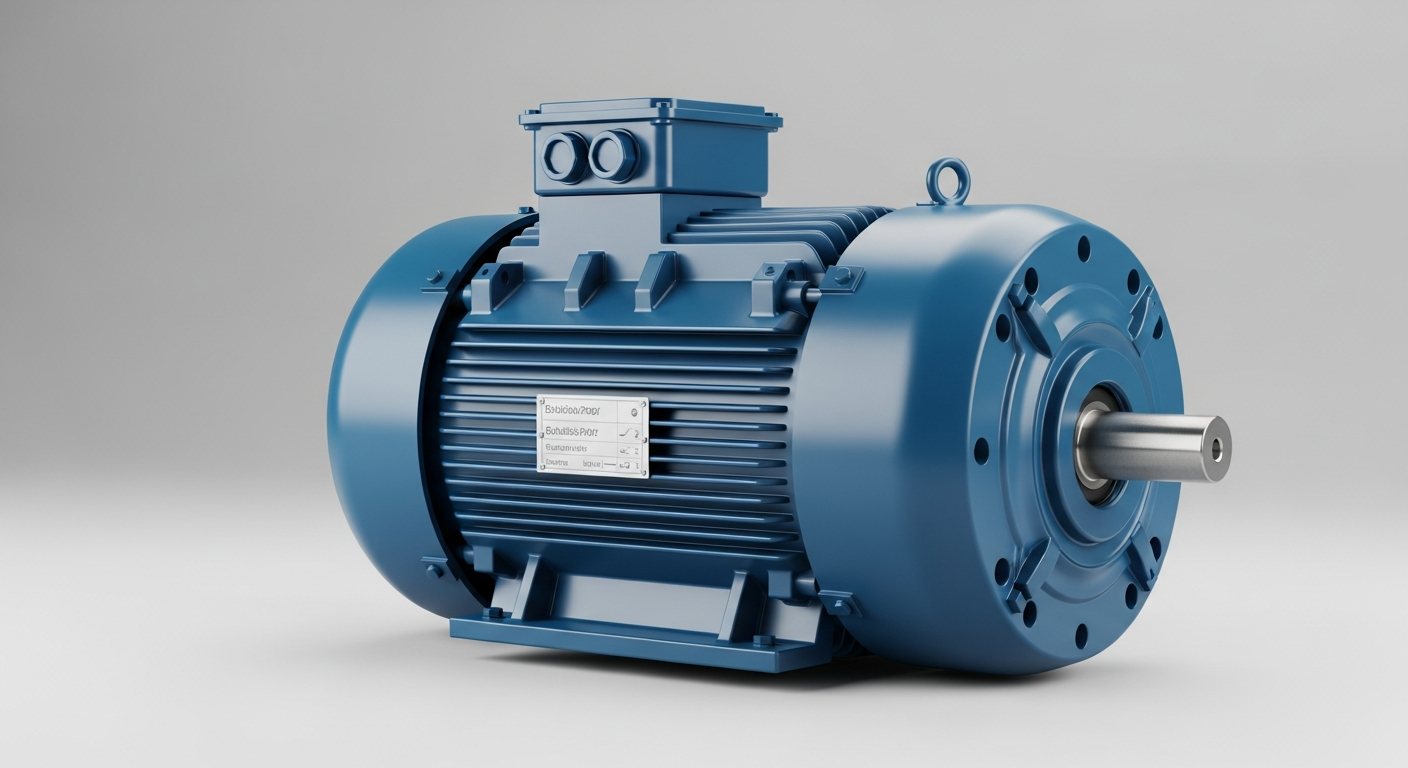
Choosing the correct motor for a hazardous industrial environment is a critical safety decision, not just a matter of performance. It protects personnel, prevents catastrophic accidents, and ensures regulatory compliance. The selection criteria for an explosion proof motor go far beyond horsepower and RPM. They involve a detailed analysis of the specific hazardous materials present, ambient temperature conditions, and the required level of protection. Misinterpreting these factors can lead to the ignition of flammable gases, vapors, or dust, resulting in severe consequences. This guide outlines the fundamental criteria for selecting a motor designed to operate safely in classified hazardous locations.

Understand the Core Standards First
Before selecting a motor, you must understand the standards that define hazardous locations. Our guide compares NEC, IEC, and ATEX to clarify global compliance.
Criterion 1: Correctly Identifying the Hazardous Area Classification
The first and most important criterion is a complete understanding of the environment where the motor will operate. This is defined by a classification system that categorizes hazardous locations based on the nature of the flammable substances present. In North America, this system is detailed in the National Electrical Code (NEC), specifically per NFPA 70 Article 500. You must correctly identify the Class, Division, and Group for your specific application. A motor certified for a Class I, Division 2, Group C area is not suitable for a Class II, Division 1, Group F environment. This classification dictates the required construction and sealing of the motor to prevent it from becoming an ignition source.
- Class I: Locations where flammable gases or vapors are present (e.g., petroleum refineries, chemical plants).
- Class II: Locations with combustible dust (e.g., grain elevators, coal processing facilities).
- Class III: Locations containing easily ignitable fibers or flyings (e.g., textile mills, woodworking plants).
- Division 1 vs. Division 2: Division 1 indicates that hazardous substances are present continuously or intermittently under normal operating conditions. Division 2 means they are present only under abnormal conditions, such as a container failure or system breakdown.
Criterion 2: Matching the Motor’s Temperature Code (T-Code)
An explosion proof motor contains any internal explosion, but it still generates heat on its external surface during operation. The Temperature Code, or T-Code, represents the maximum surface temperature the motor can reach. This temperature must always be lower than the autoignition temperature of the specific hazardous gases, vapors, or dust in the environment. Selecting a motor with an incorrect T-code is a critical failure in safety protocol. For example, if a gas in your facility has an autoignition temperature of 200°C, you must select a motor with a T-code that corresponds to a temperature safely below that, such as T3A (180°C) or T4 (135°C). A T3-rated motor would be unsuitable as it could reach the exact autoignition temperature. A motor rated T2B (260°C) would be an unacceptable ignition risk.
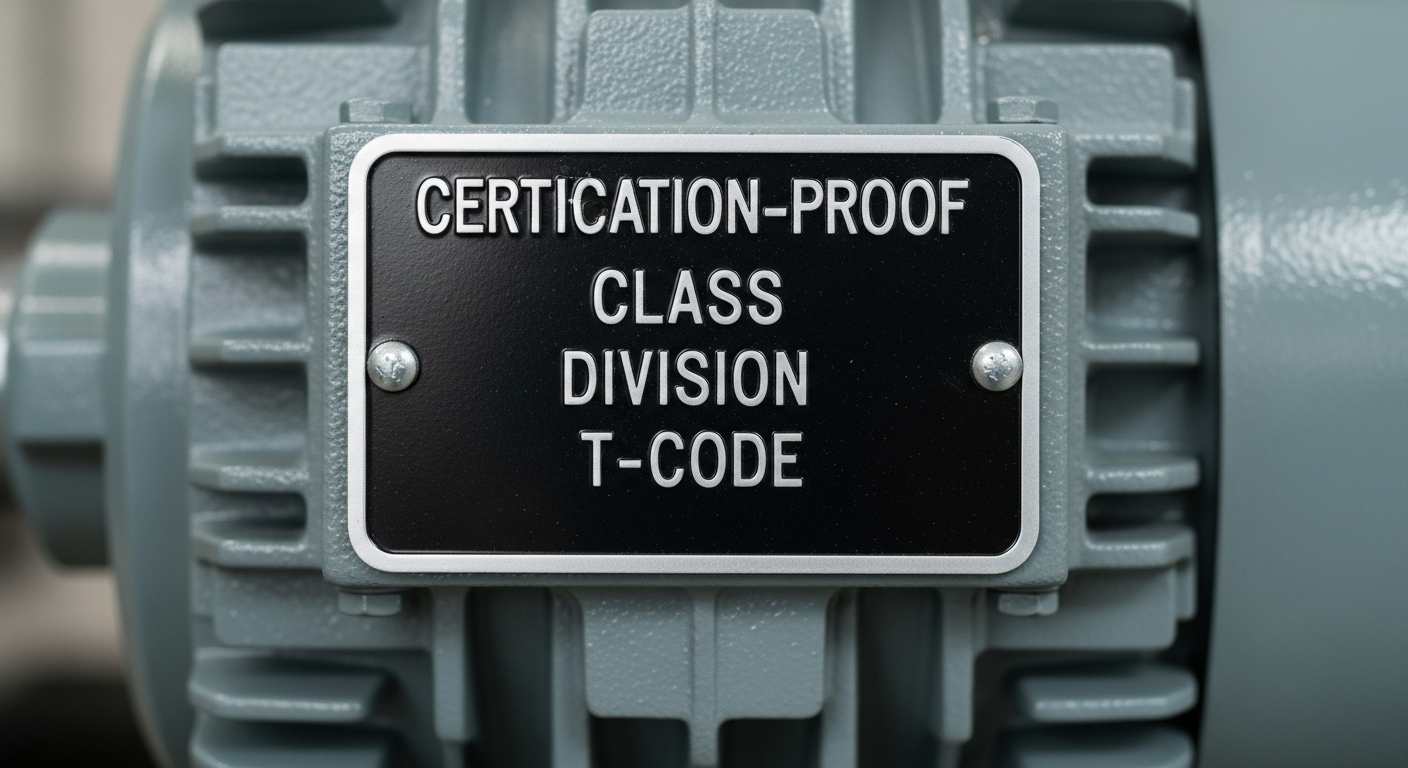
- T-Code Verification: Always check the motor’s nameplate for its T-Code rating.
- Safety Margin: Best practice is to select a motor with a T-Code that provides a significant safety margin below the autoignition temperature of the materials present.
- Ambient Temperature: The motor’s T-Code rating is based on a standard ambient temperature, typically 40°C. If your operating environment is hotter, the motor’s maximum surface temperature will be higher, and you may need a motor with a special rating or a lower T-Code.
- Documentation Review: Refer to your facility’s hazardous area classification drawings and safety data sheets (SDS) for specific autoignition temperatures of chemicals used on site.
Criterion 3: Verifying Enclosure Type and Environmental Protection
While the hazardous area classification is primary, the motor’s general enclosure type is also vital for its longevity and reliability. The environment in a hazardous location can also be corrosive, wet, or extremely dusty. NEMA (National Electrical Manufacturers Association) standards define enclosure types that protect against these conditions. An explosion proof motor for a Class I, Division 1 location will have a heavy-duty enclosure to contain an explosion, but you must also ensure it is rated for the external environment. For example, a motor in an outdoor refinery needs protection against rain and corrosion (e.g., NEMA 4X) in addition to its explosion proof rating. Ignoring environmental protection can lead to premature motor failure, which creates its own set of operational and safety risks.
- Assess the External Environment: Is the motor located indoors or outdoors? Will it be exposed to water (washdowns, rain), corrosive chemicals, or significant amounts of non-combustible dust?
- Select the Appropriate NEMA Rating: Choose an enclosure that matches these conditions. A NEMA 4 rating provides protection against splashing water, while NEMA 4X adds corrosion resistance.
- Consider Material Construction: For highly corrosive areas, motors with cast iron or stainless steel frames may be necessary to prevent degradation of the explosion proof enclosure itself.
- Review Sealing and Gaskets: Ensure all seals, gaskets, and conduit entries are appropriate for both the hazardous classification and the external environmental conditions to maintain the integrity of the enclosure.
Criterion 4: Matching the Apparatus Group to the Substance
Motors are certified for specific gas/dust properties and the motor’s Group rating must be appropriate for the specific chemicals in the hazardous area. This is a fundamental safety selection step because different substances have different explosive characteristics. For example, a motor rated for Group D (propane) under NEC standards is not suitable for a Group B (hydrogen) environment, which requires a more robust design due to hydrogen’s higher explosive potential. Always verify that the motor’s Apparatus Group matches the substances present in your facility.
Recommended Products for Hazardous Motor Applications
The following products from our catalog are certified for use in hazardous areas and are relevant to this guide:
| Product Category | Rating / Certification | Link |
|---|---|---|
| Explosion Proof Motors | Class I, Division 1 & 2 / ATEX Zone 1 | Shop Now |
Shop Certified Explosion Proof Motors
Our inventory of explosion proof motors is certified to meet stringent safety standards, ensuring compliance and operational safety for your hazardous locations.
Frequently Asked Questions
What is the main difference between an explosion proof and a standard motor?
An explosion proof motor features a heavy-duty enclosure designed to contain an internal ignition or spark without allowing it to escape and ignite the surrounding hazardous atmosphere. A standard motor has no such protection and can easily become an ignition source in a classified area.
How do I find the T-Code on an explosion proof motor?
The T-Code is legally required to be listed on the motor’s certification nameplate. It will be clearly marked alongside other critical information like the Class, Division, and Group ratings. If the nameplate is missing or illegible, the motor cannot be used in a hazardous area.
Can any explosion proof motor be used in any hazardous area?
No, absolutely not. Each explosion proof motor is certified for a specific combination of Class, Division, and Group. Using a motor in an environment for which it is not rated is a serious safety violation and can lead to a catastrophic failure.
What special maintenance is required for an explosion proof motor?
Maintenance must be performed by qualified personnel. It includes regularly inspecting the enclosure for damage, checking that all bolts are tightened to the correct torque, and ensuring the flame path (the tight joint between the motor’s parts) is clean and free of corrosion or damage. No unauthorized modifications are ever permitted.
Do I need a VFD-rated explosion proof motor?
If you plan to control the motor’s speed with a Variable Frequency Drive (VFD), you must use a motor specifically rated for inverter duty. Using a VFD on a standard explosion proof motor can cause it to overheat, which would violate its T-Code rating and create a severe ignition risk.
Chat for a Quote Call: 832-699-6726
Selecting the right explosion proof motor is a non-negotiable part of industrial safety. The process must be methodical. First, accurately identify the hazardous location’s Class, Division, and Group. Second, ensure the motor’s T-Code is safely below the autoignition temperature of any substances present. Finally, confirm the motor’s enclosure is rated for both the hazardous classification and any external environmental conditions like moisture or corrosion. Overlooking any of these details compromises safety and violates regulatory standards. Adhering to these selection criteria is essential for protecting your equipment and personnel.