















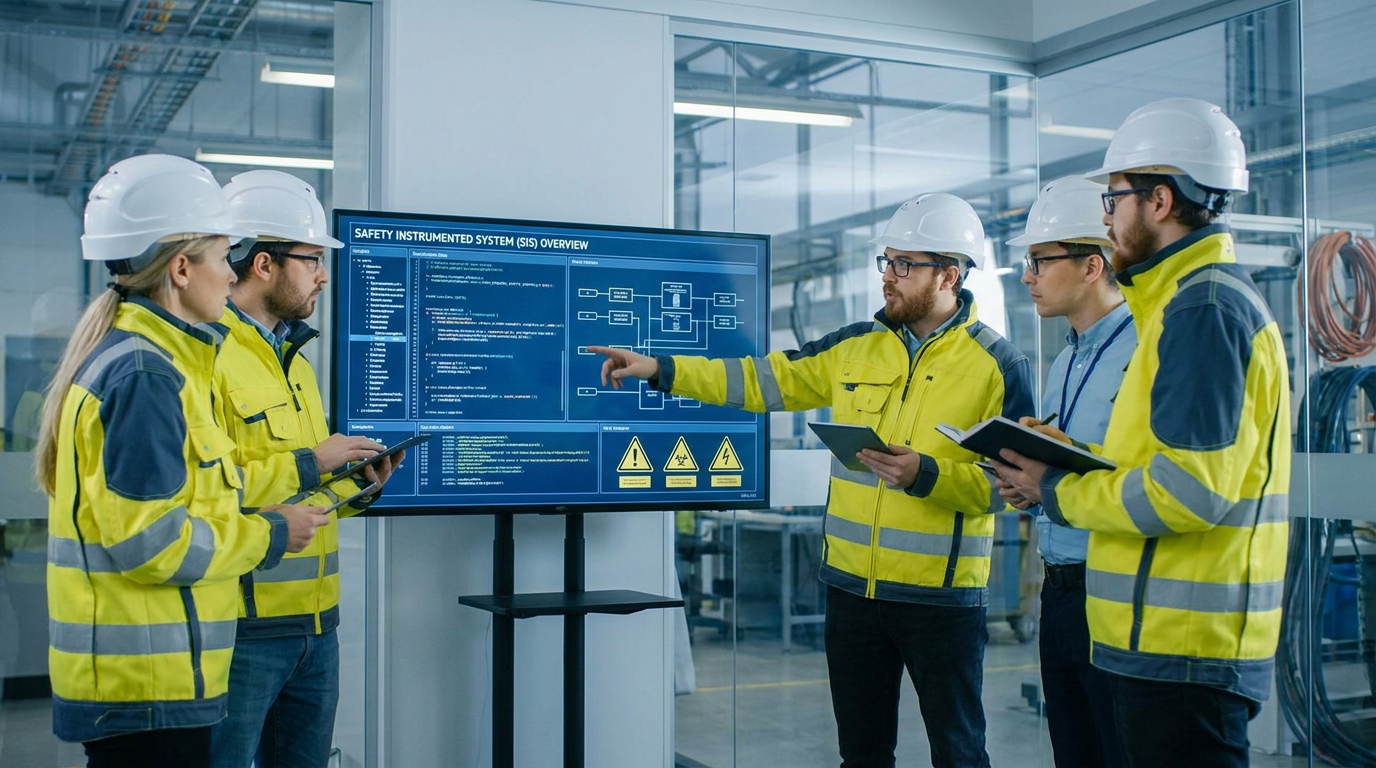
In the intricate and often hazardous world of industrial processing, a silent guardian stands watch. This guardian, known as the Safety Instrumented System (SIS), is the last automated line of defense, a digital sentinel programmed with one solemn duty: to prevent catastrophe. It is the system that executes a flawless shutdown sequence in the blink of an eye when a reactor threatens to overheat or a pipeline is on the verge of a catastrophic rupture. But in this realm of immense pressures and volatile substances, how can we place our absolute trust in lines of code? How do we gain the unwavering confidence that this digital guardian will act precisely as intended at the most critical moment? The answer lies in a process as rigorous and disciplined as the systems it governs: software validation. This is not a mere technicality or a procedural checkbox to be ticked off a list. It is a comprehensive, evidence-based journey that transforms a theoretical safety design into a proven, reliable, and trustworthy protector. This guide will take you deep into the world of SIS software validation, moving far beyond the surface-level requirements to explore the profound ‘why’ behind the ‘what’. We will dissect the critical differences between verification and validation, assemble the expert teams required for the task, uncover the multifaceted benefits that extend far beyond compliance, and provide a practical, step-by-step roadmap for embarking on this essential journey.
Deep Dive into Safety Technologies
Software validation is just one layer of industrial protection. Explore our definitive guide on defining safety technologies for hazardous environments to ensure your facility meets every compliance standard.
Read the Safety Technology GuideThe Critical Role of Software Validation in Safety Instrumented Systems (SIS)
In the high-stakes world of industrial processing, where immense pressures, volatile chemicals, and extreme temperatures are the norm, safety is not merely a priority; it is the fundamental bedrock upon which the entire operation is built. At the heart of modern industrial safety lies the Safety Instrumented System, or SIS. This is not just any control system; it is the ultimate guardian, the last line of automated defense designed to intervene and bring a process to a safe state when all other layers of protection have failed. It is the system that slams a valve shut to prevent a catastrophic overpressure event or cuts fuel to a furnace to avert an explosion. But what gives us the confidence that this digital sentinel will perform its duty flawlessly at the critical moment? The answer, in large part, lies in a rigorous and uncompromising process known as software validation. Software validation for an SIS is the comprehensive and documented process of proving that the software, as configured and installed, meets the specific safety requirements for which it was designed. It is the ultimate confirmation that the system will do the right thing, at the right time, every single time.
- Verification vs. Validation: Verification asks, “Did we build the system right?” while validation asks, “Did we build the right system?”
- Safety Integrity Level (SIL): Validation ensures the system meets its required SIL, a measure of risk reduction.
- Compliance: Validation provides the documented proof of compliance with standards like IEC 61511.
Embarking on Your SIS Software Validation Journey: A Step-by-Step Guide
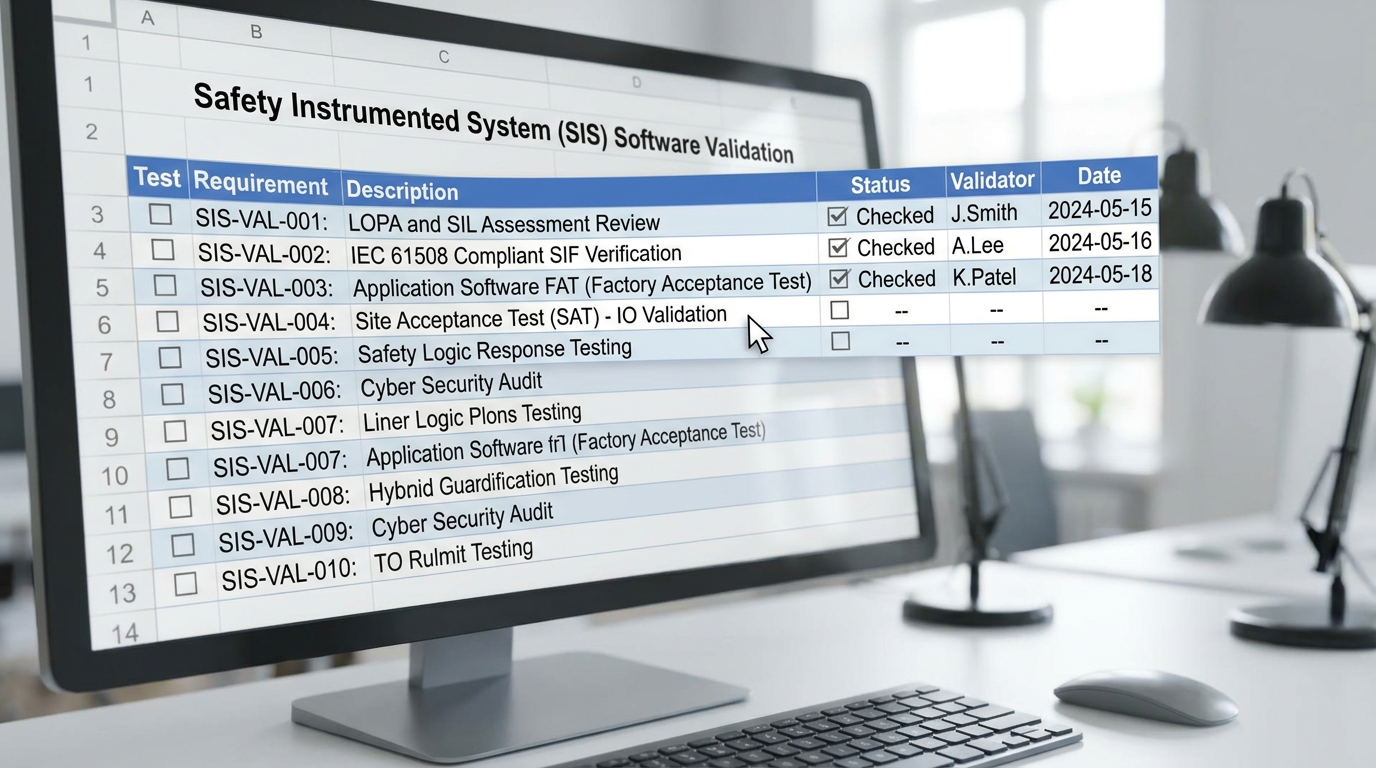
Initiating the software validation process for a Safety Instrumented System (SIS) can often feel like standing at the base of a colossal mountain. The peak, representing a fully validated and compliant system, seems distant and the path obscured by complex standards and technical jargon. However, the journey is not about a single, heroic leap but a series of deliberate, well-planned steps. The fundamental shift in mindset required is moving away from the conventional software development goal of “making it work” to the safety-critical imperative of “proving it works correctly under all foreseeable conditions and will fail in a predictable, safe manner.” This process is less about creative coding and more about disciplined engineering, where traceability, documentation, and rigorous verification are the cornerstones of success. Your first and most critical action is not to write a single line of application code or configure a logic solver, but to create the foundational document that will guide every subsequent activity: the Software Validation Plan (SVP). This document is the master blueprint, the constitution for your entire validation effort. It must be a comprehensive, living document that meticulously details the ‘who, what, when, where, and how’ of the validation process. It will define the precise scope of the software to be validated, including the specific versions of the logic solver’s operating system, the application program, and any associated communication drivers or Human-Machine Interface (HMI) components. The SVP must also explicitly reference the single source of truth from which all validation activities flow: the Safety Requirements Specification (SRS). Every test, every inspection, and every review must be directly traceable back to a specific requirement in the SRS. Without this link, any validation activity is essentially meaningless.
- Develop a Software Validation Plan (SVP):This master blueprint details the scope, methodology, and acceptance criteria for all validation activities.
- Assemble an Independent Team: The validation team must be independent of the design team to ensure objectivity and avoid confirmation bias.
- Execute Rigorous Testing: Conduct both static analysis (reviews, inspections) and dynamic testing (FAT, SAT) to challenge the software against the SRS.
Software Validation Framework Comparison
| Validation Phase | Core Objective | Traceability Link | Testing Methodology |
|---|---|---|---|
| Verification (V&V) | Ensuring the system is built correctly according to design specs. | Design Specification (DS) | Static Analysis, Code Reviews, Peer Inspections. |
| Validation (Final) | Proving the right system was built for the safety goal. | Safety Requirements (SRS) | Dynamic Testing, Fault Injection, FAT/SAT. |
| Change Management | Maintaining integrity after software updates or patches. | MOC Protocol | Impact Analysis, Regression Testing, Re-Validation. |
| Compliance Audit | Documentary proof for IEC 61511 and SIL certification. | Full Lifecycle Records | Third-party Assessment, Documentation Review. |
Certified Hardware for Your Safety Systems
Validated software requires reliable, intrinsically safe hardware to function. Shop our full range of SIL-rated components, safety relays, and hazardous area equipment ready for deployment.
Shop All Safety ProductsRelated Resources
FAQs
What exactly is software validation in the context of a Safety Instrumented System (SIS)?
Software validation for an SIS is the documented process of proving that the software meets the specific safety requirements for which it was designed. It’s the ultimate confirmation that the system will do the right thing, at the right time, every single time.
What is the difference between verification and validation (V&V), and why are both important?
Verification asks, “Are we building the product right?” while Validation asks, “Are we building the right product?” Both are essential. Verification ensures correctness at each development step, while validation confirms the final product meets the overall safety goals.
What does a typical software validation process look like?
It’s a structured process that includes creating a validation plan, conducting a Factory Acceptance Test (FAT) to test the system in a simulated environment, and a Site Acceptance Test (SAT) to validate the system’s integration with the actual plant equipment.
Who should perform the software validation?
A multi-disciplinary team that is independent of the design team. This ensures objectivity and avoids confirmation bias. The team should include a validation lead, a process/control systems engineer, and an I&C technician.
Is software validation a one-time event?
No, it’s a continuous process. Any change to the SIS software must be managed through a formal Management of Change (MOC) process that includes re-validation. Periodic proof testing also serves as a form of ongoing operational re-validation.
Conclusion
As we have journeyed through the intricate landscape of Safety Instrumented System software validation, a central truth emerges with undeniable clarity: this process is far more than a regulatory obligation or a final hurdle in a project timeline. It is the very bedrock of trust in industrial automation. It is the disciplined, methodical process that converts a theoretical safety concept, documented in the pages of a Safety Requirements Specification, into a tangible, proven, and reliable guardian of human life, environmental integrity, and operational stability. We have seen that true validation is not a singular event but a continuous thread woven through the entire safety lifecycle, beginning with the validation of the requirements themselves and extending through design, factory testing, site commissioning, and the ongoing management of change for decades to come. It demands a multi-disciplinary team of experts, bound by the principle of independence, to challenge the system with a healthy skepticism and ensure that every potential failure mode has been considered and every safety function has been rigorously proven. The benefits of embracing this philosophy are profound, yielding not only a demonstrably safer plant and unimpeachable compliance but also enhanced operational reliability, reduced spurious trips, and significant long-term financial prudence. Ultimately, software validation is the final, critical act of due diligence that allows engineers, operators, and leaders to answer the most important question with confidence: “Will our safety system work when we need it most?” By committing to a culture of robust validation, we are not just building compliant systems; we are building a legacy of safety and operational excellence.

Beyond the Checkbox: The Definitive Guide to Software Validation for Safety Instrumented Systems (SIS)
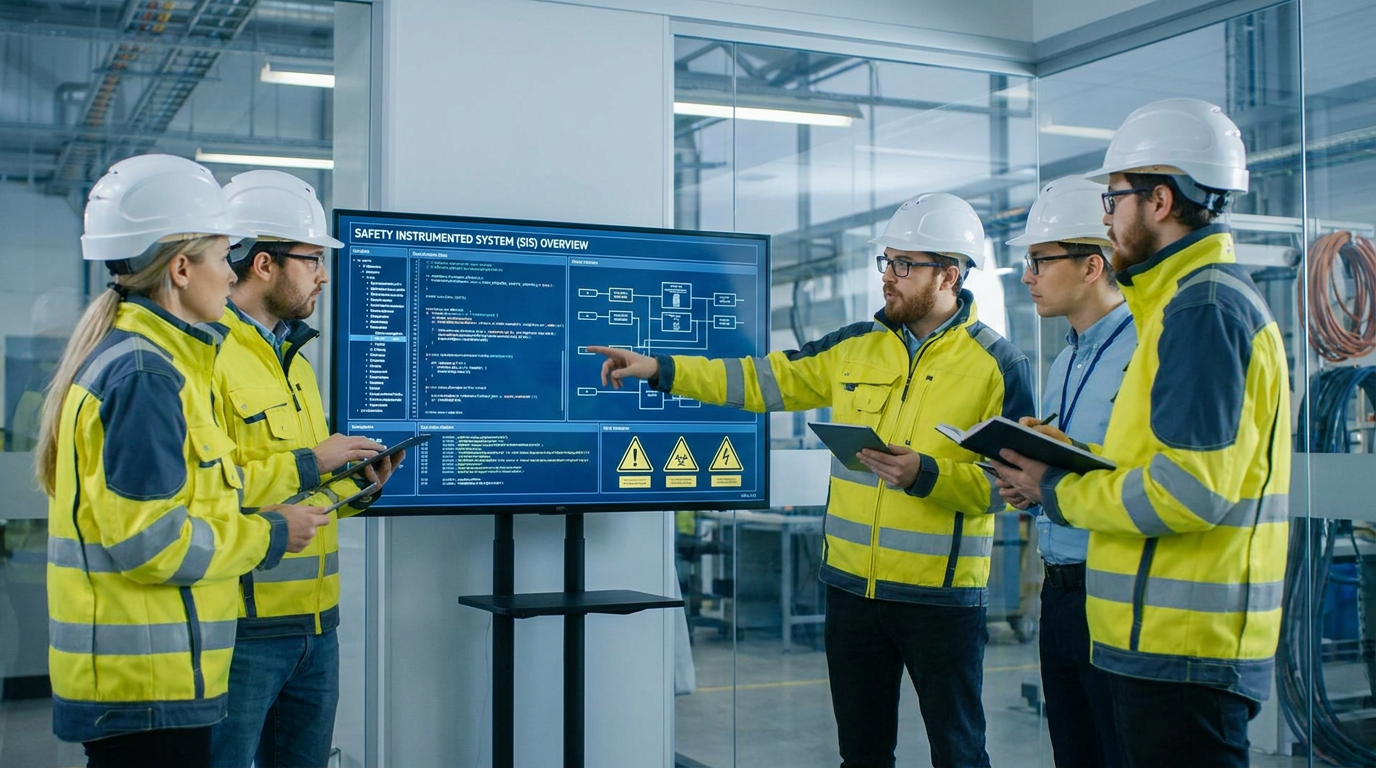
In the intricate and often hazardous world of industrial processing, a silent guardian stands watch. This guardian, known as the Safety Instrumented System (SIS), is the last automated line of defense, a digital sentinel programmed with one solemn duty: to prevent catastrophe. It is the system that executes a flawless shutdown sequence in the blink of an eye when a reactor threatens to overheat or a pipeline is on the verge of a catastrophic rupture. But in this realm of immense pressures and volatile substances, how can we place our absolute trust in lines of code? How do we gain the unwavering confidence that this digital guardian will act precisely as intended at the most critical moment? The answer lies in a process as rigorous and disciplined as the systems it governs: software validation. This is not a mere technicality or a procedural checkbox to be ticked off a list. It is a comprehensive, evidence-based journey that transforms a theoretical safety design into a proven, reliable, and trustworthy protector. This guide will take you deep into the world of SIS software validation, moving far beyond the surface-level requirements to explore the profound ‘why’ behind the ‘what’. We will dissect the critical differences between verification and validation, assemble the expert teams required for the task, uncover the multifaceted benefits that extend far beyond compliance, and provide a practical, step-by-step roadmap for embarking on this essential journey.
The Critical Role of Software Validation in Safety Instrumented Systems (SIS)
In the high-stakes world of industrial processing, where immense pressures, volatile chemicals, and extreme temperatures are the norm, safety is not merely a priority; it is the fundamental bedrock upon which the entire operation is built. At the heart of modern industrial safety lies the Safety Instrumented System, or SIS. This is not just any control system; it is the ultimate guardian, the last line of automated defense designed to intervene and bring a process to a safe state when all other layers of protection have failed. It is the system that slams a valve shut to prevent a catastrophic overpressure event or cuts fuel to a furnace to avert an explosion. But what gives us the confidence that this digital sentinel will perform its duty flawlessly at the critical moment? The answer, in large part, lies in a rigorous and uncompromising process known as software validation. Software validation for an SIS is the comprehensive and documented process of proving that the software, as configured and installed, meets the specific safety requirements for which it was designed. It is the ultimate confirmation that the system will do the right thing, at the right time, every single time.
- **Verification vs. Validation:** Verification asks, “Did we build the system right?” while validation asks, “Did we build the right system?”
- **Safety Integrity Level (SIL):** Validation ensures the system meets its required SIL, a measure of risk reduction.
- **Compliance:** Validation provides the documented proof of compliance with standards like IEC 61511.
Embarking on Your SIS Software Validation Journey: A Step-by-Step Guide
Initiating the software validation process for a Safety Instrumented System (SIS) can often feel like standing at the base of a colossal mountain. The peak, representing a fully validated and compliant system, seems distant and the path obscured by complex standards and technical jargon. However, the journey is not about a single, heroic leap but a series of deliberate, well-planned steps. The fundamental shift in mindset required is moving away from the conventional software development goal of “making it work” to the safety-critical imperative of “proving it works correctly under all foreseeable conditions and will fail in a predictable, safe manner.” This process is less about creative coding and more about disciplined engineering, where traceability, documentation, and rigorous verification are the cornerstones of success. Your first and most critical action is not to write a single line of application code or configure a logic solver, but to create the foundational document that will guide every subsequent activity: the Software Validation Plan (SVP). This document is the master blueprint, the constitution for your entire validation effort. It must be a comprehensive, living document that meticulously details the ‘who, what, when, where, and how’ of the validation process. It will define the precise scope of the software to be validated, including the specific versions of the logic solver’s operating system, the application program, and any associated communication drivers or Human-Machine Interface (HMI) components. The SVP must also explicitly reference the single source of truth from which all validation activities flow: the Safety Requirements Specification (SRS). Every test, every inspection, and every review must be directly traceable back to a specific requirement in the SRS. Without this link, any validation activity is essentially meaningless.
- **Develop a Software Validation Plan (SVP):** This master blueprint details the scope, methodology, and acceptance criteria for all validation activities.
- **Assemble an Independent Team:** The validation team must be independent of the design team to ensure objectivity and avoid confirmation bias.
- **Execute Rigorous Testing:** Conduct both static analysis (reviews, inspections) and dynamic testing (FAT, SAT) to challenge the software against the SRS.
Comparative Table: UL-Certified Intrinsically Safe Devices
| Product | Category | Main Specs | Certification | Internal Link |
|---|---|---|---|---|
| Placeholder Product 1 | Safety PLC | SIL 3, 1oo2D architecture | UL, ATEX, IECEx | Shop Now |
| Placeholder Product 2 | Intrinsically Safe I/O | SIL 3, HART pass-through | UL, ATEX, IECEx | Shop Now |
| Placeholder Product 3 | Safety Relay | SIL 3, 24VDC | UL, ATEX, IECEx | Shop Now |
Related Resources
- Functional Safety Knowledge Base
- Browse Our Full Range of Safety Instrumented System Products
- Read More Articles on Process Safety
FAQs
- What exactly is software validation in the context of a Safety Instrumented System (SIS)?
Software validation for an SIS is the documented process of proving that the software meets the specific safety requirements for which it was designed. It’s the ultimate confirmation that the system will do the right thing, at the right time, every single time. - What is the difference between verification and validation (V&V), and why are both important?
Verification asks, “Are we building the product right?” while Validation asks, “Are we building the right product?” Both are essential. Verification ensures correctness at each development step, while validation confirms the final product meets the overall safety goals. - What does a typical software validation process look like?
It’s a structured process that includes creating a validation plan, conducting a Factory Acceptance Test (FAT) to test the system in a simulated environment, and a Site Acceptance Test (SAT) to validate the system’s integration with the actual plant equipment. - Who should perform the software validation?
A multi-disciplinary team that is independent of the design team. This ensures objectivity and avoids confirmation bias. The team should include a validation lead, a process/control systems engineer, and an I&C technician. - Is software validation a one-time event?
No, it’s a continuous process. Any change to the SIS software must be managed through a formal Management of Change (MOC) process that includes re-validation. Periodic proof testing also serves as a form of ongoing operational re-validation.
Conclusion
As we have journeyed through the intricate landscape of Safety Instrumented System software validation, a central truth emerges with undeniable clarity: this process is far more than a regulatory obligation or a final hurdle in a project timeline. It is the very bedrock of trust in industrial automation. It is the disciplined, methodical process that converts a theoretical safety concept, documented in the pages of a Safety Requirements Specification, into a tangible, proven, and reliable guardian of human life, environmental integrity, and operational stability. We have seen that true validation is not a singular event but a continuous thread woven through the entire safety lifecycle, beginning with the validation of the requirements themselves and extending through design, factory testing, site commissioning, and the ongoing management of change for decades to come. It demands a multi-disciplinary team of experts, bound by the principle of independence, to challenge the system with a healthy skepticism and ensure that every potential failure mode has been considered and every safety function has been rigorously proven. The benefits of embracing this philosophy are profound, yielding not only a demonstrably safer plant and unimpeachable compliance but also enhanced operational reliability, reduced spurious trips, and significant long-term financial prudence. Ultimately, software validation is the final, critical act of due diligence that allows engineers, operators, and leaders to answer the most important question with confidence: “Will our safety system work when we need it most?” By committing to a culture of robust validation, we are not just building compliant systems; we are building a legacy of safety and operational excellence.