
























In the high-stakes world of industrial operations, where the very air can be a volatile mixture of flammable gases, vapours, or combustible dusts, safety is not a matter of choice—it is a fundamental law. Within these hazardous areas, from offshore oil rigs to sprawling chemical plants, the most mundane elements of infrastructure must be re-engineered as bastions of protection. Among these, Ex-rated lighting stands as a critical, yet often misunderstood, guardian. To neglect the upkeep of this equipment is to silently disarm your facility’s most vital safety systems. This guide delves deep into the world of Ex-rated lighting maintenance, moving beyond the simple act of changing a bulb to explore the intricate procedures, specialized competencies, and unwavering commitment required to ensure these unseen guardians remain ever-vigilant.
Master ATEX Rating Categories
Maintenance strategy depends on equipment classification. Deepen your technical knowledge by exploring our detailed guide on ATEX categories and hazardous area compliance.
Read the ATEX GuideThe Critical Importance of Competency
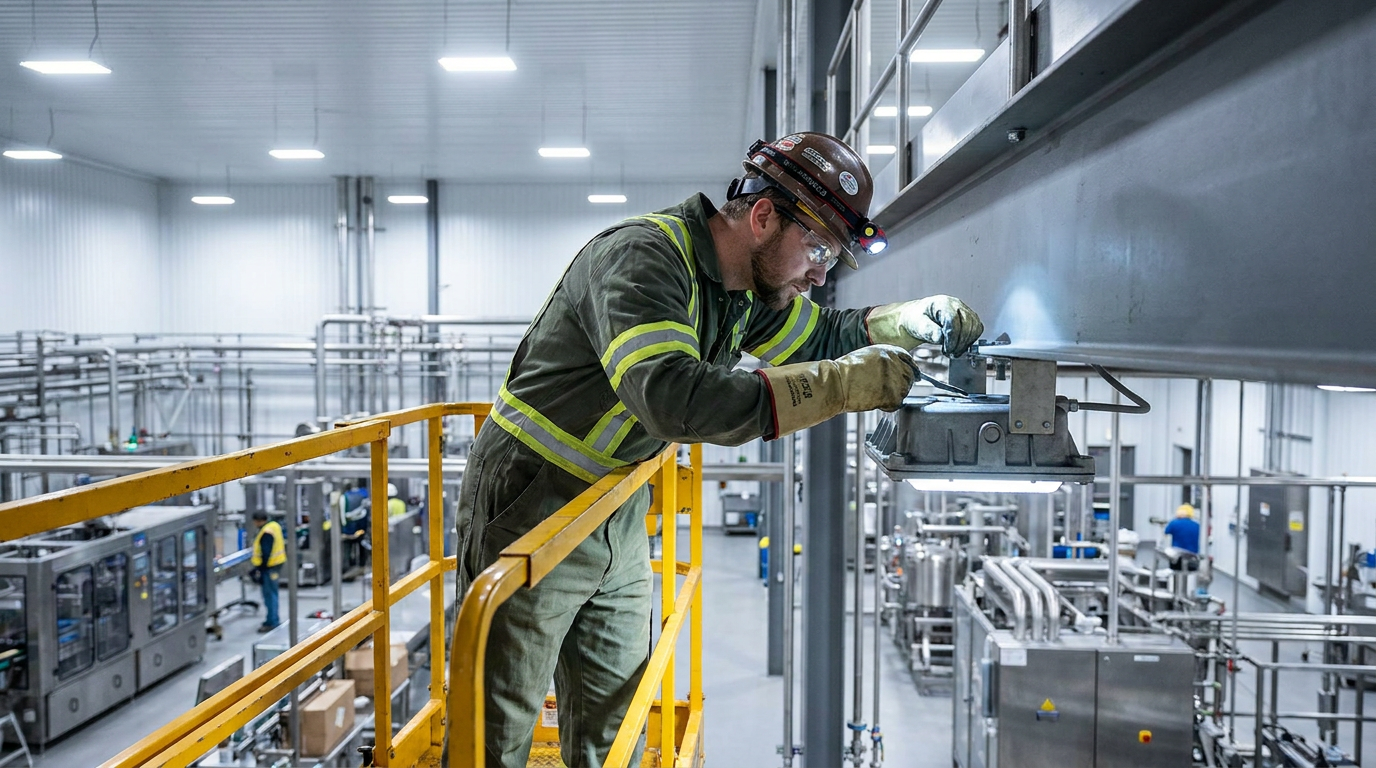
The maintenance of Ex-rated lighting is not a task for a general electrician. It requires specialized training and certification, such as the globally recognized CompEx qualification. A competent person understands the principles of explosion protection and the specific requirements for different types of Ex equipment.
- Specialized Knowledge: Understanding of hazardous area classifications (Zones), gas and dust groups, and temperature classes (T-ratings).
- Practical Skills: Hands-on ability to correctly install, inspect, and maintain Ex-rated equipment, including the proper handling of flame paths and seals.
- Regulatory Compliance: Familiarity with standards like ATEX, IECEx, and NEC to ensure all work is compliant and documented.
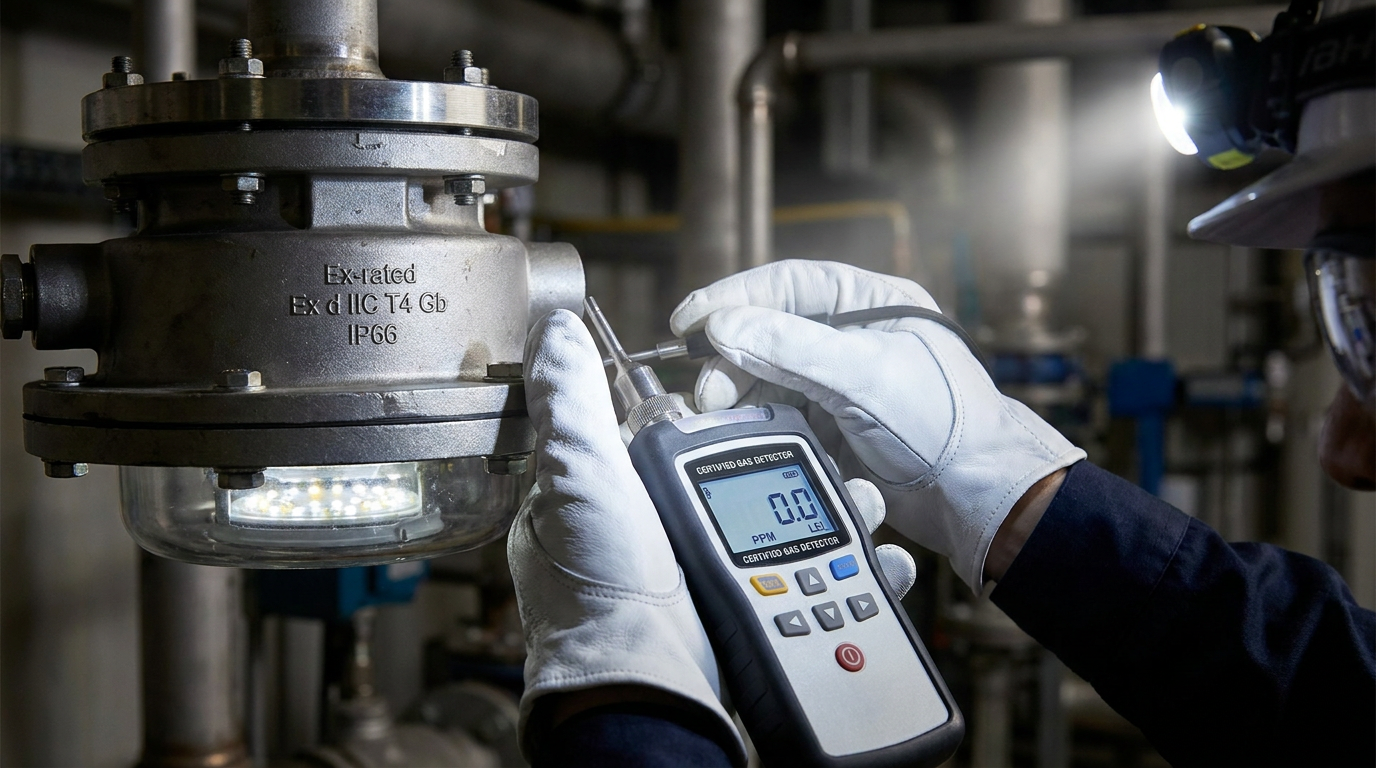
A Step-by-Step Guide to Safe Maintenance
A structured approach to maintenance is essential for ensuring the continued safety and integrity of Ex-rated lighting.
- Permit to Work: Before any work begins, a formal Permit to Work must be issued. This includes a risk assessment, isolation of the electrical circuit (Lockout/Tagout), and atmospheric testing of the area.
- Detailed Inspection: A thorough inspection of the fixture should be conducted, looking for any signs of damage, corrosion, or loose components. Gaskets, seals, and the glass lens must be in perfect condition.
- Correct Reassembly and Documentation: The fixture must be reassembled using the correct parts and to the manufacturer’s specifications, including bolt torque settings. All maintenance activities must be meticulously documented in a logbook.
Essential Ex-Rated Lighting for Hazardous Areas
| Product Name | Category | Main Specs | Price | Internal Link |
|---|---|---|---|---|
| NICOR – XPQ1B150U50GRP Titan LED | Ex-Rated Floodlight | Class I, Div 1 150 Watt LED / 19,300 Lumens |
$1,105.00 | View Details |
| NICOR – XPL1A080U50GR Proteus | Ex-Rated Linear Fixture | Class I, Div 2 80-Watt LED / 10,400 Lumens |
$1,440.72 | View Details |
| Nightstick XPP-5452G Headlamp | Ex-Rated Portable Light | Class I, Div 1 & 2 Intrinsically Safe / Multi-Function |
$63.00 | View Details |
Secure Your Facility with Fixed Lighting
Reliable maintenance starts with high-quality hardware. Browse our selection of fixed explosion-proof luminaires designed for maximum durability in Zone 1 and Zone 2 environments.
Shop Fixed Lighting SolutionsRelated Resources
- Understanding ATEX Compliance for Industrial Safety
- Ingress Protection (IP) Ratings Explained
- Shop All Ex-Rated Lighting

FAQs
What is the difference between Ex-rated and standard industrial lighting?
Ex-rated lighting is specifically designed to prevent the ignition of hazardous atmospheres by containing any internal sparks or explosions and by ensuring the surface temperature remains below the auto-ignition temperature of the surrounding substances.
How often should Ex-rated lighting be inspected?
Inspection frequency depends on the environment and regulatory requirements. It typically includes regular visual inspections, closer inspections every 1-2 years, and detailed inspections every 3-5 years. Harsh environments require more frequent inspections.
Can I use a generic replacement bulb or part?
No. Only original equipment manufacturer (OEM) or certified equivalent parts can be used. Using uncertified parts will void the fixture’s Ex certification and render it unsafe.
Who is qualified to perform maintenance on Ex-rated lighting?
Only personnel with specialized training and certification in hazardous area equipment, such as CompEx certification, are considered competent and qualified to perform this work.
What is a flame path and why is it important?
A flame path is a precisely machined gap in an explosion-proof enclosure that cools hot gases from an internal ignition to a temperature that will not ignite the external hazardous atmosphere. Its integrity is critical to the safety of the fixture.
Conclusion
Diligent maintenance of Ex-rated lighting is a critical component of a comprehensive safety strategy in any hazardous environment. By ensuring that these vital pieces of equipment are regularly inspected, maintained by competent personnel, and properly documented, you can significantly reduce the risk of a catastrophic incident. This commitment to safety protects your personnel, your assets, and your entire operation.
