



















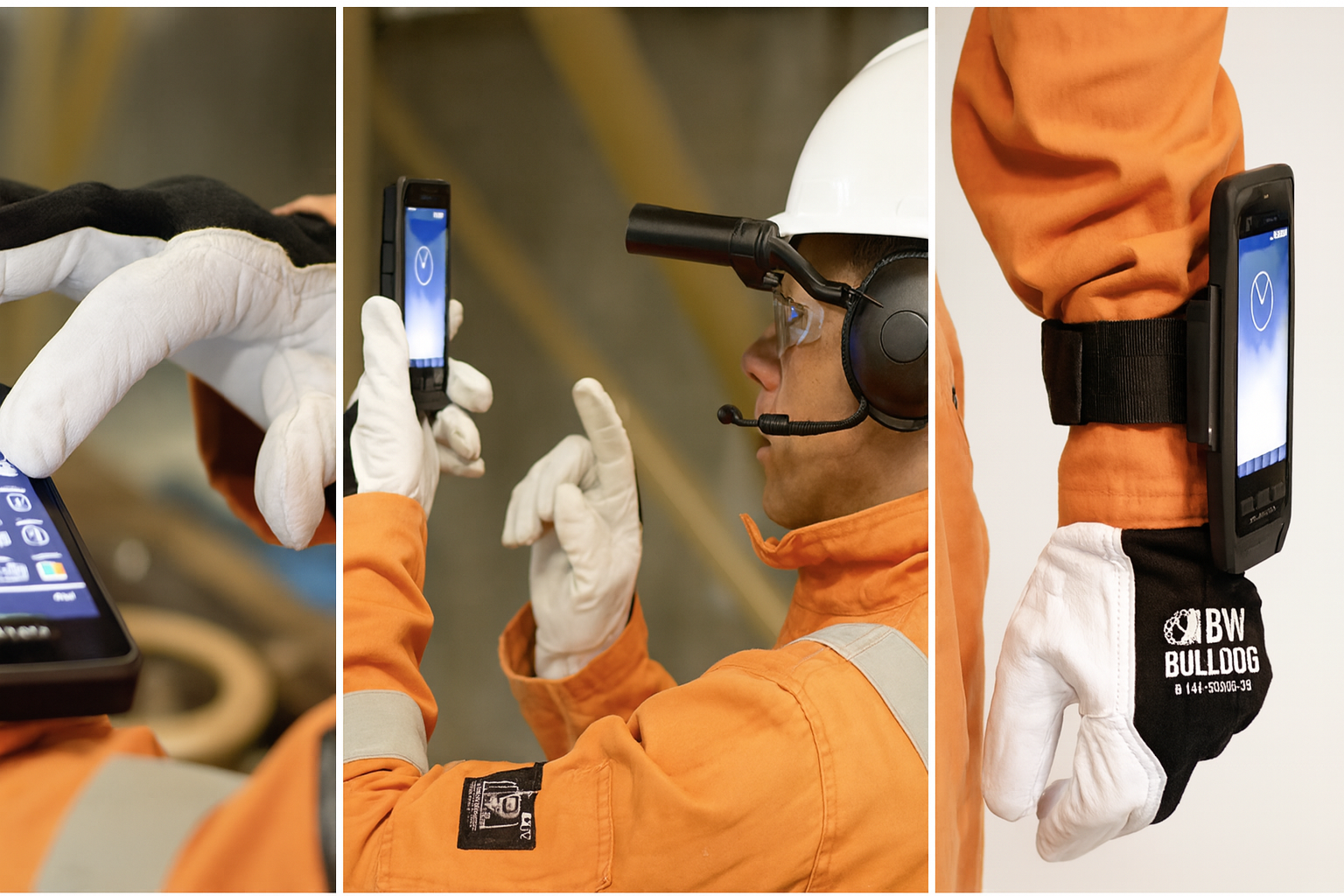
Hazardous industries such as oil and gas, chemical processing, and mining rely on ATEX-certified phones to keep teams connected safely in explosive environments. These intrinsically safe devices are engineered to prevent ignition from sparks, heat, or static discharge — making them essential for workers in Zones 1 and 2.
As we move into 2026, advancements in 5G connectivity, rugged design, and battery performance have expanded options for buyers. However, atex phone price remains a major consideration — and it varies significantly by certification, region, and manufacturer.
In this comprehensive guide, we’ll explore the latest ATEX smartphones from leading brands, analyze updated 2026 pricing, compare technical specifications, and explain the key factors that influence cost.
Need help choosing the right ATEX phone?
Our Hazardous Area Experts can guide you on certifications, compatibility, and pricing to find the best device for your facility.
💬 Chat with an ExpertQuick replies • Compatibility checks • Certification guidance
What Makes a Phone ATEX or Intrinsically Safe?
ATEX phones meet European Union Directive 2014/34/EU, certifying them for use in explosive atmospheres. To achieve this certification, manufacturers must design phones that:
Limit electrical and thermal energy to prevent ignition.
Enclose or isolate battery components.
Use specialized materials that resist static buildup and high heat.
Undergo independent lab testing for Zone 1 and Zone 2 environments.
In short: an ATEX-rated phone allows safe communication without risking ignition — a critical factor for oil rigs, refineries, and chemical plants.
Understanding ATEX Phone Pricing in 2026
Why Certified Phones are a Critical Investment for Hazardous Areas
An ATEX-certified phone is not just a communication tool; it’s a piece of safety equipment. The price reflects extensive research, specialized components, and rigorous testing required to ensure the device cannot become an ignition source in a volatile atmosphere. Investing in a certified device is an investment in asset protection, operational continuity, and, most importantly, worker safety.
Decoding Certifications: ATEX, IECEx, and Class/Division Explained
The price of an intrinsically safe phone is directly tied to its certification level. Here’s a brief breakdown:
- ATEX: The European Union’s directive for equipment used in explosive atmospheres. Zone 1 devices offer a higher level of protection (and cost more) than Zone 2 devices.
- IECEx: An international certification accepted in many countries, streamlining global compliance. It often accompanies an ATEX rating.
- Class/Division: The system used primarily in North America. Class I, Division 1 (CI/D1) is comparable to ATEX Zone 1, while Class I, Division 2 (CI/D2) is similar to Zone 2.
The True Cost of Non-Compliance vs. The Price of a Certified Device
While the upfront cost of an ATEX phone can seem high, it pales in comparison to the potential costs of a non-compliance incident. A single spark from an uncertified device can lead to catastrophic explosions, resulting in significant financial losses, legal liabilities, operational shutdowns, and tragic loss of life. The price of a certified phone is a fraction of the cost of a single safety incident.
Average Price Ranges for ATEX Phones in 2026
Entry-Level & Feature Phones (Typically Zone 2 / Class I Div 2)
These devices prioritize essential communication (voice and text) over advanced smartphone features. They are ideal for workers who need a reliable, safe communication line without the complexity of a full-fledged smartphone. Expected Price Range: $600 – $1,300 USD.
Mid-Range Rugged Smartphones (Zone 1 & Zone 2 Options)
This is the most common category, offering a balance of performance, durability, and safety certification. These Android-based devices often feature 4G/5G connectivity, quality cameras for inspections, and enough processing power for industrial apps. Expected Price Range: $1,500 – $3,000 USD.
High-End & Specialized Devices (Zone 1 / Class I Div 1 with Advanced Features)
These flagship devices are built for the most demanding environments and data-intensive tasks. They boast top-tier processors, 5G modems, superior cameras (sometimes with thermal imaging), and the highest level of intrinsic safety certification for Zone 1. Expected Price Range: $3,000 – $5,000+ USD.
Key Factors That Influence ATEX Phone Costs
The Certification Impact: Zone 1 vs. Zone 2 Smartphone Pricing
The single greatest factor affecting price is the hazardous area rating. A Zone 1 / Div 1 phone requires more stringent design, testing, and component isolation to ensure it is safe even if a fault occurs. This engineering complexity means a Zone 1 certified smartphone can cost 40-60% more than a comparable Zone 2 model.
Technical Specifications: From Processor and Memory to 5G and Camera Quality
Like consumer phones, ATEX devices with faster processors, more RAM/storage, 5G capabilities, and high-resolution cameras carry a higher price tag. Integrating these advanced components while maintaining intrinsic safety is a significant engineering challenge that adds to the cost.
Durability & Ingress Protection: IP Ratings and Ruggedness
Beyond being explosion-proof, these phones are built to withstand harsh industrial conditions. Higher IP ratings (e.g., IP68 for dust and water resistance), military-grade shock/drop protection (MIL-STD-810H), and resistance to chemicals all contribute to a higher manufacturing cost and final price.
Top ATEX Mobile Phones and Their 2026 Prices
ECOM Smart-Ex Series: Features and Price Points
The ECOM Smart-Ex line is a benchmark in the industry. The flagship Smart-Ex 03, with 5G connectivity and Zone 1/21 certification, is designed for next-generation industrial applications. Its price typically falls in the $2,500 – $3,200 range, depending on configuration. The older, but still highly reliable, Smart-Ex 02 (4G, Zone 1/21) offers a more budget-friendly option around $1,800 – $2,200.
i.safe MOBILE IS540.1: Cost and Capabilities for Zone 1/21
The i.safe MOBILE IS540.1 is a high-performance 5G smartphone certified for Zone 1/21. It features a powerful chipset and a high-quality display, making it suitable for complex applications like augmented reality and remote assistance. Its premium features place it in the $2,800 – $3,500 price bracket, reflecting its position as a top-tier device.
BARTEC Pixavi Phone: A Look at its Price and Unique Features
BARTEC’s Pixavi devices are known for their exceptional camera technology and ruggedness, specifically designed for video collaboration in hazardous areas. The Pixavi Phone is a Zone 1/21 and Class I, Div 1 device that often commands a premium price due to its specialized optics and robust build. Expect pricing to be in the $3,500 – $4,500 range, targeting organizations where high-quality visual data is critical.
How to Choose the Right ATEX Phone for Your Budget
Assessing Your Operational Needs vs. Nice-to-Have Features
Before purchasing, clearly define your requirements. Do workers need basic push-to-talk, or will they be running complex software? Does the job require 5G speeds, or is 4G sufficient? Separating essential needs from desirable features can prevent overspending on capabilities that won’t be used.
Sourcing from a Trusted Authority vs. Unauthorized Resellers
Purchasing from an authorized distributor like the Intrinsically Safe Store ensures you receive genuine, fully certified products with a valid manufacturer’s warranty. Unauthorized resellers may offer lower prices, but often at the cost of outdated stock, questionable certification, or no after-sales support, posing a significant safety and financial risk.
Factoring in Long-Term Value and Support
The total cost of ownership (TCO) is more important than the initial price. Consider factors like warranty duration, availability of service, battery replaceability, and accessory ecosystem. A slightly more expensive phone from a reputable brand with strong support may offer better long-term value than a cheaper alternative with limited service options.

Request a Custom Quote for Your ATEX Phone
Get tailored pricing and availability for your site. Our team can help you select the right certified smartphone and prepare your ATEX compliance package.
🧾 Chat to Request a QuoteBulk pricing • Expert support • Fast turnaround
Ecom vs. i.safe MOBILE: Which Brand Should You Choose?
Both Ecom Instruments (a Pepperl+Fuchs brand) and i.safe MOBILE lead the intrinsically safe smartphone market, but their strengths differ.
Ecom Highlights
Trusted in heavy industry for over 30 years.
Broad range from feature phones (Ex-Handy) to 5G smart models (Smart-Ex 03).
Integration with Honeywell Connected Worker and RealWear platforms.
Global service centers and rapid parts availability.
i.safe MOBILE Highlights
Strong focus on German engineering and rugged design.
Offers dual-SIM and glove-friendly operation.
IS530.1 and IS540.1 include 5G capability and advanced thermal stability.
Accessories such as barcode scanners and PTT modules expand versatility.
Recommendation
If your operations emphasize Android ecosystem integration and global service, choose Ecom.
If you need rugged durability, modular expansion, or advanced accessories, i.safe MOBILE may be the better fit.
ATEX Phone Battery & 5G Comparison
Modern intrinsically safe phones have evolved to balance safety limitations with longer run times and faster connectivity.
| Model | Battery (mAh) | 5G Capability | Charging Safety | Operating Time (typical) |
|---|---|---|---|---|
| Ecom Smart-Ex 03 5G | 5000 mAh | 5G / 4G | Certified safe charge cycles | 15–18 hrs |
| Ecom Smart-Ex 02 DZ1 | 4400 mAh | 4G only | ATEX approved charger | 12–15 hrs |
| i.safe IS520.1 | 4000 mAh | 4G LTE | Intrinsic charging circuit | 12 hrs |
| i.safe IS530.1 | 4400 mAh | 4G/5G Hybrid | Intrinsic charging circuit | 14 hrs |
| Atexxo iPhone 15 | 3279 mAh | 5G / Wi-Fi 6 | External safe case charging | 10–12 hrs |
Key takeaway: 5G-enabled devices such as the Ecom Smart-Ex 03 and Atexxo iPhone 15 command higher prices due to advanced modems and safety-tested battery enclosures.
Regional Availability and Lead Times
Typical Lead Times (2026)
| Brand | Lead Time | Availability Notes |
|---|---|---|
| Ecom | 6–10 weeks | Most DZ1 models in stock; special orders for 5G models |
| i.safe MOBILE | 8–12 weeks | Built-to-order for IS530/540 series |
| Atexxo | 4–8 weeks | Depends on iPhone model and ATEX zone certification |
Regional Shipping Considerations
North America – UL/CSA acceptance may require dual certification, adding lead time.
Europe / Middle East – ATEX/IECEx models readily available.
Asia / Australia – Check band compatibility and voltage for chargers.
Intrinsically Safe Store ships globally and assists with certification documentation upon request.
Oil & Gas Use Cases: Why ATEX Phones Matter
Offshore Platforms & Refineries
In these volatile environments, wireless communication must never risk ignition. ATEX phones are used for:
Maintenance and inspection logging
Real-time video consultations via 5G
SCADA and safety system alerts
Lone-worker tracking
Field Automation & Digitalization
New 5G ATEX smartphones enable augmented-reality (AR) work instructions, barcode scanning, and IoT integration — transforming productivity while keeping crews safe.
Frequently Asked Questions about ATEX Phone Prices
Are ATEX phones more expensive than standard rugged phones?
Yes, significantly. The cost premium comes from the specialized engineering, intrinsically safe components, limited production volumes, and the expensive, rigorous third-party testing required to achieve ATEX, IECEx, or Class/Division certification. You are paying for a certified safety system, not just a durable phone.
Can I use a regular phone inside an ATEX-rated case?
For Zone 1 / Div 1 areas, the answer is definitively no. Intrinsic safety must be built into the device itself. For less hazardous Zone 2 / Div 2 areas, some solutions exist (like those from ATEXXO for iPhones) where the case and phone are certified together as a single system. You cannot use just any third-party case; the entire unit must be certified.
Do you offer price matching on ATEX and IECEx smartphones?
At the Intrinsically Safe Store, we are committed to providing competitive pricing and exceptional value. While we don’t have a formal price-matching policy due to the complex nature of certifications and global sourcing, we encourage you to contact our experts. We can prepare a custom quote that includes technical support, certification guidance, and logistical assistance to ensure you get the best overall value and the correct equipment for your needs.
Summary Table: Best ATEX Phones by Industry
| Industry / Use Case | Recommended Phone | Why |
|---|---|---|
| Oil & Gas Production | Ecom Smart-Ex 03 5G | 5G reliability for remote monitoring |
| Petrochemical Plants | i.safe Mobile IS540.1 | High performance for data-heavy apps |
| Maintenance & Inspection | Ecom Smart-Ex 02 | Mid-range price and robust ATEX rating |
| Emergency Response Teams | Atexxo iPhone 15 | Familiar iOS interface + ATEX Zone 2 safety |
| Industrial Automation | i.safe Mobile IS530.1 | Expandable for barcode and sensor modules |
Compare ATEX & IECEx Certified Phones
Explore the latest intrinsically safe smartphones from ECOM, i.safe MOBILE, and Atexxo. Find the ideal device for your hazardous area.
🔎 Chat with a SpecialistModel comparison • Stock availability • Expert guidance
Conclusion: Finding the Right ATEX Phone at the Right Price
Choosing the best intrinsically safe smartphone in 2026 is a balancing act between price, performance, and certification.
Whether you need the latest 5G device like the Ecom Smart-Ex 03, a high-performance workhorse like the i.safe IS540.1, or an ATEXXO iPhone 15 for Zone 2 operations, the team at Intrinsically Safe Store can help you choose the best solution for your site.
Don’t leave safety to chance — get personalized guidance on certifications, regional availability, and bulk pricing.
