



















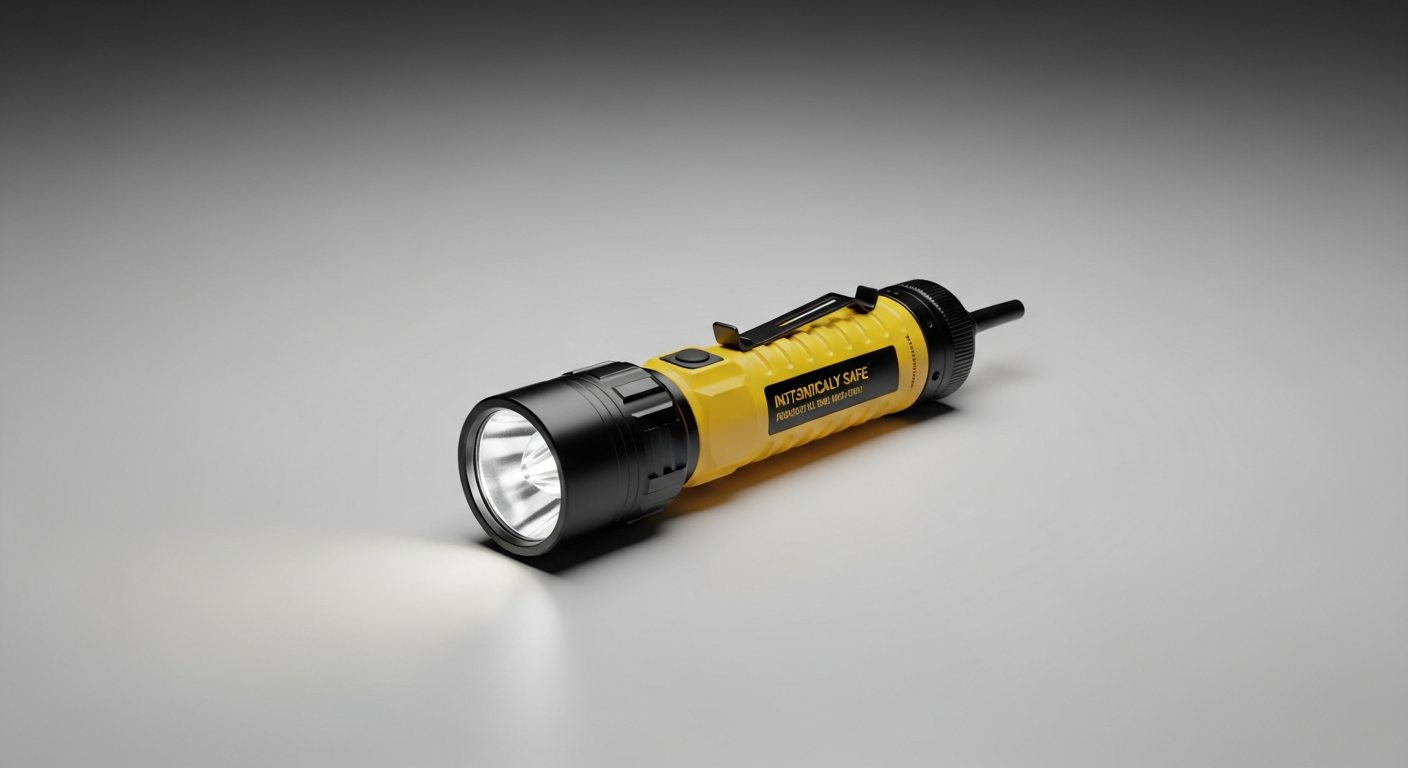
Verifying that a portable light source is safe for a hazardous environment with flammable gases, vapors, or liquids is a critical task. For professionals in these locations, understanding the class 1 division 1 flashlight requirements is a fundamental safety responsibility, not just a matter of compliance. These regulations are in place to ensure a flashlight cannot become an ignition source. The primary standard governing these devices is UL 913, which sets strict criteria for intrinsically safe apparatus. This article covers the key design, testing, and certification mandates from UL 913 to help you select equipment that ensures safety and operational integrity in high-risk industrial settings.
Understand the Core Concepts of Hazardous Locations
Before diving into flashlight specifics, solidify your understanding of what makes a location Class 1 Division 1. Our detailed guide explains the classifications that dictate equipment safety requirements.
Decoding UL 913 for C1D1 Flashlights
The principle of intrinsic safety is the foundation of the class 1 division 1 flashlight requirements. This protection method ensures the electrical energy within the device is low enough that it cannot produce a spark or thermal effect capable of igniting a specific hazardous atmosphere. For North America, the standard defining these limits is UL 913, the Standard for Intrinsically Safe Apparatus and Associated Apparatus for Use in Class I, II, III, Division 1, Hazardous (Classified) Locations. This standard is not a recommendation; it’s a required set of design and testing protocols for certification. It specifies maximum voltage, current, and power levels, along with component spacing, temperature ratings, and enclosure integrity to prevent ignition under normal and fault conditions. A flashlight with a UL 913 certification for Class 1 Division 1 has undergone rigorous evaluation to confirm it is safe for environments where ignitable concentrations of flammable substances are present continuously or for long periods.
Key Design and Construction Mandates
To comply with UL 913, manufacturers must follow specific design principles that eliminate ignition risks. These mandates cover the entire flashlight’s construction, materials, and circuitry, going beyond simply using low-power components. The objective is to ensure the device remains safe even if one or more faults occur.
- Energy-Limiting Circuitry: The primary requirement is the use of circuits that intrinsically limit current and voltage. This is often achieved through redundant Zener diodes to clamp voltage and series resistors to limit current, ensuring that even under short-circuit conditions, the energy output remains below the ignition threshold for the specified gas group (e.g., Group C for ethylene, Group D for propane).
- Component Spacing and Protection: The standard specifies minimum creepage and clearance distances between conductive parts to prevent arcing. Critical energy-limiting components must be encapsulated or coated with an insulating compound (potting) to protect them from environmental factors and prevent tampering or accidental shorting.
- Enclosure Integrity and Materials: The flashlight’s housing must be durable enough to withstand impact and drop tests without compromising the internal circuitry. Casing materials must have anti-static properties to prevent static charge buildup that could discharge as an incendiary spark. The enclosure must also be sealed to a specific IP rating to prevent the ingress of dust or moisture, which could lead to a fault.
- Battery and Power Source Safety: Batteries are a major focus, as they store significant energy. The requirements include protection against short circuits, reverse polarity installation, and deep discharge. Only specific battery types and models listed in the certification documentation are permitted for use, and the battery compartment is often designed to prevent accidental shorts during replacement.
The Certification and Marking Process
Obtaining a UL 913 listing for a Class 1 Division 1 flashlight is an exhaustive process that requires third-party testing and validation by a Nationally Recognized Testing Laboratory (NRTL) like UL, CSA, or Intertek. This process ensures impartiality and confirms the device meets all relevant safety standards.
- Documentation Review: Manufacturers must submit detailed design schematics, component lists, and material specifications. The NRTL reviews this documentation to ensure the design theoretically complies with the requirements of UL 913 before any physical testing begins.
- Physical Sample Testing: Production samples of the flashlight undergo a series of rigorous tests. This includes drop and impact tests to assess mechanical durability, temperature rise tests to ensure the surface temperature never exceeds the specified T-rating, and fault analysis where components are intentionally shorted or opened to verify the intrinsic safety circuits perform as designed.
- Spark Ignition Testing: In this critical test, the flashlight’s circuitry is connected to a specialized apparatus in a chamber filled with the most easily ignitable concentration of a specific hazardous gas (e.g., a methane-air or hydrogen-air mixture). The circuit is then switched on and off thousands of times under worst-case fault conditions to prove it cannot produce a spark with enough energy to cause an explosion.
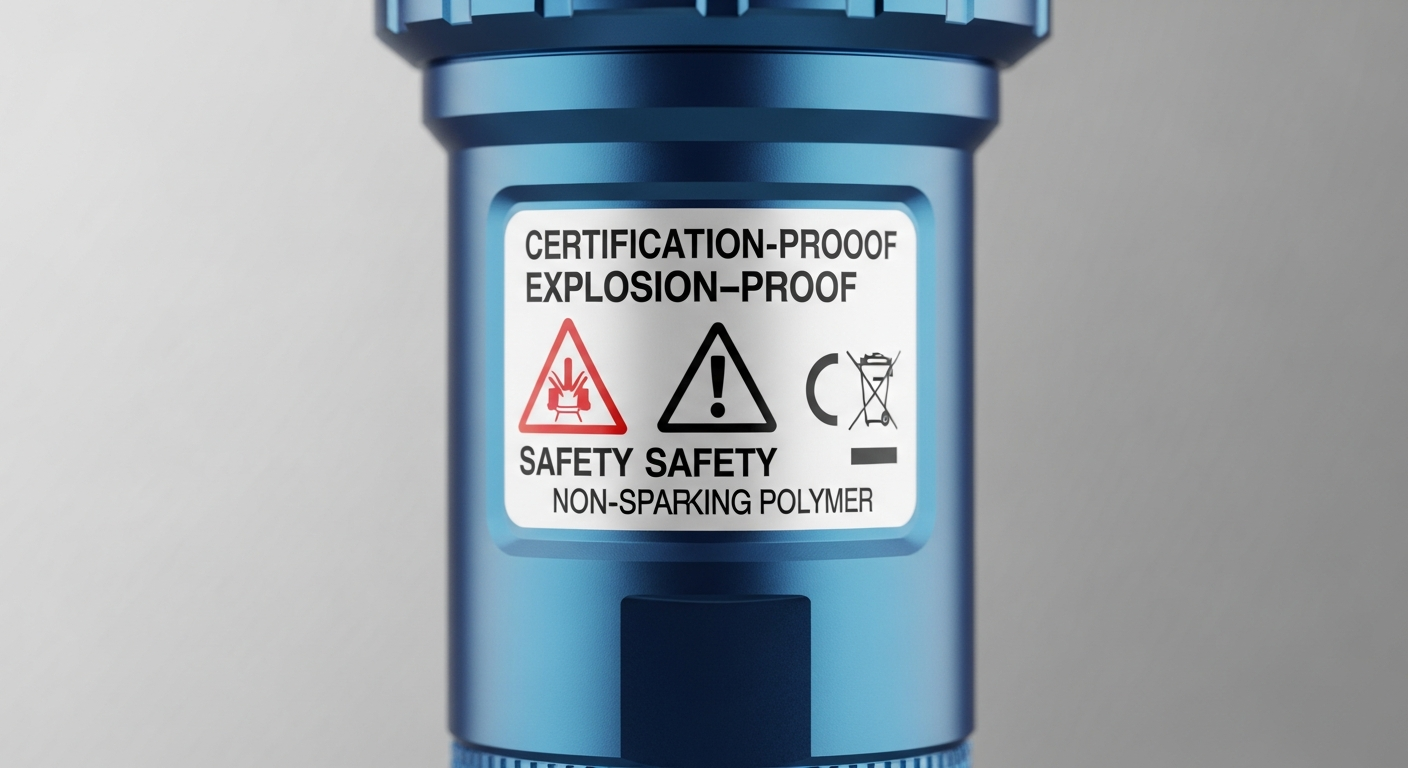
- Labeling and Marking: Once certified, the flashlight must bear a permanent label with specific information. This includes the Class, Division, and Group ratings, the surface temperature code (T-rating), the NRTL’s mark, and any warnings, such as the required battery types. This marking is the end user’s primary means of verifying that the flashlight meets the necessary class 1 division 1 flashlight requirements.
Recommended Products for Class 1 Division 1 Use
The following products from our catalog are certified for use in Class 1 Division 1 hazardous areas:
| Product Category | Rating / Certification | Link |
|---|---|---|
| Intrinsically Safe Flashlights | Class I Division 1 | Shop Now |
| Class 1 Division 1 Rated Equipment | Class I Division 1 | Shop Now |
Shop Certified Intrinsically Safe Flashlights
Our selection of flashlights is certified to meet Class 1 Division 1 standards, ensuring compliance and safety for your team in the most hazardous environments.
Frequently Asked Questions
What does Class 1 Division 1 mean for a flashlight?
It means the flashlight is certified as intrinsically safe for use in an area where ignitable concentrations of flammable gases, vapors, or liquids are present continuously or for long periods under normal operating conditions. The device is designed to be incapable of causing an explosion.
Can I use any battery in a C1D1 flashlight?
No, this is extremely dangerous and voids the certification. You must only use the exact battery make and model specified by the manufacturer in the user manual and often on the flashlight’s certification label. Using unapproved batteries can introduce an ignition risk.
What is a T-rating on a Class 1 Div 1 flashlight?
The T-rating (Temperature Code) indicates the maximum surface temperature the flashlight can reach under any condition. This is critical for preventing the auto-ignition of hazardous substances. For example, a T4 rating means the surface temperature will not exceed 135°C (275°F).
Is an ‘explosion proof’ flashlight the same as an ‘intrinsically safe’ one?
No, they are different protection methods. An explosion-proof (Ex d) flashlight contains an explosion within its heavy enclosure, while an intrinsically safe (Ex i) flashlight prevents an explosion by limiting the electrical and thermal energy to below ignition levels. For portable devices like flashlights, intrinsic safety is far more common.
How can I verify a flashlight’s certification?
Check for the official mark of a Nationally Recognized Testing Laboratory (NRTL) like UL, CSA, or Intertek directly on the product’s label. The label must also clearly state its rating for Class I, Division 1, and the applicable Gas Groups (e.g., A, B, C, D). You can often look up the certification number on the NRTL’s public database.
Chat for a Quote Call: 832-699-6726
Selecting a flashlight for a hazardous location is a decision with serious safety implications. Adherence to Class 1 Division 1 standards is not optional; it is a fundamental requirement for preventing catastrophic incidents. Understanding the principles of intrinsic safety as defined by UL 913 is key to evaluating and procuring the correct equipment. Always verify the NRTL certification marking, use only manufacturer-specified batteries, and understand that design features like energy-limiting circuits and anti-static materials are essential for safety. A solid understanding of class 1 division 1 flashlight requirements is necessary to equip teams with tools that are verifiably safe for their work environments.