

















In environments where explosive atmospheres are a constant concern—such as oil refineries, gas plants, chemical manufacturing facilities, and grain silos—electrical components must be carefully selected to ensure they do not become an ignition source. One often overlooked component is the humble cable. While it may seem like a minor detail, using the wrong type of cable can compromise an entire intrinsically safe system.
Intrinsically safe cables are specifically designed to limit the energy—both electrical and thermal—transmitted through them, making them incapable of igniting a hazardous atmosphere. In this article, we will break down the key considerations for selecting the right intrinsically safe cable, explain the relevant certifications like ATEX, and recommend compliant product options available from Intrinsically Safe Store.
What Is an Intrinsically Safe Cable?
An intrinsically safe cable is a specialized electrical cable engineered to ensure that, even in the presence of flammable gases, vapors, or dust, it cannot produce a spark or heat level sufficient to ignite an explosion. These cables are typically part of a broader intrinsically safe system, which includes barriers, certified devices, and safe wiring methods.
Characteristics of Intrinsically Safe Cables
Energy Limitation: The cable’s capacitance and inductance per unit length must be known and documented on its datasheet. These values are not arbitrary; they are critical inputs for calculating the total stored energy in the circuit to ensure it remains below safe limits.
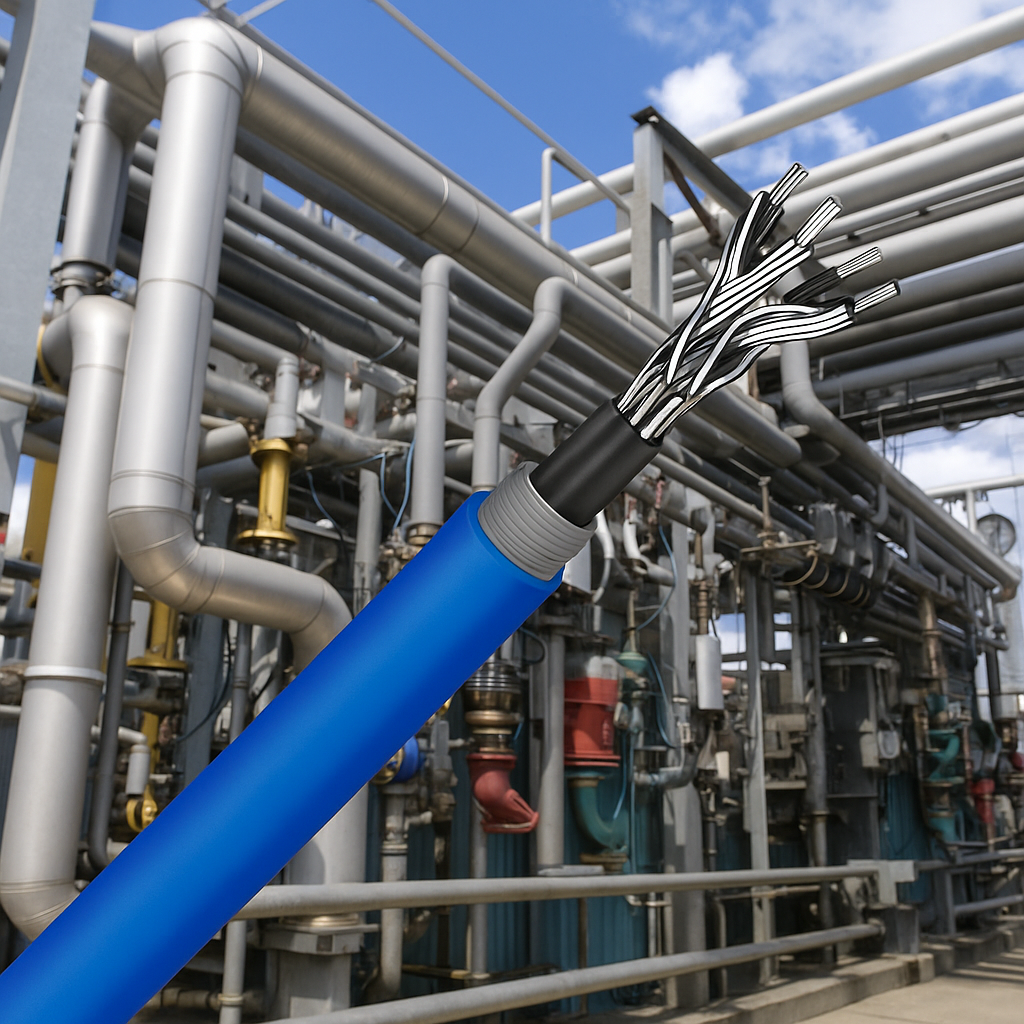
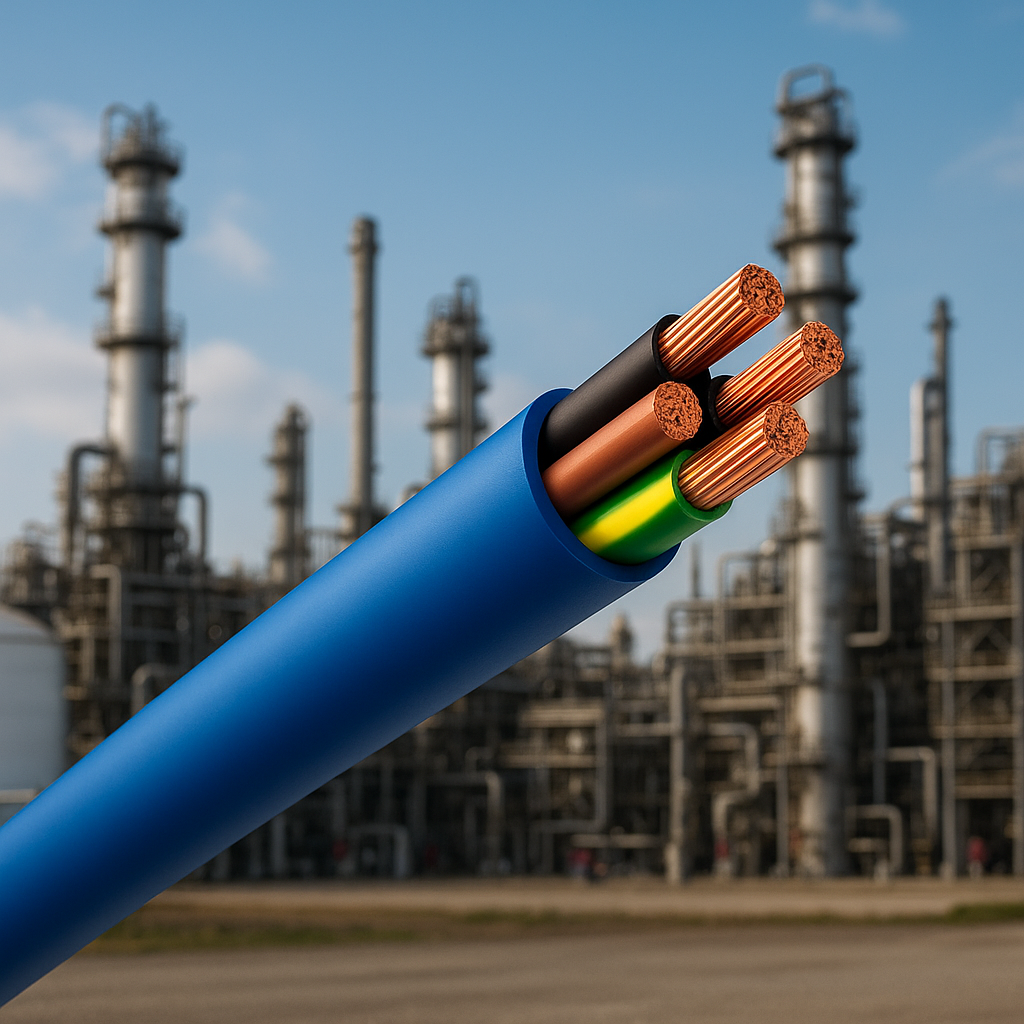
Distinctive Color Coding: Most intrinsically safe cables are blue, a widely recognized industry standard to indicate intrinsic safety.
High-Quality Insulation: Often features polyurethane or other rugged materials to withstand industrial environments.
Shielding: Many are shielded to prevent electromagnetic interference (EMI), which could affect sensitive instrumentation.
Low Capacitance and Inductance: Critical for ensuring compliance with safety calculations outlined in ATEX and IECEx guidelines.

Understanding ATEX and Related Certifications
What Is ATEX?
ATEX stands for “Atmosphères Explosibles” and refers to the European Union directives that regulate equipment used in explosive atmospheres. The design and installation of an intrinsically safe system, including the choice of cable, must comply with requirements derived from the ATEX directives. Specifically, installation practices are governed by standards like EN/IEC 60079-14, which ensures the integrity of the safety concept.
ATEX 2014/34/EU (formerly ATEX 95): Applies to electrical and non-electrical equipment used in potentially explosive areas.
ATEX 1999/92/EC (ATEX 137): Focuses on worker safety and the proper use of certified equipment.
Other Relevant Certifications
IECEx: An international certification for equipment used in explosive atmospheres.
UL 60079-11 / UL 913: U.S. certifications for intrinsically safe systems and components.
CSA: Canadian standard aligned with North American explosion protection.
A cable used in an intrinsically safe loop is typically considered ‘simple apparatus,’ meaning it doesn’t require its own certification. However, its electrical characteristics (capacitance, inductance, and L/R ratio) are critical parameters used in the overall system safety calculation, often called the ‘entity concept.’ The entire IS loop, including the barrier, cable, and end device, must be documented to ensure compliance.
Key Factors to Consider When Choosing Intrinsically Safe Cables
1. Zone Classification
The first step in choosing the right cable is identifying the ATEX zone where it will be used. These zones are categorized based on the frequency and duration of the presence of explosive gases or dust.
Zone 0: Continuous presence of hazardous material (highest risk).
Zone 1: Likely presence during normal operations.
Zone 2: Unlikely presence and only for short durations.
The higher the risk (Zone 0 or 1), the stricter the cable requirements.
Differentiating Zone 2 from Zone 1 and Zone 0 Cabling Standards
While all hazardous zones require certified equipment, the level of protection differs. For cabling, the key distinction lies in the expected presence of an explosive atmosphere.
- Zone 0 and Zone 1: For these high-risk areas, the associated apparatus (e.g., barrier) must have a protection level of ‘Ex ia’. The chosen cable’s total capacitance and inductance over the required length must not exceed the maximum values (Ca and La) specified by the barrier’s certification documents.
- Zone 2: As the risk is lower (explosive atmosphere is infrequent), Ex ‘ic’ protection is generally sufficient. The system, including the cable, must be designed to not cause ignition during normal operation or predictable malfunctions. The requirements are stringent but acknowledge the reduced likelihood of a flammable atmosphere coinciding with an electrical fault.
2. System Capacitance and Inductance
Every intrinsically safe system has limits for how much energy its components can store. Cables must have:
Low capacitance (C): To prevent energy storage.
Low inductance (L): To reduce the risk of voltage spikes or arcs.
The cable’s length and properties must be considered when calculating the total system safety per the entity concept.
Electrical Parameter Checklist: Capacitance, Inductance, and L/R Ratio
For an engineer, verifying Zone 2 compliance requires precise calculations based on the ‘entity concept’. You must ensure the cable parameters do not exceed the limits of the associated apparatus (e.g., the safety barrier).
- Capacitance (Cc): The total capacitance of the cable (Cc) plus the device capacitance (Ci) must be less than the maximum allowable capacitance of the barrier (Ca). Formula: Cc + Ci ≤ Ca.
- Inductance (Lc): The total inductance of the cable (Lc) plus the device inductance (Li) must be less than the maximum allowable inductance of the barrier (La). Formula: Lc + Li ≤ La.
- L/R Ratio: For circuits where inductance is a concern, the cable’s inductance-to-resistance ratio (L/R) must be less than that allowed by the barrier. This ensures that stored energy can dissipate safely without creating an incendive spark.
Always consult the datasheets for both the cable and the barrier to find these values (typically specified in µF/m, µH/m, and µH/Ω).
3. Cable Construction
Opt for cables with:
Robust Outer Sheath: Preferably polyurethane for high resistance to abrasion and chemicals.
Shielding: Braided or foil shielding to eliminate EMI in communication cables.
Color Coding: Blue insulation to signify intrinsic safety.
4. Environmental Conditions
Assess the operating environment. Will the cable be exposed to:
Extreme temperatures?
Chemical vapors or liquids?
Mechanical stress?
Water or moisture ingress?
Cables used in outdoor or corrosive environments must be rated for these conditions.
Mechanical & Environmental Requirements: Durability and Protection
Beyond electrical parameters, a cable’s physical resilience is critical for long-term safety and reliability in Zone 2.
- Sheath Material: Polyurethane (PUR) is a superior choice for resistance to oils, solvents, and abrasion. For less demanding environments, PVC may be adequate.
- Armoring: In areas with a risk of crushing or impact, armored cables (e.g., Steel Wire Armor – SWA) are necessary to protect the internal conductors.
- UV and Water Resistance: For outdoor or damp locations, ensure the cable has a UV-stabilized sheath and a suitable IP (Ingress Protection) rating to prevent degradation and moisture ingress.
- Temperature Rating: The cable must have an operating temperature range that is compliant with the area’s T-class (Temperature Class) rating to avoid becoming a hot surface ignition source.
5. Cable Type and Application
Control Cables: For signal and data transmission in control loops.
Power-Limited Tray Cable (PLTC): For fixed installations, often armored for protection.
Multiconductor Cables: For connecting multiple devices in intrinsically safe zones.
What are the Core Cable Requirements for an ATEX Zone 2 Area?
To summarize for engineers, a compliant ATEX Zone 2 cable must satisfy four primary conditions:
- Controlled Electrical Parameters: The cable must have documented, low values for capacitance and inductance per meter to be used in entity calculations.
- Robust Physical Construction: It must feature a durable outer sheath, appropriate insulation, and adequate shielding to withstand the specific industrial environment.
- Clear Identification: The cable should have a light blue outer sheath for easy identification as part of an intrinsically safe circuit.
- System Compatibility: It must be used as part of a complete certified IS loop, including a Zone 2-rated barrier and end device. A cable is considered ‘simple apparatus’ and does not carry its own ATEX certificate, but its parameters are essential for the system’s overall certification.
Marking and Identification for ATEX Zone 2 Compliance
Proper identification is a non-negotiable part of ATEX compliance. During inspections and maintenance, engineers must be able to instantly recognize IS circuits.
- Light Blue Sheath: This is the universal color code for intrinsically safe cabling. Any cable that is not light blue should be immediately questioned.
- Cable Markings: The sheath should be printed with the manufacturer’s name, cable type, conductor size, and compliance with relevant standards (e.g., EN 60079-14).
- Cable Glands and Terminations: The entry point into enclosures is critical. Always use ATEX-certified cable glands appropriate for the enclosure’s protection concept (e.g., Ex ‘e’ for increased safety) to maintain system integrity.
Common Installation Mistakes to Avoid in Zone 2
Even a compliant cable can be rendered unsafe by improper installation. Technicians and engineers must avoid these common errors:
- Improper Segregation: Failing to maintain sufficient physical distance or a grounded metal partition between IS and non-IS wiring can lead to dangerous energy transfer through induction.
- Ignoring Cable Length Calculations: Installing a cable run that is longer than the maximum calculated length based on the system’s entity parameters.
- Incorrect Shield Grounding: Grounding the shield at both ends can create a ground loop, which may introduce unsafe currents into the hazardous area. The shield must be grounded at one point only, typically at the safe-area side.
- Mechanical Damage: Damaging the cable’s outer sheath during pulling or installation compromises its protective qualities.
Selecting Compliant ATEX Zone 2 Cables
Follow this checklist for a compliant selection process:
- Confirm Zone 2 Classification: Double-check the area classification documents for the installation site.
- Review System Entity Parameters: Get the datasheet for the IS barrier and note the maximum allowed capacitance (Ca), inductance (La), and L/R ratio.
- Calculate Maximum Cable Length: Using the cable datasheet’s per-meter capacitance and inductance values, calculate the longest permissible run.
- Evaluate Physical Needs: Assess the environment for chemical exposure, risk of impact, and temperature extremes to select the appropriate sheath, armor, and temperature rating.
- Verify Documentation: Ensure the chosen cable has a datasheet that clearly lists all necessary electrical parameters for your compliance records.
If you have any doubts about calculations or product suitability, it is always best to talk to a hazardous-area specialist to ensure full compliance and safety.
Top Intrinsically Safe Cable Products to Consider
Based on current availability at Intrinsically Safe Store, the following cable products are recommended for use in ATEX-rated installations:
ÖLFLEX® EB
Blue polyurethane jacket
Designed specifically for use in hazardous environments
Flame-retardant and oil-resistant
Ideal for control and signal cables in ATEX zones
ÖLFLEX® EB CY
Shielded version of the ÖLFLEX EB
Braided copper shield provides protection from EMI
Low capacitance for increased safety in signal circuits
Suitable for instrumentation and data transmission
OZ-BL Blue Control Cable
Flexible control cable for intrinsically safe applications
Halogen-free and flame-retardant
Suitable for measuring and control circuits in explosive atmospheres
Each of these options is constructed to meet international standards for intrinsic safety, making them suitable for integration into ATEX- or IECEx-certified systems.
Comparison Table: Intrinsically Safe Cables
| Product Name | Sheathing | Shielding | Ideal Application | Certification |
|---|---|---|---|---|
| MDC-4FPX-ZZ Cable – 4-Pin Female Plug | Polyurethane | Yes | Control systems in hazardous areas | ATEX Certified |
| MDC-2FP-ZZ 2-Pin M12 Cable (20 AWG) | Polyurethane | Yes | Signal transmission in explosive atmospheres | ATEX Certified |
| GameChanger Hazardous Location Cable | Polyethylene | No | Data communication in industrial environments | ATEX Certified |
FAQs
What makes a cable “intrinsically safe”?
A cable is intrinsically safe when it is designed to limit the energy passing through it, preventing ignition of flammable gases or dust. This is achieved through specific construction properties like low capacitance, shielding, and flame-retardant sheathing.
Can I use a regular cable in an ATEX Zone 1 or 0?
No. Cables used in ATEX zones must meet strict standards to prevent ignition risks. Using a regular, non-certified cable in these environments is both dangerous and non-compliant.
Are intrinsically safe cables always blue?
While not mandatory, blue is the standard industry color to indicate intrinsic safety, especially for quick identification during installation and inspection.
Do intrinsically safe cables have to be part of a complete certified system?
Yes. Cables must be used in conjunction with other certified intrinsically safe components such as barriers, isolators, and devices. Certification is only valid when the system is assessed as a whole.
How do I calculate the safe length for an intrinsically safe cable?
Safe lengths are determined by assessing the total loop capacitance and inductance. These values must fall below the maximum allowed by the system’s entity parameters (defined by the device and barrier).
Best Choice by Industry Use Case
| Industry | Recommended Cable | Justification |
|---|---|---|
| Oil & Gas | MDC-4FPX-ZZ Cable – 4-Pin Female Plug | High resistance to hydrocarbons and mechanical stress |
| Chemical Manufacturing | MDC-2FP-ZZ 2-Pin M12 Cable (20 AWG) | Excellent chemical resistance and flexibility |
| Mining | GameChanger Hazardous Location Cable | Durable construction suitable for underground environments |
| Food & Pharmaceutical Processing | MDC-4FPX-ZZ Cable – 4-Pin Female Plug | Complies with hygiene standards and easy to clean |
| Utilities & Power Plants | MDC-2FP-ZZ 2-Pin M12 Cable (20 AWG) | Reliable performance in high-temperature areas |
Conclusion
Choosing the right intrinsically safe cable for your ATEX equipment is not just a matter of preference—it’s a regulatory and safety requirement. From understanding your zone classification and installation environment to evaluating certifications and cable specifications, every detail plays a crucial role in maintaining operational safety.
Cables like the ÖLFLEX® EB, EB CY, and OZ-BL provide rugged, compliant solutions for a variety of industrial settings. When integrated correctly with ATEX-certified systems, these cables help ensure uninterrupted communication, control, and compliance in even the most hazardous conditions.
