

Intrinsically Safe News
Intrinsically Safe Headlamp
An intrinsically safe headlamp is a critical tool for workers in industries like underground mining, oil and gas, and for emergency response teams who require hands-free lighting in potentially explosive environments. In the same way, those working in potentially explosive environments should use only equipment that is certified for the specific hazardous conditions present.
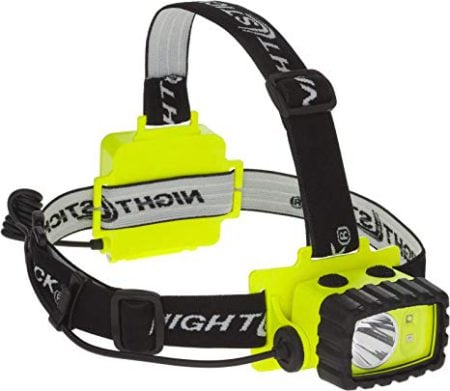
What does intrinsically safe mean? It means that the flashlight design will not produce sparks, or at least not enough sparks with the energy to ignite its surroundings.
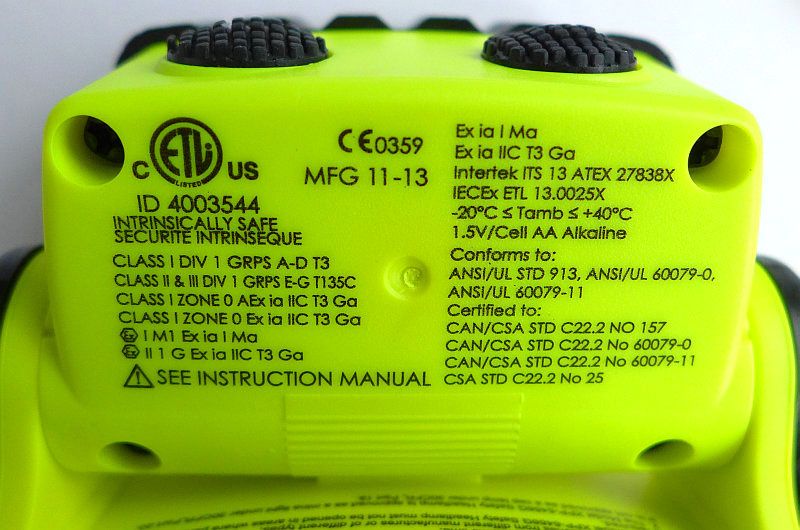
Additionally, typical certifications include ATEX, IECEx, and MSHA listing as intrinsically safe permissible.
Features to look out for:
- LED technology – 50,000 + hours LED life
- Spotlight – High/Low-brightness white floodlight – red floodlight
- Focused spotlight beam for distance illumination
- Red colored floodlight for preservation of night vision (optional)
- Engineered polymer housing
- Adjustable ratchet tilt head
- Non-slip elastic head strap
- Heavy-duty rubber strap for hard hat applications
- Waterproof with higher rating preferred
- Impact & chemical resistant
Modern intrinsically safe headlamps almost exclusively use high-efficiency LED technology. Unlike older incandescent bulbs, LEDs produce bright light with very low heat and power consumption, which are critical factors for meeting strict intrinsic safety standards. So, look for an output with LED emitters.
What battery should I use?
Intrinsically safe batteries come in various chemistries, including rechargeable Li-ion, NiCd, and lithium-thionyl chloride (Li-SOCl2). In addition to the environmental conditions such as performance, life cycle, and weight, the battery pack design is a crucial factor to consider.
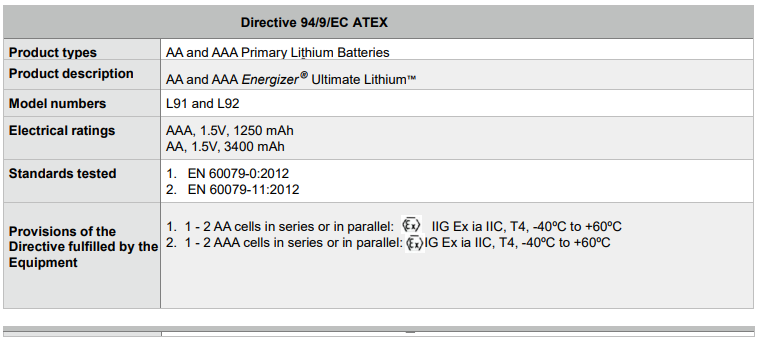
When working within flammable and potentially explosive conditions, one must take extra safety precautions. Workers should hold their electronic equipment, such as lamps, gas detectors, and air-monitoring devices, to the highest safety standards.
Deeper Technical Specifications for Intrinsically Safe Headlamps
While general features are important, the specific performance metrics and certification details are what truly define a headlamp’s suitability for hazardous environments. These numbers and codes are not just jargon; they are guarantees of safety and performance.
Performance Metrics
- Lumen Output: Typical models offer between 80 and 200 lumens. While lower than some consumer-grade lights, this range is optimized for close to medium-range tasks without producing excessive heat, a critical factor for intrinsic safety.
- Beam Distance: A focused spotlight can typically reach from 50 to 120 meters, providing ample illumination for inspections and navigation in dark environments.
- Battery Life (Run Time): Run time can vary dramatically based on the brightness setting, from as little as 5 hours on the highest setting to over 40 hours on the lowest. This is crucial for planning long shifts in remote locations.
- Ingress Protection (IP) Rating: Look for ratings like IP67, which indicates the device is completely dust-tight and can be submerged in 1 meter of water for up to 30 minutes. This ensures durability in wet and dusty conditions.
Understanding Certifications
The certification markings are the most critical aspect. For example:
- ATEX/IECEx: A marking like
II 1G Ex ia IIC T4 Gameans the headlamp is suitable for Zone 0 environments (where explosive gas is continuously present), has the highest level of protection (‘ia’), can be used with all surface industry gases (IIC), and has a maximum surface temperature of 135°C (T4). - North American Standards: A rating of
Class I, Division 1, Groups A, B, C, Dsignifies the equipment is approved for areas where flammable gases or vapors are present under normal operating conditions. The groups specify the type of hazardous substance.
Common Use Cases
Intrinsically safe headlamps are essential tools across a variety of high-risk industries, providing critical hands-free lighting where standard equipment would pose an ignition risk.
- Oil and Gas: Workers on offshore rigs, in refineries, and along pipelines use these headlamps for maintenance, inspection, and emergency response in environments with hydrocarbon gases.
- Mining: As mentioned, mining operations (especially coal mining) require MSHA-approved headlamps to prevent the ignition of methane gas or coal dust.
- Chemical Plants: Technicians handling volatile chemicals and solvents rely on certified headlamps for safe operation and maintenance of equipment.
- Emergency Services: HazMat teams and firefighters entering potentially explosive atmospheres during a rescue or containment operation depend on intrinsically safe lighting for their safety.
- Wastewater Treatment: Methane and other sewer gases can accumulate in confined spaces, making IS headlamps a requirement for workers in these facilities.
Conclusion
Choosing an intrinsically safe headlamp is about more than just hands-free illumination; it’s a critical safety decision. By understanding the key features, performance specifications, and, most importantly, the certification standards like ATEX and IECEx, you can ensure your team is equipped with a tool that is both effective and compliant. The right headlamp provides not only light but also peace of mind in the most dangerous environments.
Frequently Asked Questions (FAQs)
Can I use a regular high-powered LED headlamp in a hazardous area?
Absolutely not. Regular headlamps, even high-quality ones, are not designed to be intrinsically safe. Their internal circuitry and battery can create sparks or heat sufficient to ignite flammable gases or dust, leading to a catastrophic explosion. Only use headlamps that are explicitly certified for the specific hazardous environment you are working in.
What is the difference between an Intrinsically Safe and an Explosion Proof headlamp?
The core difference is the protection method. Intrinsic Safety (IS) prevents an explosion by limiting the electrical and thermal energy of the device to a level below what is needed to ignite a hazardous atmosphere. Explosion Proof (XP) equipment, on the other hand, is built into a robust enclosure that can contain an internal explosion and prevent it from propagating to the outside environment. Headlamps are almost always designed using the IS method due to the need for lightweight and portable equipment.
Can I use any type of battery in my intrinsically safe headlamp?
No. You must only use the specific battery models and brands listed by the headlamp manufacturer in the user manual. Using an unapproved battery will void the intrinsic safety certification and can introduce an ignition risk. The entire system, including the headlamp and its specific battery, is tested and certified together.
What do the ‘Groups’ in a Class I, Division 1 rating mean?
The ‘Groups’ (A, B, C, D) classify the specific type of flammable substance the equipment is safe to be used around. Group A is for acetylene, which is the most volatile. Group B is for hydrogen, Group C for ethylene, and Group D is for substances like propane and gasoline. A headlamp rated for Groups A, B, C, and D offers the broadest level of protection for gas and vapor environments.
Need help selecting the right certified headlamp for your hazardous environment? Our specialists are ready to assist. Request a quote for certified headlamps or call us at 832-699-6726 to speak directly with a hazardous area lighting expert.